The Story
Plant Bio
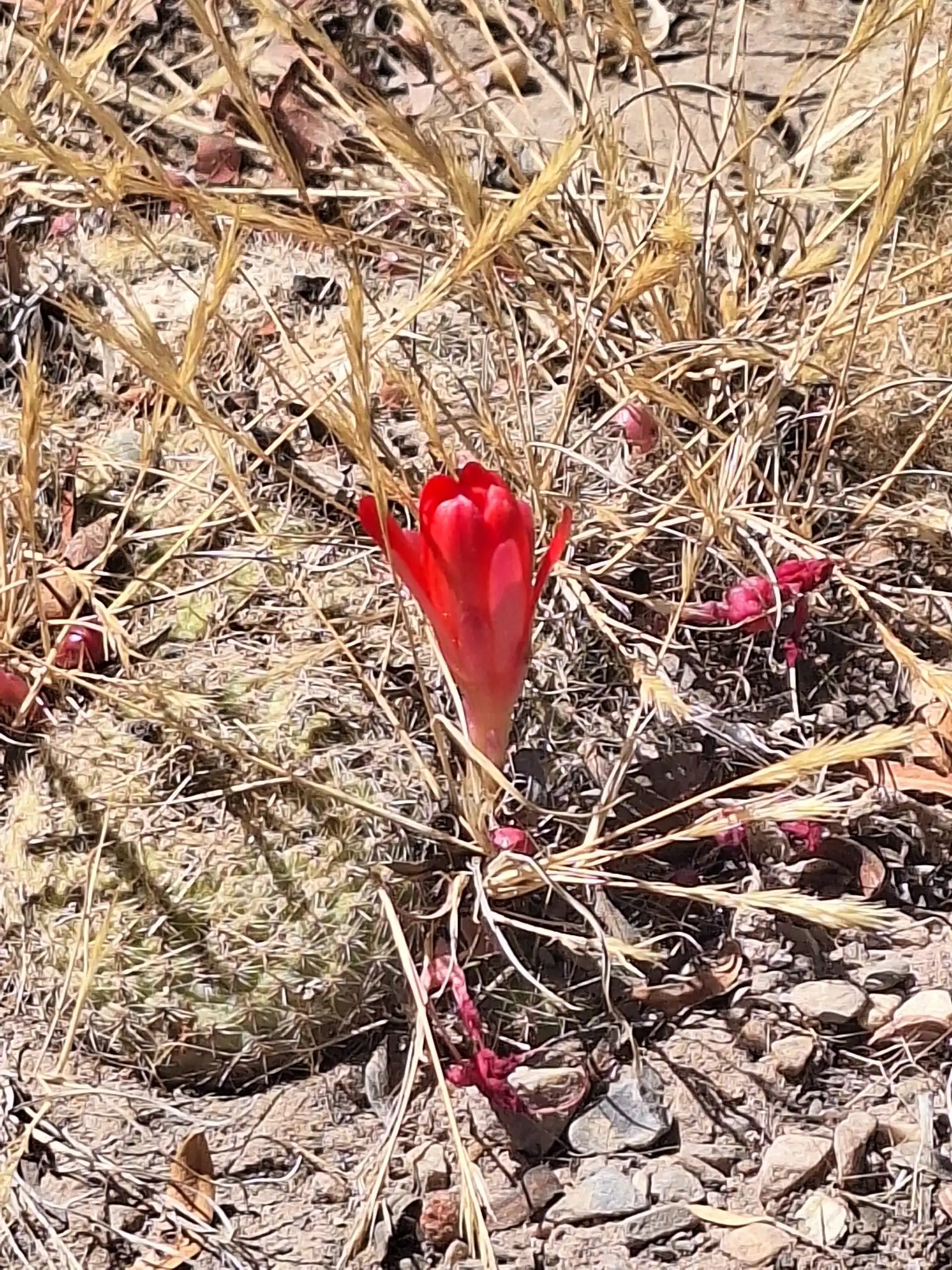
Rebutia minuscula is a dwarf clustering cactus from the high Andes of northern Argentina and Bolivia, forming low mounds of small flattened-globose stems to about four inches high. The leafless pale-green stems carry sixteen to twenty ribs broken into tubercles and bear dense short white spines.
It is the type species of the genus, now broadened to include many local forms once sold under separate names in the senilis group. In spring each stem rings its own base with slender funnel-form flowers to about one and a half inches long in bright red to violet-red, with orange, pink, yellow and white forms, self-fertile and setting seed without a partner.
Uses & Benefits:
Essentials
At a Glance
Plant Type
Cactus Succulent
Height
4"
Width
4"
Light
Full Sun, Partial Sun
Zones
9, 10
Water
Low
Humidity
Low
Lifespan
Long-lived perennial
Native To
Northern Argentina, Bolivia
Toxicity
Unknown; spiny - handle with care
Bloom period
Spring – Early summer
In flower about 4 months of the year
Planting
How to Grow
- Pot in a very gritty mineral cactus mix with 50-70% pumice, coarse sand or perlite that dries fast.
- Set in full sun to bright light such as a south window, with shade from the hottest midday sun to prevent sunburn.
- Water deeply only when the mix is almost dry, weekly in spring and summer, monthly in fall, and none in winter.
- Hold dry and cool in winter near 40F with 4-6 weeks of cool rest to set flower buds.
- Feed sparingly if at all with dilute cactus fertilizer once or twice during active growth.
- Repot yearly until in a 4-inch pot, then only every 2-3 years; never overpot.
Pro Tip
Keep it cold and completely dry in winter; a warm watered winter gives rot and no flowers.
Keep It Thriving
Care Guide
Do
- Give maximum bright light and fresh air movement
- Let the mix dry almost completely between waterings
- Keep completely dry in winter while cool
- Use a shallow clay pot with a drainage hole
Don't
- Do not water on a schedule when the mix is still damp
- Do not keep warm and watered through winter
- Do not prune or cut stems to shape
- Do not leave standing in a saucer of water
Seasonal Care Calendar
| Task | Jan | Feb | Mar | Apr | May | Jun | Jul | Aug | Sep | Oct | Nov | Dec |
|---|---|---|---|---|---|---|---|---|---|---|---|---|
| Fertilize | ||||||||||||
| Pest Check | ||||||||||||
| Plant | ||||||||||||
| Propagate | ||||||||||||
| Winter Prep |
Watch Out For
Pests & Diseases
Common Pests
Common Diseases
In the Garden
Landscape Uses & Companions
Landscape Uses
Companion Plants
Multiply
Propagation Methods
Good to Know
Common Questions
Little Crown Cactus questions
What zones can Little Crown Cactus grow in?
Little Crown Cactus is hardy in USDA Zones 9–10: in that range it survives winter in the ground. Colder than Zone 9, grow it in a container you can move to shelter for the winter, or as an annual.
When does Little Crown Cactus bloom?
Little Crown Cactus typically blooms from early spring to early summer. Exact timing shifts a week or two with your zone — Sow's bloom calendar maps it to your garden.
Does Little Crown Cactus need full sun?
Little Crown Cactus does best in full sun to part shade. In hot climates, afternoon shade keeps blooms fresher longer.
Is Little Crown Cactus drought tolerant?
Yes — once established (usually after the first full season), Little Crown Cactus handles dry spells with minimal watering. Water deeply its first year to build the root system that makes that possible.
Keep exploring
Explore the genus
Hardy in your zone?
Grow Little Crown Cactus with confidence
See it in a design of your actual yard, get zone-matched care reminders, and track it season by season in your garden journal.