The Story
Plant Bio
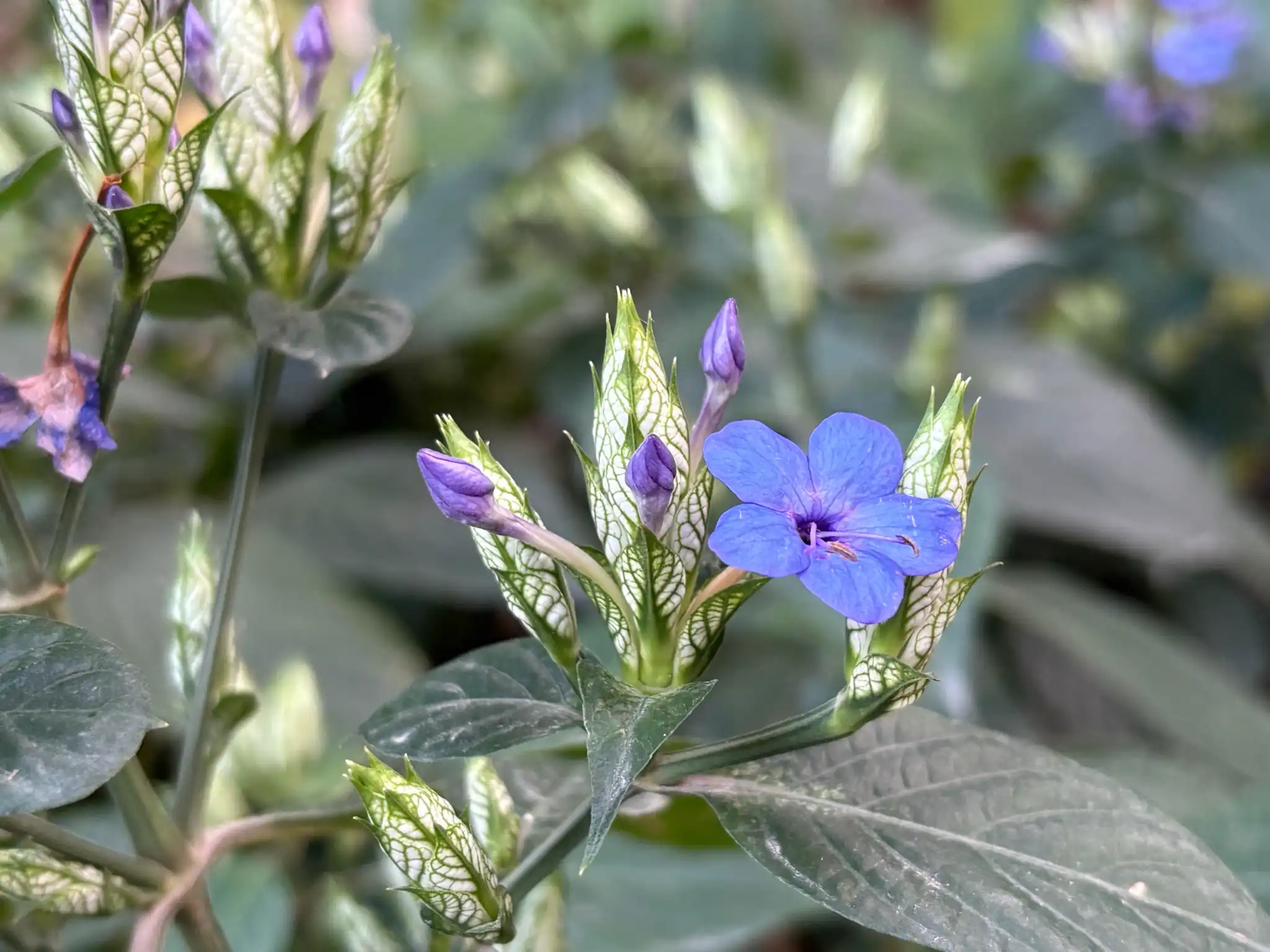
Eranthemum pulchellum is an evergreen shrub from the Himalaya to Indo-China, growing two to five feet tall with a strongly branched, upright-open frame and ovate dark green leaves to eight inches long with deeply impressed veins. The flowers are gentian-blue tubes about three-quarters of an inch across, packed into axillary and terminal spikes three to six inches long.
It blooms most profusely in late winter to early spring, with showy green-white veined bracts that persist after the blue corollas drop. It holds its foliage year-round only where frost is absent and is killed by freezing, so northern gardeners must treat it as a container plant.
Uses & Benefits:
Essentials
At a Glance
Plant Type
Shrub
Height
60"
Width
48"
Light
Full Sun, Partial Sun
Zones
10
Water
Medium
Humidity
Moderate
Lifespan
Evergreen shrub
Native To
N. Pakistan to Indo-China
Toxicity
Unknown
Bloom period
Late winter – Early spring
In flower about 2 months of the year
Planting
How to Grow
- Plant in rich, well-drained soil in full sun to part shade with afternoon shade in hot climates.
- Water to keep soil evenly moist; do not let it dry out.
- Grow in the ground only in zones 10-11; elsewhere grow in a large container.
- Move containers indoors to a bright, frost-free greenhouse or room before first fall frost.
- Propagate from stem cuttings to replace leggy plants.
Pro Tip
North of zone 10 keep it in a container and move it under glass before first frost; plants left outside through freezing do not recover.
Keep It Thriving
Care Guide
Do
- Give afternoon shade in hot sun
- Keep soil evenly moist with medium water
- Overwinter frost-free in a container north of zone 10
Don't
- Do not leave outdoors through freezing
- Do not let soil dry out completely
- Do not prune hard into old leafless wood
Seasonal Care Calendar
| Task | Jan | Feb | Mar | Apr | May | Jun | Jul | Aug | Sep | Oct | Nov | Dec |
|---|---|---|---|---|---|---|---|---|---|---|---|---|
| Fertilize | ||||||||||||
| Pest Check | ||||||||||||
| Propagate | ||||||||||||
| Prune | ||||||||||||
| Winter Prep |
Watch Out For
Pests & Diseases
Common Pests
In the Garden
Landscape Uses & Companions
Landscape Uses
Companion Plants
Multiply
Propagation Methods
Good to Know
Common Questions
Blue Sage questions
What zones can Blue Sage grow in?
Blue Sage is hardy in USDA Zone 10: in that range it survives winter in the ground. Colder than Zone 10, grow it in a container you can move to shelter for the winter.
When does Blue Sage bloom?
Blue Sage typically blooms from late winter to early spring. Exact timing shifts a week or two with your zone — Sow's bloom calendar maps it to your garden.
Does Blue Sage need full sun?
Blue Sage does best in full sun to part shade. In hot climates, afternoon shade keeps blooms fresher longer.
Keep exploring
Explore the genus
Hardy in your zone?
Grow Blue Sage with confidence
See it in a design of your actual yard, get zone-matched care reminders, and track it season by season in your garden journal.