The Story
Plant Bio
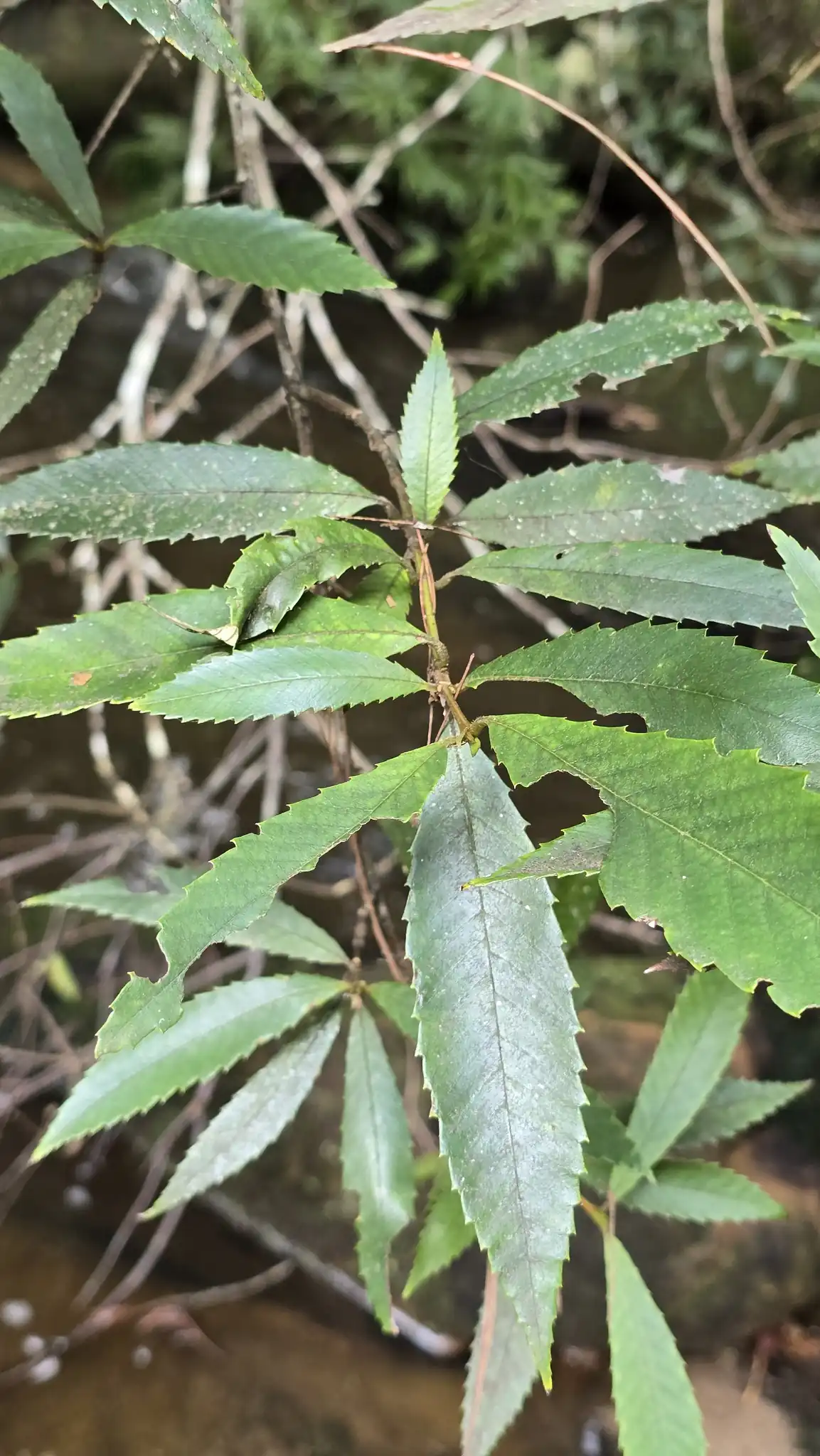
Callicoma serratifolia is a large evergreen shrub or small upright tree native to damp creek margins and sheltered gullies of eastern Australia. It produces dense, spherical heads of creamy-white stamens set against dark green leaves with white-felted undersides and coarsely serrated margins.
Although its fluffy flower heads resemble true wattles, this species belongs to the Cunoniaceae family and requires consistently damp soil rather than arid conditions. Spring growth emerges in a striking pale bronze shade covered with fine, rust-colored hairs before maturing to glossy green.
Uses & Benefits:
Essentials
At a Glance
Plant Type
Tree
Height
288"
Width
120"
Light
Full Sun, Partial Sun
Zones
9, 10
Water
High
Humidity
Moderate to High
Lifespan
Perennial
Native To
Australia
Toxicity
Non-toxic
Bloom period
Spring – Early summer
In flower about 4 months of the year
Planting
How to Grow
- Select a planting site in partial shade or sheltered full sun with organically rich, acidic to neutral soil.
- Dig a planting hole twice as wide as the root ball and match the container depth.
- Backfill with native soil enriched with leaf mold or compost, pressing firmly to eliminate air pockets.
- Water thoroughly at planting and apply a 2-inch layer of organic mulch around the root zone, keeping it clear of the trunk.
- Maintain consistent soil moisture throughout the establishment period and during hot dry spells.
Pro Tip
Prune lightly behind spent flower heads and never cut into old leafless wood, as mature stems lack epicormic buds and will fail to reshoot.
Keep It Thriving
Care Guide
Do
- Keep the root zone consistently moist with regular deep watering.
- Mulch annually in spring to conserve soil moisture and cool the roots.
- Protect young plants from frost until stems woody up and mature.
Don't
- Do not allow the soil to dry out completely around the root system.
- Do not prune back into old, bare wood without leafy shoots.
- Do not expose young specimens to hard frosts or drying coastal winds.
Seasonal Care Calendar
| Task | Jan | Feb | Mar | Apr | May | Jun | Jul | Aug | Sep | Oct | Nov | Dec |
|---|---|---|---|---|---|---|---|---|---|---|---|---|
| Fertilize | ||||||||||||
| Mulch | ||||||||||||
| Pest Check | ||||||||||||
| Prune |
Watch Out For
Pests & Diseases
Common Pests
Common Diseases
In the Garden
Landscape Uses & Companions
Landscape Uses
Multiply
Propagation Methods
Good to Know
Common Questions
Black Wattle questions
What zones can Black Wattle grow in?
Black Wattle is hardy in USDA Zones 9–10: in that range it survives winter in the ground. Colder than Zone 9, winters are too cold for it to survive outdoors.
Is Black Wattle deer resistant?
Not reliably. Deer may browse Black Wattle, especially tender spring growth — plan on repellents or fencing where pressure is high.
When does Black Wattle bloom?
Black Wattle typically blooms from early spring to early summer. Exact timing shifts a week or two with your zone — Sow's bloom calendar maps it to your garden.
Does Black Wattle need full sun?
Black Wattle does best in full sun to part shade. In hot climates, afternoon shade keeps blooms fresher longer.
Keep exploring
Explore the genus
Hardy in your zone?
Grow Black Wattle with confidence
See it in a design of your actual yard, get zone-matched care reminders, and track it season by season in your garden journal.