The Story
Plant Bio
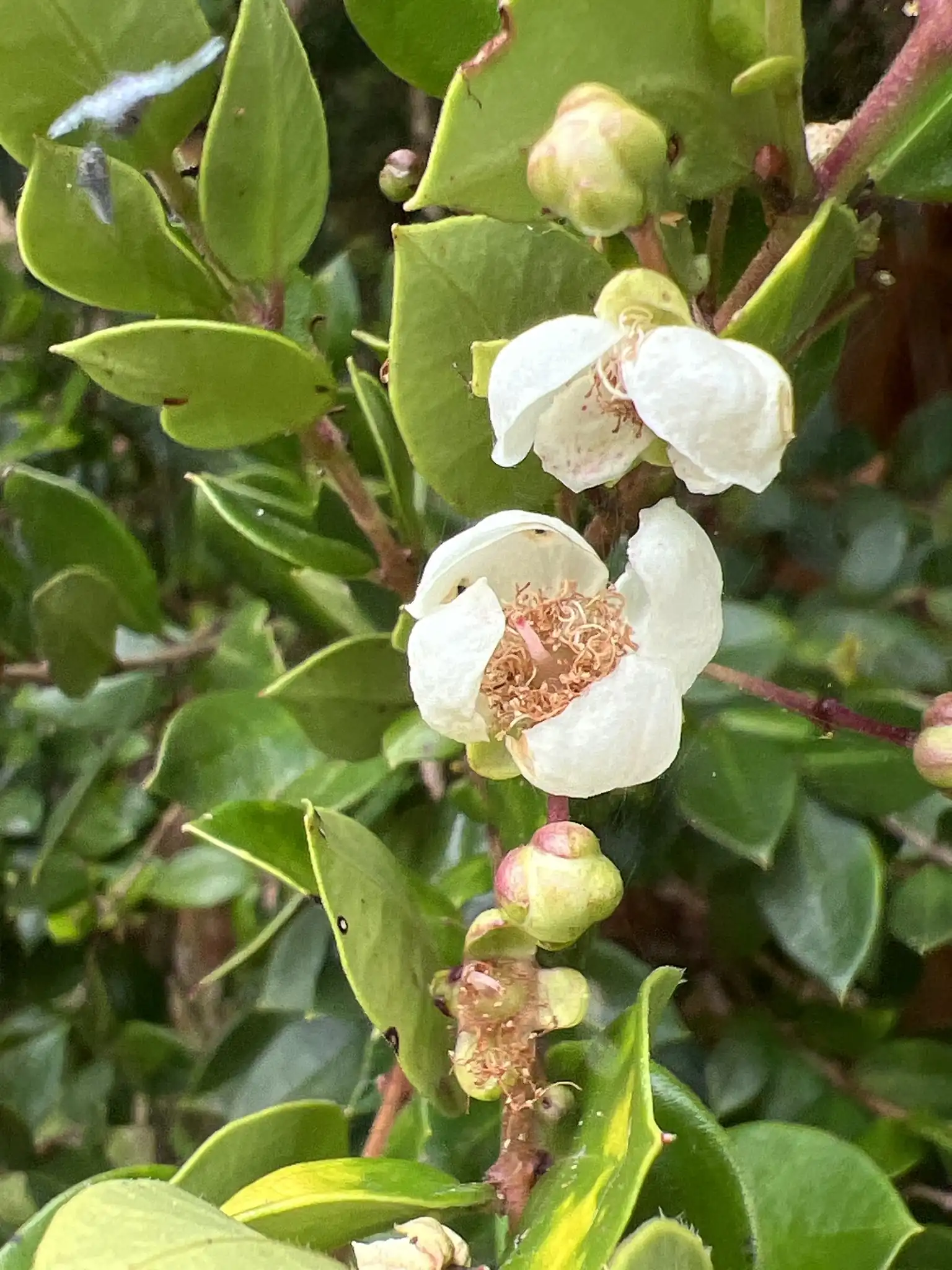
Luma apiculata, the Chilean myrtle, is an evergreen shrub or small tree reaching six to eight feet in gardens, with dense small oval glossy leaves that release scent when crushed. White solitary flowers with four to five waxy petals and a ring of prominent stamens with pink anthers open in summer, followed by round black-purple edible berries.
Cinnamon-brown bark peels and flakes to expose paler new bark, giving winter structure after flowers and fruit finish. It forms a bushy upright plant about as wide as tall that succeeds in infertile well-drained ground, where rich feeding and hard yearly shearing weaken growth.
Uses & Benefits:
Essentials
At a Glance
Plant Type
Shrub
Height
96"
Width
96"
Light
Full Sun, Partial Sun
Zones
8, 9, 10
Water
Moderate
Humidity
Average
Lifespan
Long-lived shrub
Native To
Chile and Argentina
Toxicity
Non-toxic
Bloom period
Summer – Fall
In flower about 6 months of the year
Marketplace
Where to Buy
Shipping costs Year-round shipping Free shipping
Planting
How to Grow
- Plant in full sun to light shade in well-drained, humus-rich but infertile soil.
- Set the root ball level with the soil surface and water deeply to settle.
- Mulch to conserve moisture but keep mulch clear of the stems.
- Water regularly the first season, then reduce; established plants take moderate drought.
Pro Tip
Grow it lean and leave it alone; rich fertilizer, constant watering and cutting back into bare wood set it back more than neglect ever will.
Keep It Thriving
Care Guide
Do
- Plant in well-drained soil and avoid overwatering once established.
- Remove dead, damaged or crossing shoots in spring to early summer.
- Leave the peeling bark intact to protect the trunk.
Don't
- Do not cut back into old bare wood or shear hard every year.
- Do not overfeed or plant in rich, heavily fertilized ground.
- Do not plant where water stands in winter.
Seasonal Care Calendar
| Task | Jan | Feb | Mar | Apr | May | Jun | Jul | Aug | Sep | Oct | Nov | Dec |
|---|---|---|---|---|---|---|---|---|---|---|---|---|
| Harvest | ||||||||||||
| Mulch | ||||||||||||
| Pest Check | ||||||||||||
| Plant | ||||||||||||
| Prune |
Watch Out For
Pests & Diseases
Common Pests
Common Diseases
In the Garden
Landscape Uses & Companions
Landscape Uses
Multiply
Propagation Methods
Good to Know
Common Questions
Chilean Myrtle questions
What zones can Chilean Myrtle grow in?
Chilean Myrtle is hardy in USDA Zones 8–10: in that range it survives winter in the ground. Colder than Zone 8, grow it in a container you can move to shelter for the winter.
Is Chilean Myrtle deer resistant?
Yes — Chilean Myrtle is rated deer-resistant. Deer typically pass it over, though extreme hunger can override any plant's defenses.
When does Chilean Myrtle bloom?
Chilean Myrtle typically blooms from summer to fall. Exact timing shifts a week or two with your zone — Sow's bloom calendar maps it to your garden.
Does Chilean Myrtle need full sun?
Chilean Myrtle does best in full sun to part shade. In hot climates, afternoon shade keeps blooms fresher longer.
Is Chilean Myrtle drought tolerant?
Yes — once established (usually after the first full season), Chilean Myrtle handles dry spells with minimal watering. Water deeply its first year to build the root system that makes that possible.
Keep exploring
Explore the genus
Hardy in your zone?
Grow Chilean Myrtle with confidence
See it in a design of your actual yard, get zone-matched care reminders, and track it season by season in your garden journal.