The Story
Plant Bio
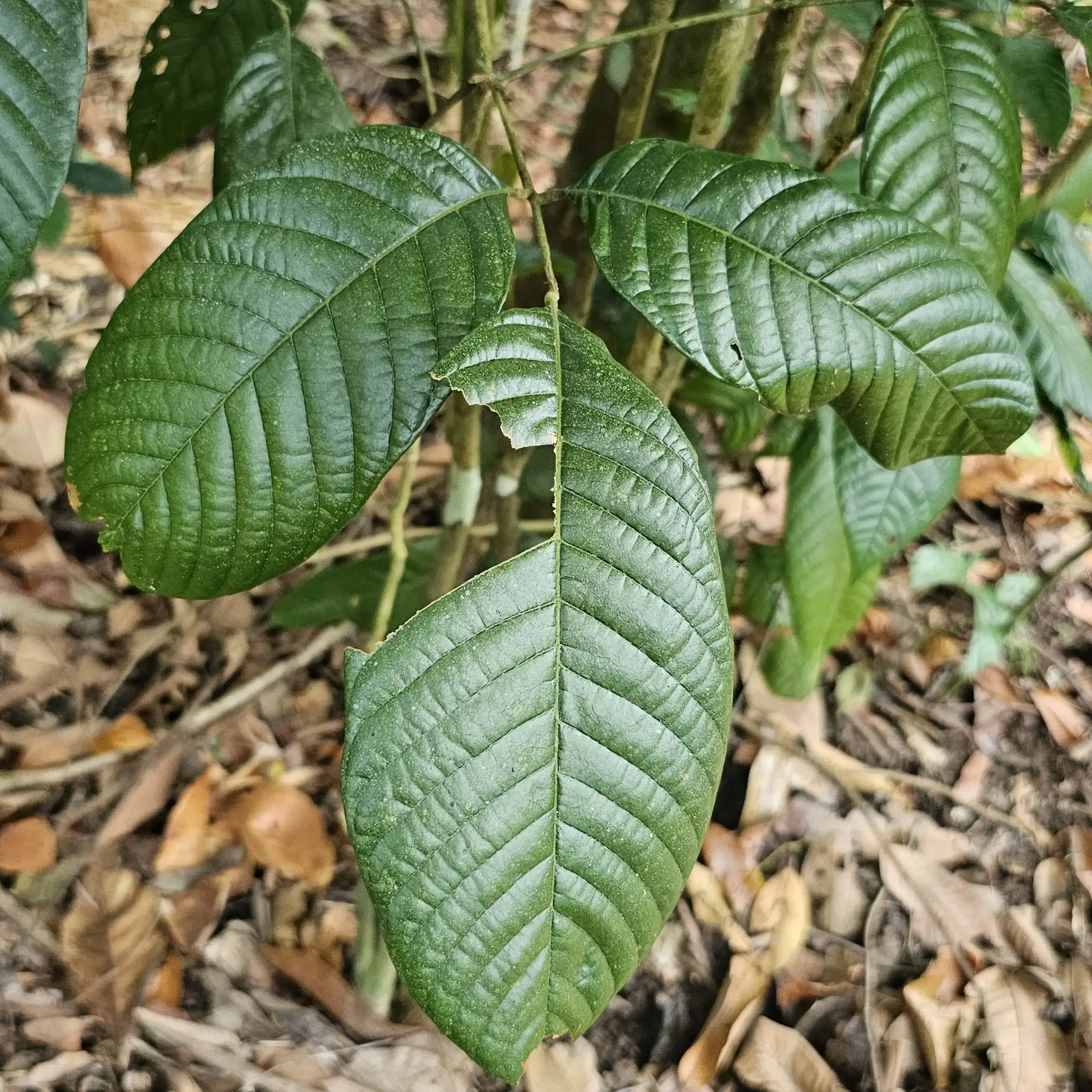
Dimocarpus longan is an evergreen tree of Southeast Asian lowland forest that builds a tall trunk with rough bark and a broad crown of spreading branches with slightly drooping densely leafy tips. Leaves are pinnate with oblong glossy leaflets that persist year-round, and upright terminal panicles 4 to 18 inches long carry mingled male and female flowers that develop into thin-skinned fruit with translucent flesh around a large seed.
Sold as Dimocarpus malesianus, this Malesian form is the wild small-fruited longan of Borneo, Malaya, Sumatra and the Philippines, reaching about 30 feet in gardens and over 100 feet in forest. Fruit is smaller and more variable than commercial longan, with warty yellow-green skin and translucent flesh that can carry a musky note, and the tree requires frost-free tropical heat with full sun and humid air to grow and ripen.
Uses & Benefits:
Essentials
At a Glance
Plant Type
Tree
Height
360"
Width
360"
Light
Full Sun
Zones
9, 10
Water
Moderate
Humidity
High
Lifespan
Long-lived tree
Native To
Southeast Asia
Toxicity
Non-toxic
Bloom period
Spring
In flower about 3 months of the year
Planting
How to Grow
- Set the tree in full sun with 80 to 100 percent light, spacing 30 feet for a spreading crown.
- Plant high in well-draining compost-amended soil at pH 5.5 to 6.5, leaving the root flare exposed.
- Build a wide mulch basin and hold mulch 4 inches off the trunk to keep bark dry.
- Water regularly through establishment and maintain humid tropical conditions; do not let the root zone dry hard or stay flooded.
- Protect from any freeze and prune lightly after harvest to keep the crown compact for picking.
Pro Tip
Plant high with the root flare exposed, hold mulch 4 inches clear of the trunk in a wide basin, and protect from any freeze; buried stems and cold air stall this tree fast.
Keep It Thriving
Care Guide
Do
- Water regularly until established and maintain humidity
- Mulch in a wide basin kept clear of the trunk
- Plant in full sun in well-drained acidic soil
- Inspect fruit clusters and leaf undersides for webworm, scale and mealybug
Don't
- Do not plant deep or pile mulch against the trunk
- Do not expose to frost or freezing wind
- Do not expect commercial longan size or flavor from seedling fruit
- Do not let soil stay waterlogged
Seasonal Care Calendar
| Task | Jan | Feb | Mar | Apr | May | Jun | Jul | Aug | Sep | Oct | Nov | Dec |
|---|---|---|---|---|---|---|---|---|---|---|---|---|
| Mulch | ||||||||||||
| Pest Check | ||||||||||||
| Plant | ||||||||||||
| Prune | ||||||||||||
| Winter Prep |
Watch Out For
Pests & Diseases
Common Pests
Common Diseases
In the Garden
Landscape Uses & Companions
Landscape Uses
Companion Plants
Multiply
Propagation Methods
Good to Know
Common Questions
Alupag questions
What zones can Alupag grow in?
Alupag is hardy in USDA Zones 9–10: in that range it survives winter in the ground. Colder than Zone 9, winters are too cold for it to survive outdoors.
When does Alupag bloom?
Alupag typically blooms in spring. Exact timing shifts a week or two with your zone — Sow's bloom calendar maps it to your garden.
Does Alupag need full sun?
Alupag does best in full sun (6+ hours).
Keep exploring
Explore the genus
Hardy in your zone?
Grow Alupag with confidence
See it in a design of your actual yard, get zone-matched care reminders, and track it season by season in your garden journal.