Also known as Guava · 7 saves
Psidium
Psidium, the genus most gardeners know as guava. We track 3 varieties; the ones most used by real gardeners.
The 3 most-saved Psidium varieties
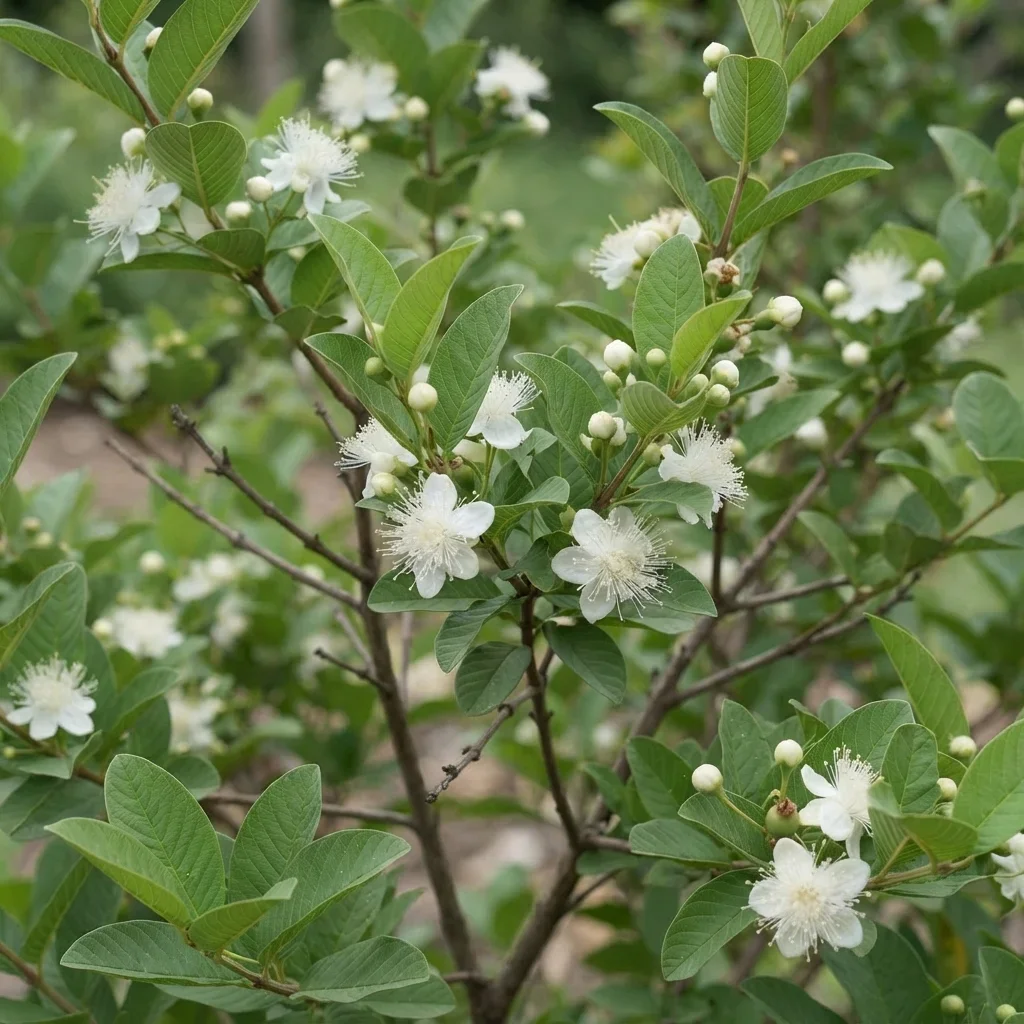
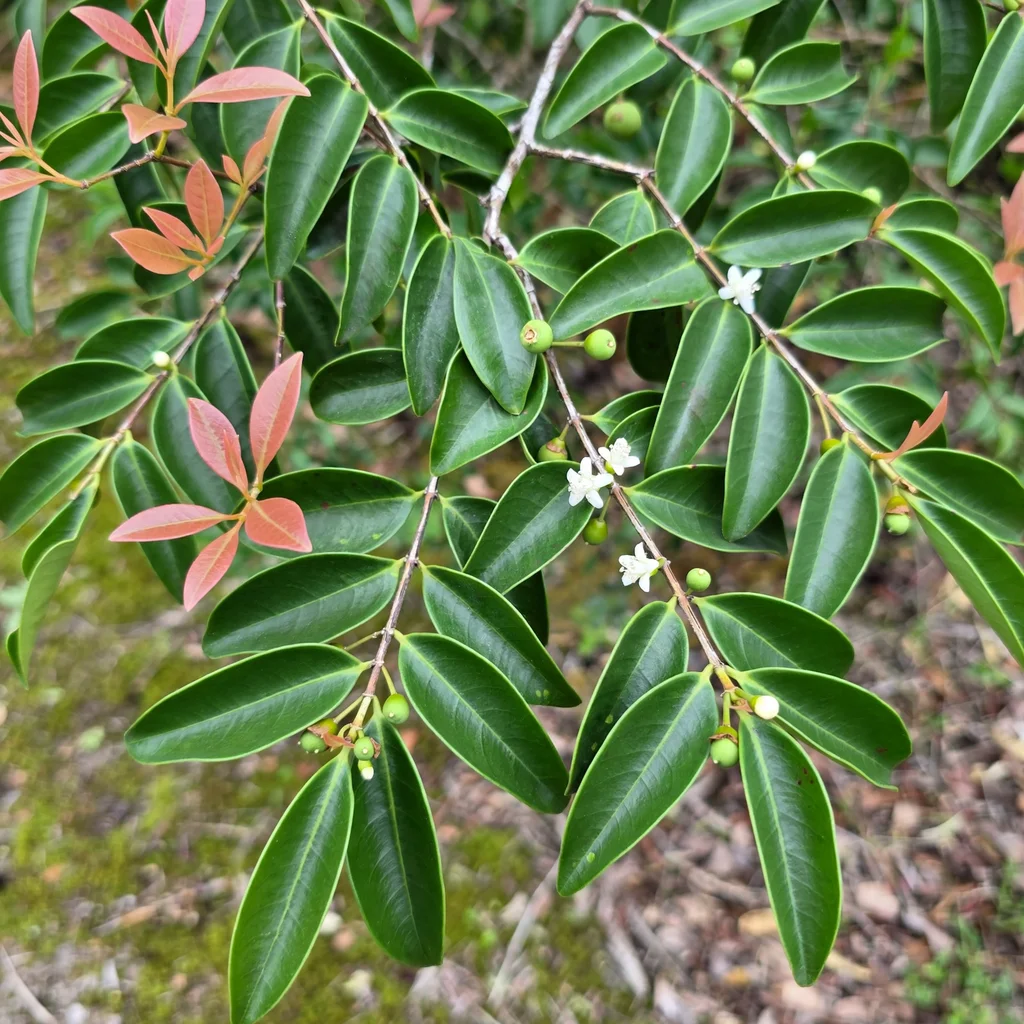
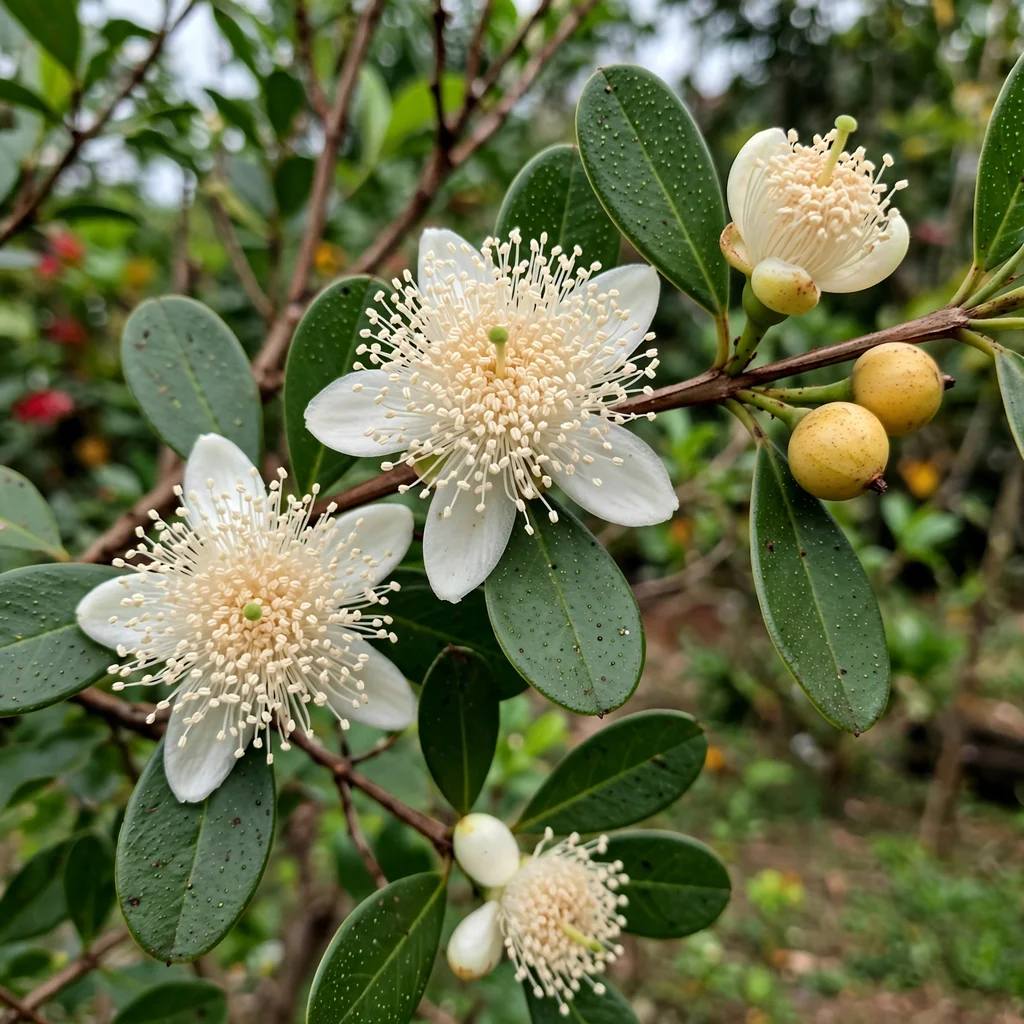
2 species of Psidium
Each one is a parent of the varieties above.
Track your Psidium in Sow
Save the Psidium you grow and get care reminders timed to your zone.
How to grow Psidium
Whats common across all Psidium varieties in our catalog — drawn from the care records of the 3 most-grown of them.
The Psidium year
- PruneFebruary and March100% of varieties
Thin and shape after fruiting to encourage new fruiting wood.
- FertilizeMarch and April100% of varieties
Apply a balanced fertilizer at spring growth onset.
- Check for PestsJune67% of varieties
Check leaf undersides for spider mites in hot dry weather.
- Winter PrepNovember67% of varieties
Cover or move containers of young plants before frost.
- HarvestSeptember and October67% of varieties
Harvest fruits when they become fragrant and soften slightly.


Do
- Grow in full sun for best fruiting with afternoon shade tolerated in hot sites
- Allow soil to drain freely and water deeply during establishment
- Prune after fruiting to keep a compact crown
- Water regularly to keep soil moist but not waterlogged 🌱
- Provide full sun for at least 6 hours daily
Avoid
- Do not plant in flooded or constantly wet ground
- Do not expose young plants to hard frost without protection
- Do not cut back into old leafless wood to reshape
- Avoid overwatering, which can cause root rot ❌
What goes wrong with Psidium
| Problem | What you'll see | What to do |
|---|---|---|
| Spider mites | Pale stippled leaves and fine webbing, worst under glass or in hot dry air | Wash foliage with a strong jet of water and improve airflow; apply insecticidal soap for persistent outbreaks |
| Guava fruit fly | Larvae tunnel into fruit causing soft spots and rot | Use organic traps or insecticidal soap |
| Aphids | Sticky residue and distorted leaves | Apply neem oil or insecticidal soap |
| Guava whitefly | Yellowing leaves with white insects and sticky honeydew on undersides | Wash off with water and apply insecticidal soap or horticultural oil |
| Anthracnose | Dark, sunken spots on fruit and leaves | Apply copper-based fungicide and improve air circulation |
| Root rot | Wilting and yellowing leaves with soft roots | Ensure well-draining soil and reduce watering |
Making more Psidium
seed
- Sow fresh seed promptly, as viability drops in storage.
- Surface-sow in moist free-draining mix and cover lightly.
- Hold warm and evenly moist; expect sprouting in 28 to 35 days with low germination.
- Grow on in bright light and pot up when seedlings have several true leaves.
cuttings
- Take semi-hardwood cuttings from current-season growth.
- Trim to 4 to 6 inches, remove lower leaves and wound the base.
- Insert in moist perlite and peat and hold warm with high humidity.
- Pot up once roots resist a gentle tug.
Psidium questions
How many types of Psidium are there?
The Sow catalog tracks 3 distinct Psidium varieties. The most popular — ranked by 7 real gardeners — are shown first above.
What zones does Psidium grow in?
Across its varieties, Psidium covers USDA Zones 9–10. Individual varieties differ — each plant page lists its exact range, and Sow filters the catalog to your zone automatically.
When does Psidium bloom?
Most Psidium varieties bloom from late spring to late summer.
Which Psidium should I choose?
Start from the most-saved varieties above — popularity across thousands of gardens is a strong signal of reliability — then filter by your zone and sun. In the Sow app you can preview any of them in a photo of your actual yard before you buy.