The Story
Plant Bio
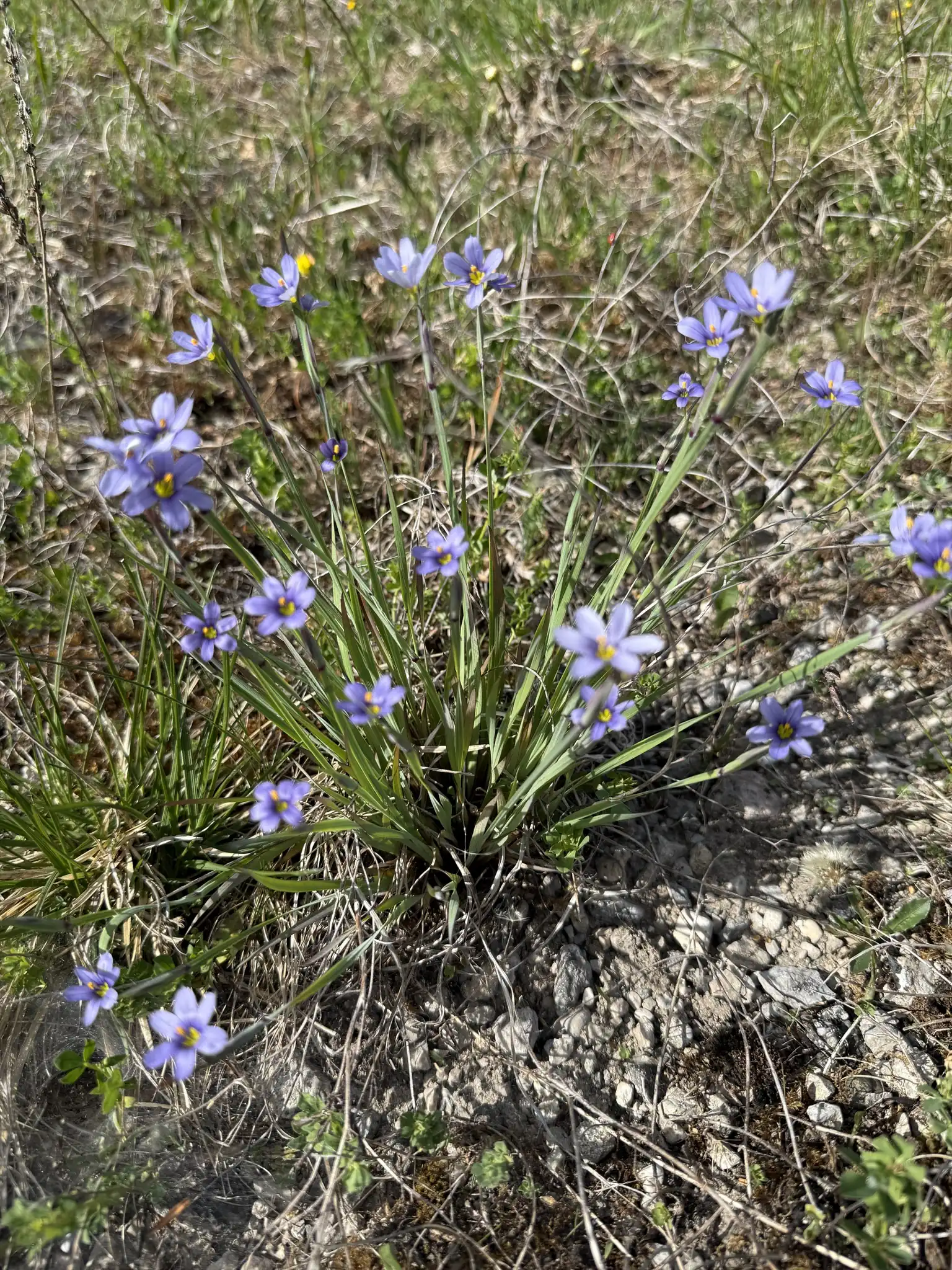
Sisyrinchium montanum is a clump-forming herbaceous perennial in the iris family native to moist meadows, prairies, and open woods across North America. It produces narrow, grass-like basal leaves alongside flattened, winged stems that carry small clusters of violet-blue star-shaped flowers with bright yellow centers.
Although foliage resembles lawn grass, the plant forms distinct flattened fans and produces six-tepaled blooms that open fully in direct sunlight. The outer spathe bract enclosing the terminal flower cluster is noticeably longer than the inner bract, distinguishing this species from related blue-eyed grasses.
Uses & Benefits:
Essentials
At a Glance
Plant Type
Perennial
Height
20"
Width
8"
Light
Full Sun, Partial Sun
Zones
4, 5, 6, 7, 8
Water
Medium
Humidity
Moderate
Lifespan
Perennial
Native To
North America
Toxicity
Non-toxic
Bloom period
Late spring – Midsummer
In flower about 3 months of the year
Planting
How to Grow
- Select a site in full sun to partial shade with light, sandy or loamy soil.
- Amend heavy soils with coarse sand or organic compost to ensure free drainage.
- Plant container stock or plugs level with the surrounding soil, firming gently without burying the crown.
- Water thoroughly after planting until roots establish, maintaining even soil moisture through the first summer.
Pro Tip
Position the root crown flush with the soil line during planting, as setting the crown too deeply in stagnant or waterlogged soil causes rapid crown rot.
Keep It Thriving
Care Guide
Do
- Provide full sunlight to encourage maximum flower opening.
- Divide dense clumps every two to three years to maintain vigor.
- Shear back spent flower stems to prevent unwanted self-seeding.
Don't
- Do not plant in soggy clay soils that retain water year-round.
- Do not mow or cut into the root crown during the growing season.
- Do not apply heavy doses of nitrogen fertilizer.
Seasonal Care Calendar
| Task | Jan | Feb | Mar | Apr | May | Jun | Jul | Aug | Sep | Oct | Nov | Dec |
|---|---|---|---|---|---|---|---|---|---|---|---|---|
| Divide | ||||||||||||
| Mulch | ||||||||||||
| Prune | ||||||||||||
| Spring Cleanup |
Watch Out For
Pests & Diseases
Common Pests
Common Diseases
In the Garden
Landscape Uses & Companions
Landscape Uses
Multiply
Propagation Methods
Good to Know
Common Questions
Mountain Blue-Eyed Grass questions
What zones can Mountain Blue-Eyed Grass grow in?
Mountain Blue-Eyed Grass is hardy in USDA Zones 4–8: in that range it survives winter in the ground. Warmer than Zone 8, winter isn't the problem: it prefers colder winters, and summer heat can shorten its life.
Is Mountain Blue-Eyed Grass deer resistant?
Yes — Mountain Blue-Eyed Grass is rated deer-resistant. Deer typically pass it over, though extreme hunger can override any plant's defenses.
When does Mountain Blue-Eyed Grass bloom?
Mountain Blue-Eyed Grass typically blooms from late spring to mid-summer. Exact timing shifts a week or two with your zone — Sow's bloom calendar maps it to your garden.
Does Mountain Blue-Eyed Grass need full sun?
Mountain Blue-Eyed Grass does best in full sun to part shade. In hot climates, afternoon shade keeps blooms fresher longer.
Is Mountain Blue-Eyed Grass drought tolerant?
Yes — once established (usually after the first full season), Mountain Blue-Eyed Grass handles dry spells with minimal watering. Water deeply its first year to build the root system that makes that possible.
More Sisyrinchium to compare
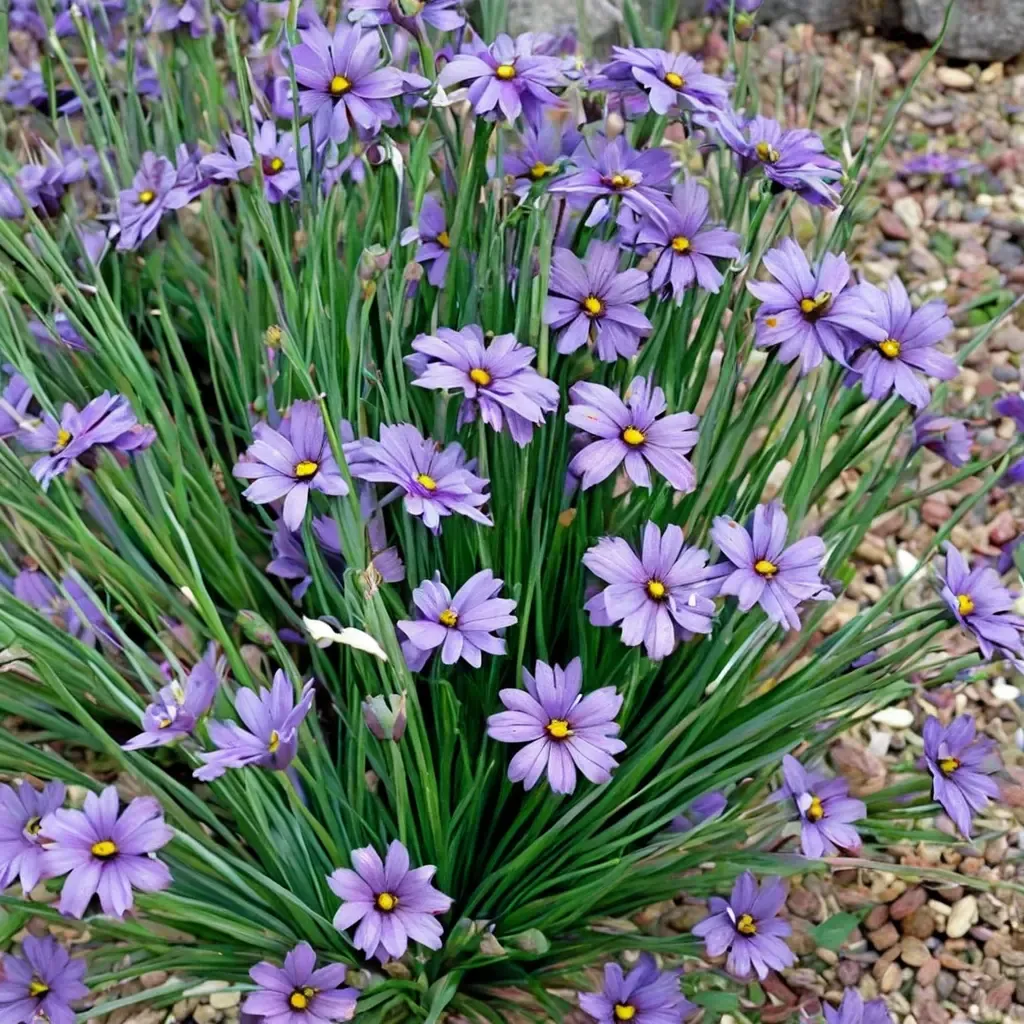
Lucerne Blue-eyed Grass
Sisyrinchium angustifolium 'Lucerne'
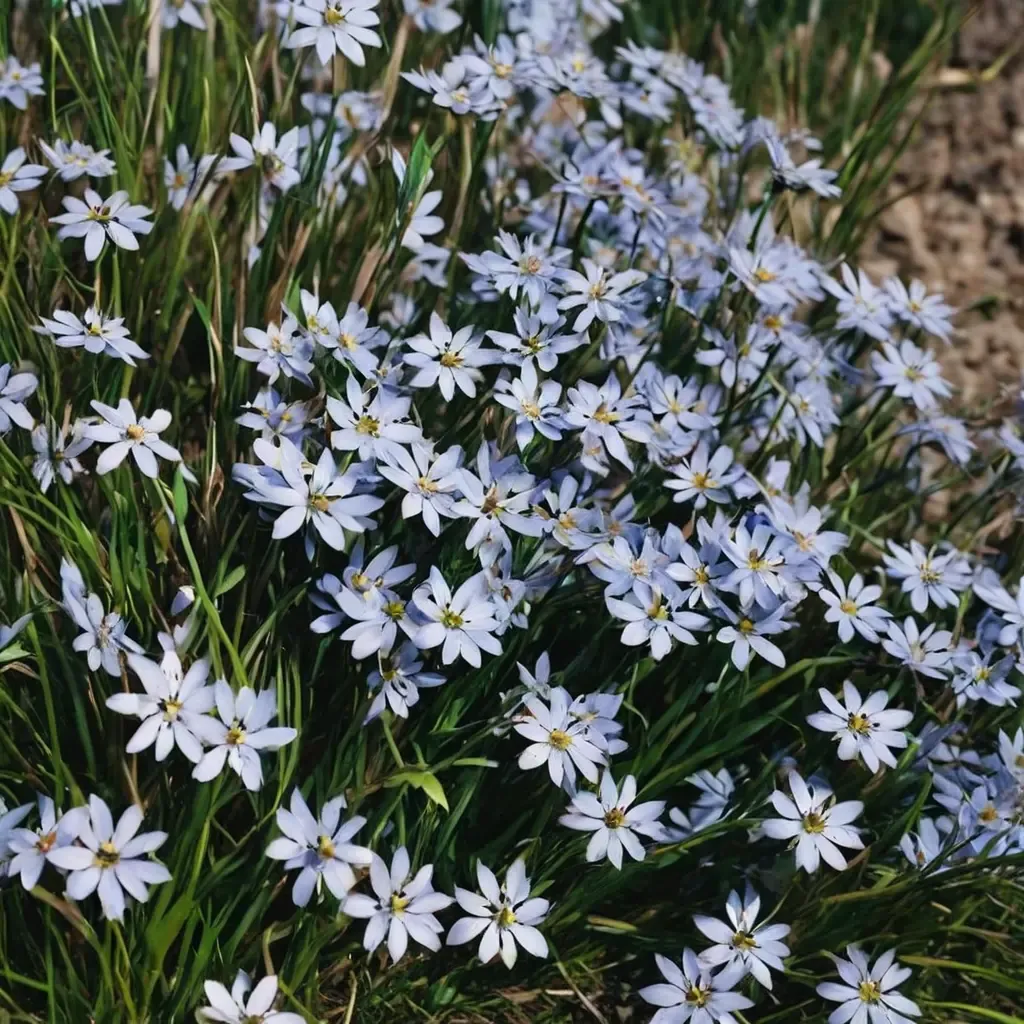
Suwannee Blue-eyed Grass
Sisyrinchium nashii 'Suwannee'
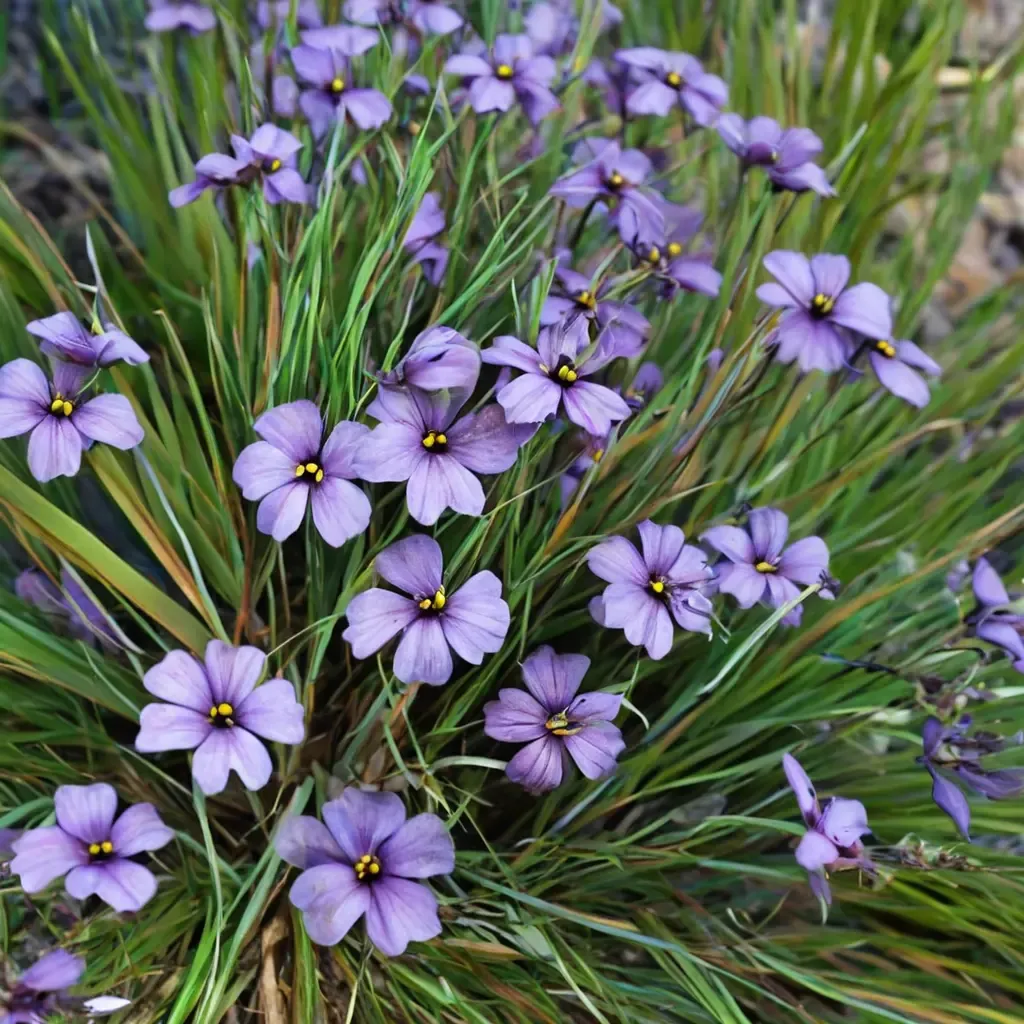
Western Blue-eyed Grass
Sisyrinchium bellum
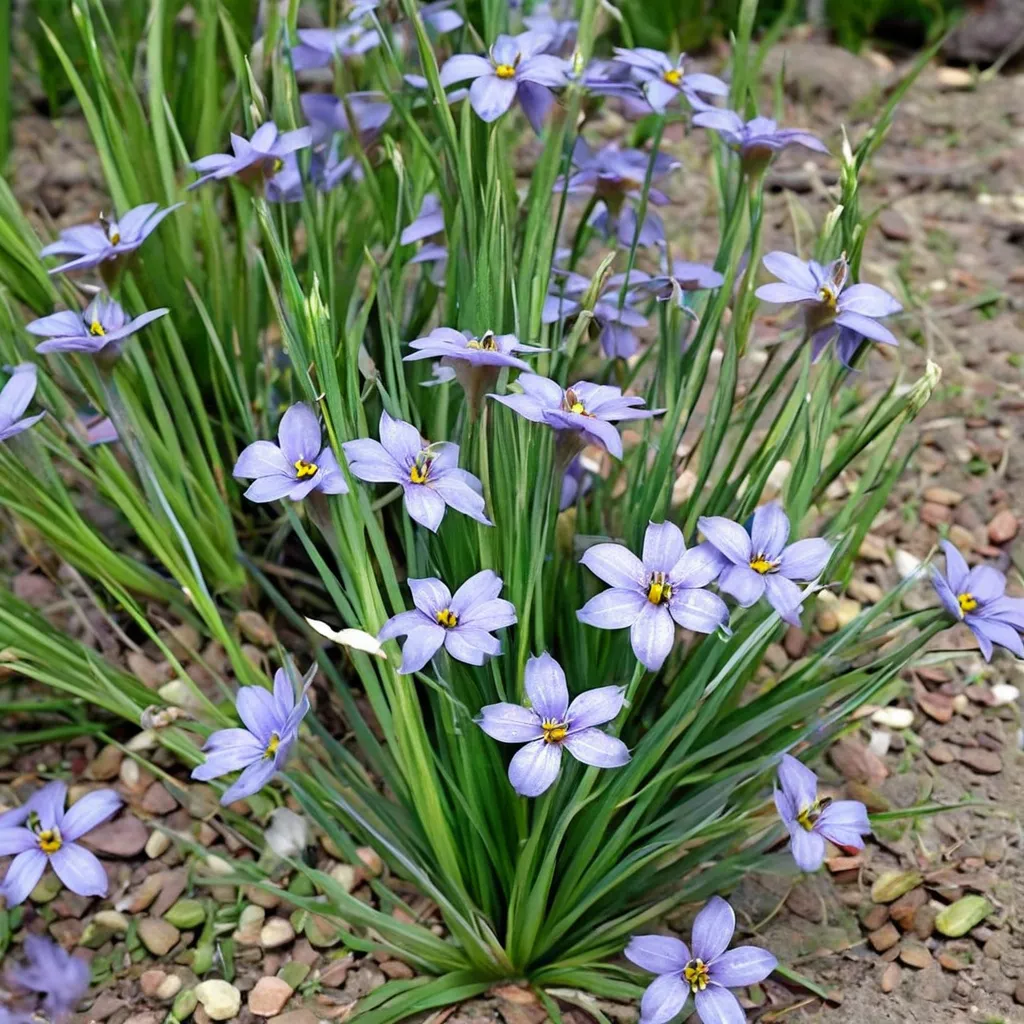
Narrow-leaved Blue-eyed Grass
Sisyrinchium angustifolium
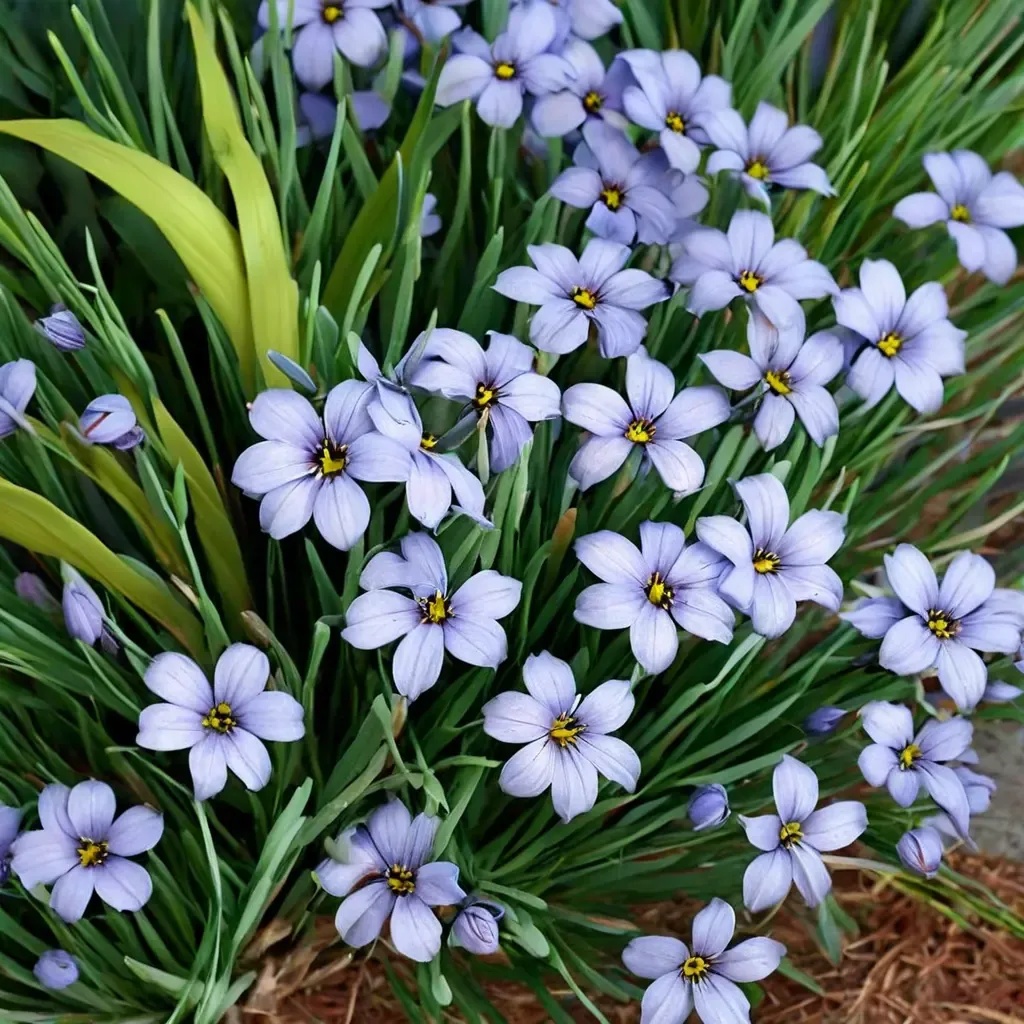
Devon Skies Blue-Eyed Grass
Sisyrinchium x hybrida 'Devon Skies'
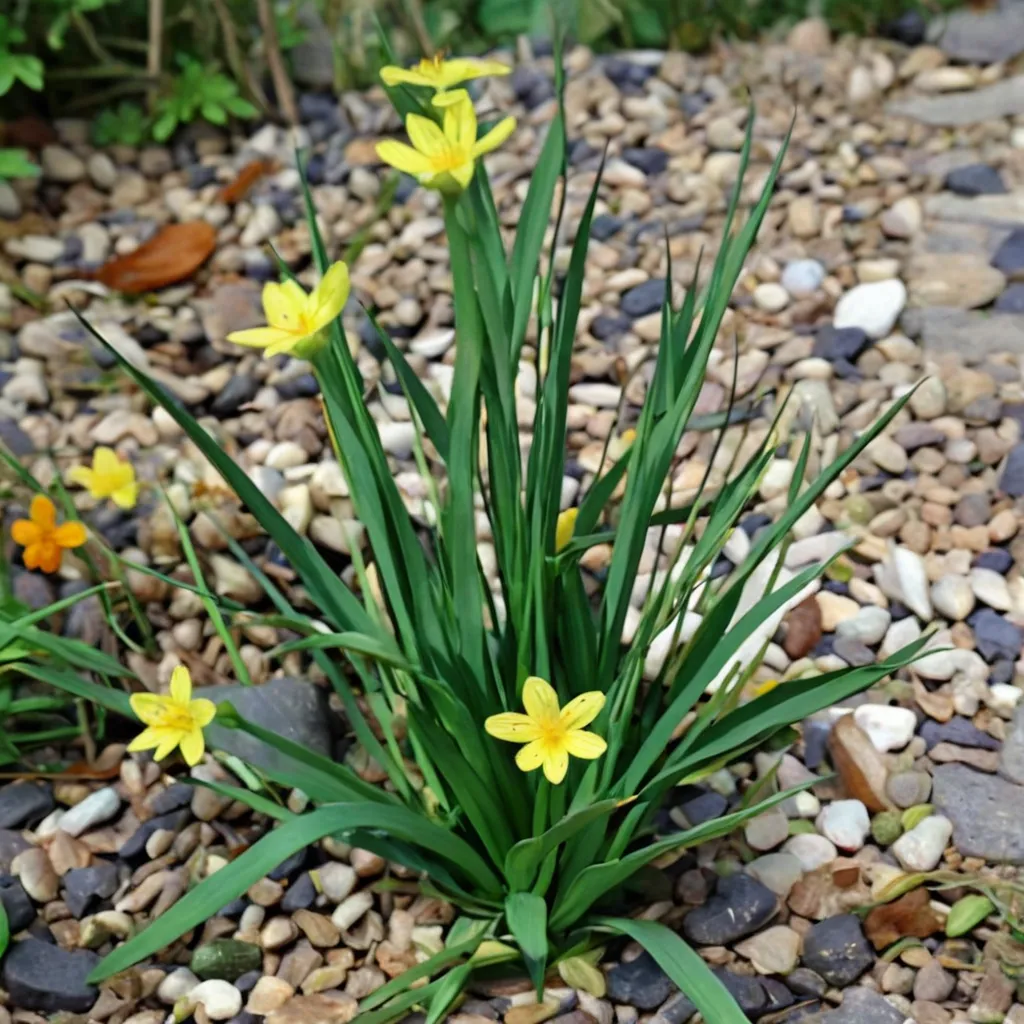
Blue-eyed Grass
Sisyrinchium brachypus
Keep exploring
Explore the genus
Hardy in your zone?
Grow Mountain Blue-Eyed Grass with confidence
See it in a design of your actual yard, get zone-matched care reminders, and track it season by season in your garden journal.