The Story
Plant Bio
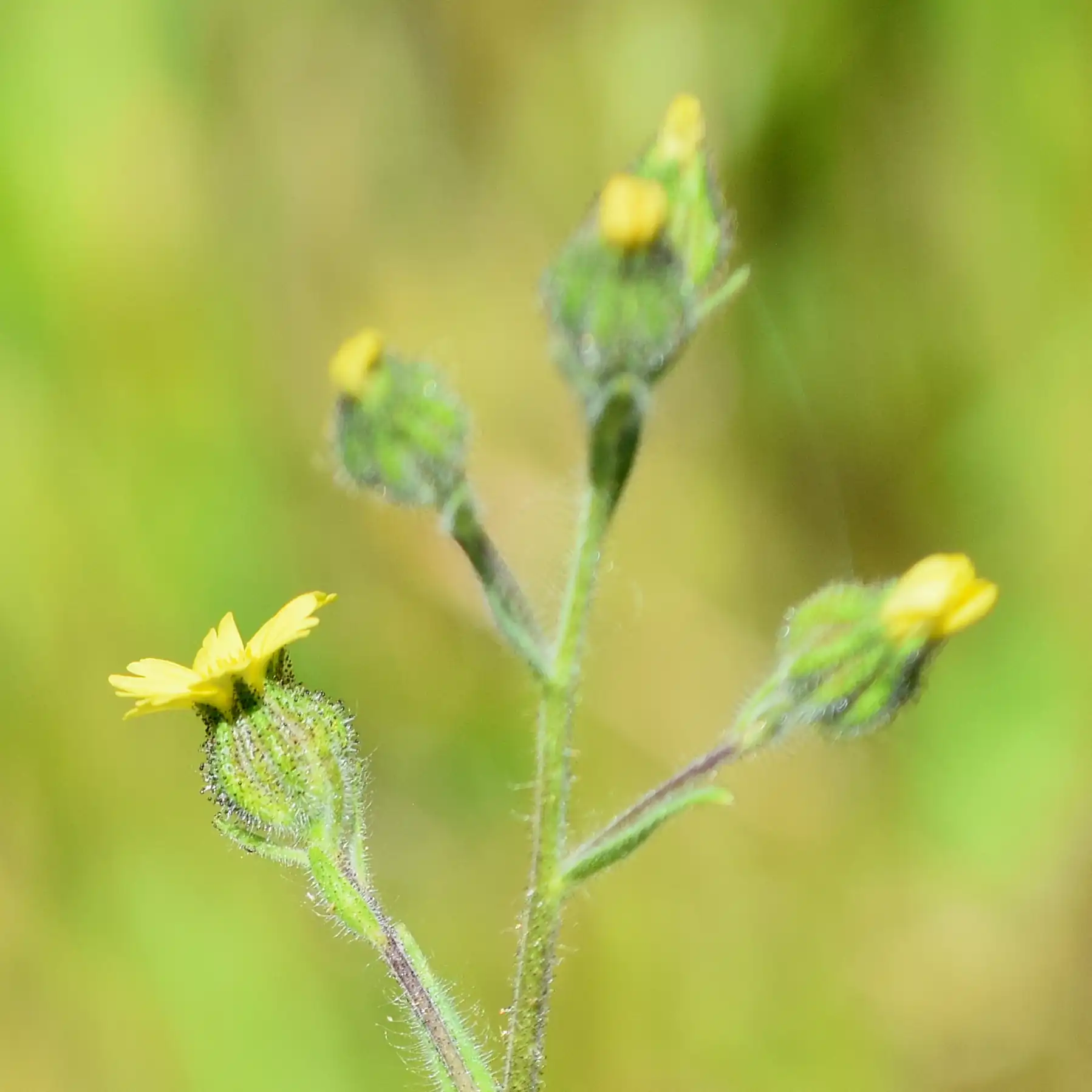
Madia gracilis is an upright annual herb native to open slopes and dry grasslands across western North America. Its narrow foliage and stems are covered in sticky, glandular hairs that release a distinct lemon fragrance when touched.
Small lemon-yellow flower heads open from late spring through fall, featuring lobed ray petals that encircle dark central anthers. The sticky stem secretions act as a physical barrier against crawling sap-sucking insects, protecting the upper flower clusters.
Uses & Benefits:
Essentials
At a Glance
Plant Type
Annual
Height
31"
Width
12"
Light
Full Sun
Zones
5, 6, 7, 8, 9
Water
Low
Humidity
Low
Lifespan
Annual
Native To
Western North America
Toxicity
Non-toxic (may cause mild skin irritation)
Bloom period
Late spring – Fall
In flower about 7 months of the year
Planting
How to Grow
- Select a site in full sun featuring dry, sandy, or gravelly soil.
- Scatter seeds directly over bare, unamended soil in fall or early spring and press lightly.
- Water lightly to prompt germination, then reduce irrigation as seedlings establish deep roots.
- Allow plants to flower, set seed, and complete their annual cycle naturally.
Pro Tip
Sow seed directly into lean, well-drained gravelly soil in full sun; rich compost and heavy irrigation induce weak, floppy stems and severe powdery mildew.
Keep It Thriving
Care Guide
Do
- Provide sharp drainage and unfiltered full sun exposure.
- Let the soil dry out thoroughly between light waterings.
- Allow flower heads to drop seed in fall to maintain self-sustaining colonies.
Don't
- Do not apply nitrogen fertilizers, which produce weak and top-heavy growth.
- Do not plant in damp, humid, or poorly ventilated garden locations.
- Do not apply heavy organic mulch around plant bases.
Seasonal Care Calendar
| Task | Jan | Feb | Mar | Apr | May | Jun | Jul | Aug | Sep | Oct | Nov | Dec |
|---|---|---|---|---|---|---|---|---|---|---|---|---|
| Deadhead | ||||||||||||
| Pest Check | ||||||||||||
| Plant | ||||||||||||
| Spring Cleanup |
Watch Out For
Pests & Diseases
Common Pests
Common Diseases
In the Garden
Landscape Uses & Companions
Landscape Uses
Multiply
Propagation Methods
Good to Know
Common Questions
Grassy Tarweed questions
What zones can Grassy Tarweed grow in?
Grassy Tarweed is an annual: it grows, flowers and sets seed in one season, so winter cold doesn't limit where it grows. Gardeners in any zone can grow it by planting at the right time, usually after the last spring frost.
Is Grassy Tarweed deer resistant?
Not reliably. Deer may browse Grassy Tarweed, especially tender spring growth — plan on repellents or fencing where pressure is high.
When does Grassy Tarweed bloom?
Grassy Tarweed typically blooms from late spring to late fall. Exact timing shifts a week or two with your zone — Sow's bloom calendar maps it to your garden.
Does Grassy Tarweed need full sun?
Grassy Tarweed does best in full sun (6+ hours).
Is Grassy Tarweed drought tolerant?
Yes — once established (usually after the first full season), Grassy Tarweed handles dry spells with minimal watering. Water deeply its first year to build the root system that makes that possible.
More Madia to compare

Keep exploring
Explore the genus
Hardy in your zone?
Grow Grassy Tarweed with confidence
See it in a design of your actual yard, get zone-matched care reminders, and track it season by season in your garden journal.