The Story
Plant Bio
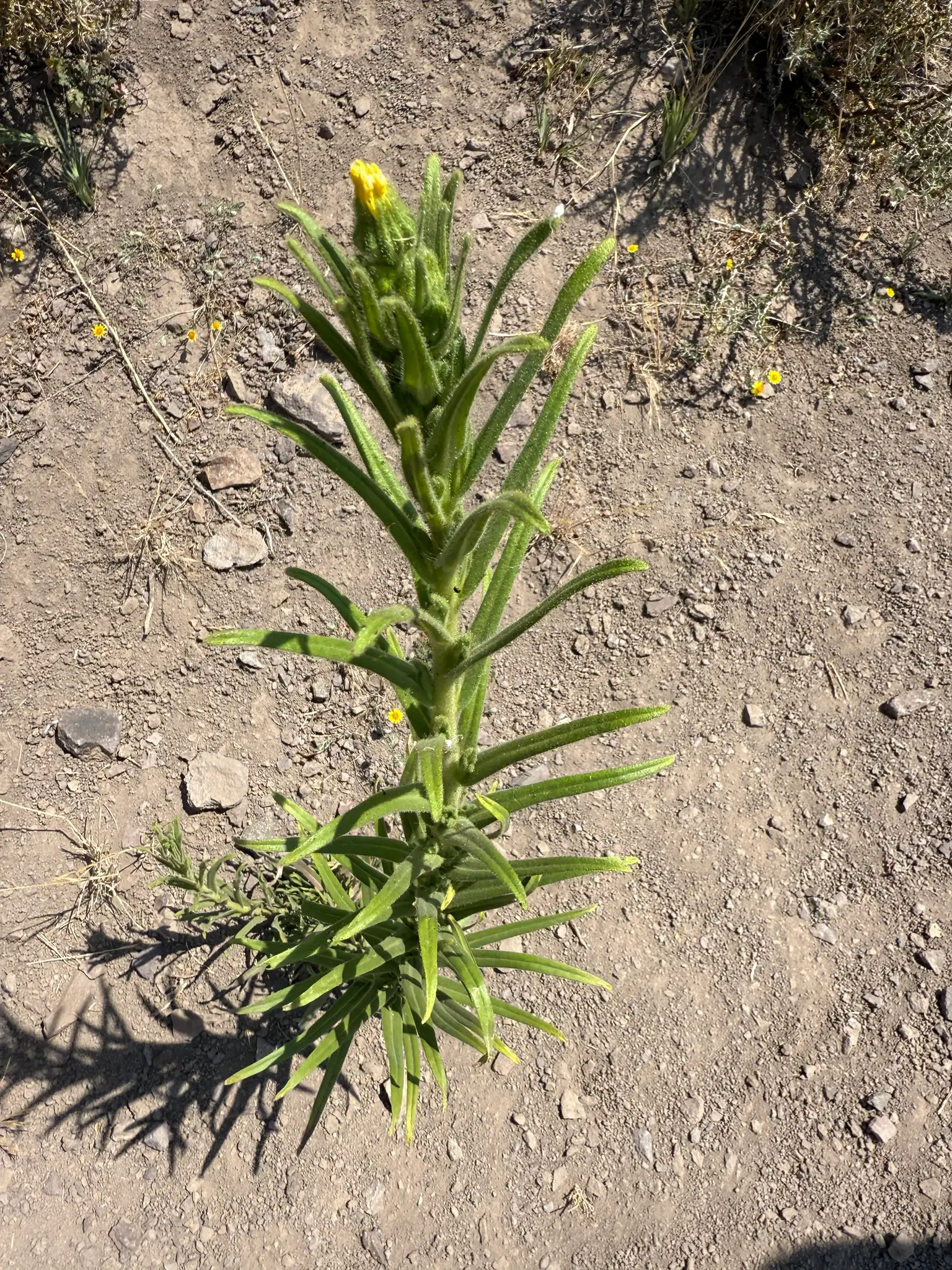
Madia sativa, commonly known as coast tarweed, is an erect annual native to western North America and South America with stiff stems covered in sticky, glandular hairs. The plants produce dense clusters of small yellow flower heads from summer into early fall, releasing a strong, pungent aroma.
The stems and foliage are coated in a visceral resin that deters insect herbivores and traps dust in arid coastal or inland conditions. Heavy production of oil-rich seeds makes it a valuable autumn food source for seed-eating birds.
Uses & Benefits:
Essentials
At a Glance
Plant Type
Annual
Height
94"
Width
24"
Light
Full Sun
Zones
6, 7, 8, 9, 10
Water
Low
Humidity
Tolerates coastal maritime conditions
Lifespan
Annual
Native To
Western North America, South America
Toxicity
Non-toxic (can cause skin irritation)
Bloom period
Summer – Early fall
In flower about 4 months of the year
Planting
How to Grow
- Select a full-sun location with well-draining sandy, loamy, or clay soil.
- Sow seeds directly outdoors in early spring, lightly pressing them into bare soil.
- Water sparingly during germination until roots establish.
- Cease watering once plants reach active growth to prevent root rot.
Pro Tip
Withhold summer irrigation once seedlings establish, as wet soil causes weak, leggy stems and encourages fatal root rot.
Keep It Thriving
Care Guide
Do
- Provide full sun exposure throughout the growing season.
- Ensure high soil drainage to protect root systems.
- Mow or pull plants before seed heads ripen if self-seeding must be controlled.
Don't
- Do not overwater or use automatic overhead sprinklers.
- Do not apply excess fertilizer, which induces weak, rank stem growth.
- Do not handle plants bare-handed if susceptible to resinous contact dermatitis.
Seasonal Care Calendar
| Task | Jan | Feb | Mar | Apr | May | Jun | Jul | Aug | Sep | Oct | Nov | Dec |
|---|---|---|---|---|---|---|---|---|---|---|---|---|
| Harvest | ||||||||||||
| Pest Check | ||||||||||||
| Propagate | ||||||||||||
| Prune |
Watch Out For
Pests & Diseases
Common Pests
Common Diseases
In the Garden
Landscape Uses & Companions
Landscape Uses
Companion Plants
Multiply
Propagation Methods
Good to Know
Common Questions
Coast Tarweed questions
What zones can Coast Tarweed grow in?
Coast Tarweed is an annual: it grows, flowers and sets seed in one season, so winter cold doesn't limit where it grows. Gardeners in any zone can grow it by planting at the right time, usually after the last spring frost.
Is Coast Tarweed deer resistant?
Not reliably. Deer may browse Coast Tarweed, especially tender spring growth — plan on repellents or fencing where pressure is high.
When does Coast Tarweed bloom?
Coast Tarweed typically blooms from early summer to early fall. Exact timing shifts a week or two with your zone — Sow's bloom calendar maps it to your garden.
Does Coast Tarweed need full sun?
Coast Tarweed does best in full sun (6+ hours).
Is Coast Tarweed drought tolerant?
Yes — once established (usually after the first full season), Coast Tarweed handles dry spells with minimal watering. Water deeply its first year to build the root system that makes that possible.
More Madia to compare

Keep exploring
Explore the genus
Hardy in your zone?
Grow Coast Tarweed with confidence
See it in a design of your actual yard, get zone-matched care reminders, and track it season by season in your garden journal.