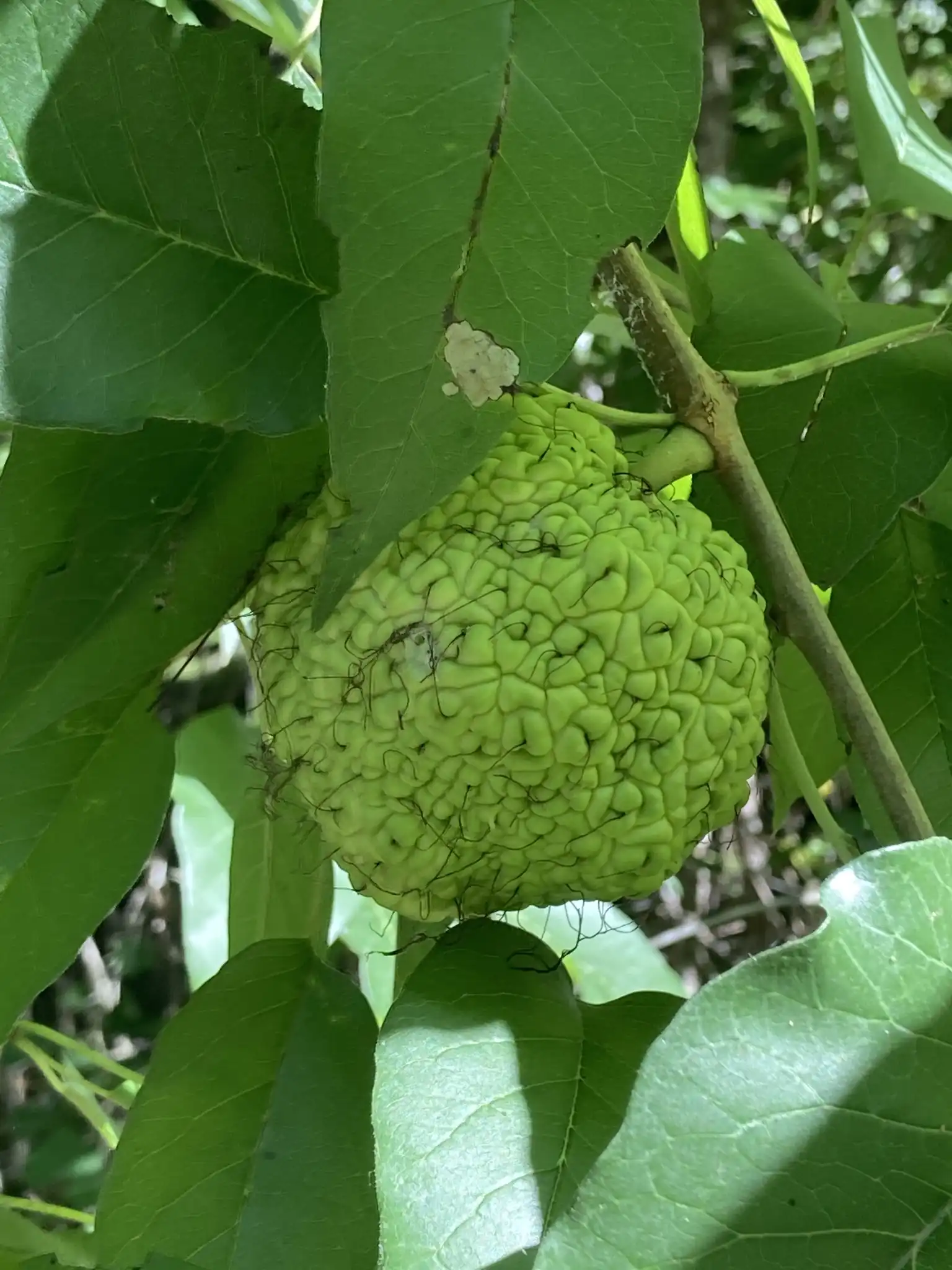
1 named cultivar
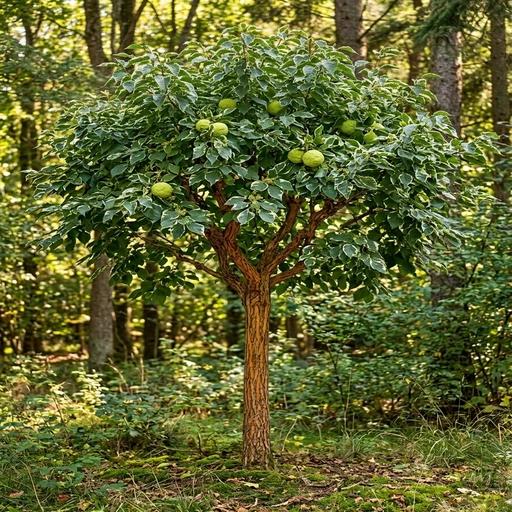
The Story
Plant Bio
Maclura pomifera, or Osage orange, is a fast-growing deciduous tree from the Red River country of south-eastern Oklahoma, Texas and Arkansas. It builds a rounded, low-branched crown of 25 to 70 ft on deeply furrowed orange-brown bark, with zig-zag thorny shoots and glossy oval leaves that turn clear yellow. Male and female flowers sit on separate trees.
Female trees drop 4 to 6 in wrinkled green fruits that look like warty oranges; they are inedible and bleed a sticky white latex when cut. The heartwood is among the most rot-resistant of any North American timber and was the standard fence-post and hedgerow wood of the prairies before barbed wire.
Uses & Benefits:
Essentials
At a Glance
Plant Type
Tree
Height
480"
Width
420"
Light
Full Sun
Zones
4, 5, 6, 7, 8, 9
Water
Low once established
Humidity
Tolerates dry air and wind
Lifespan
Long-lived; often over 100 years
Native To
South-eastern Oklahoma, Texas and Arkansas
Toxicity
Fruit inedible; the milky sap can irritate skin and eyes
Planting
How to Grow
- Plant in full sun; it will not thrive in shade.
- Allow 25 to 40 ft of clear space away from paths and drives.
- Set the root ball level with the surrounding soil and water it in well.
- Choose a male or fruitless clone if falling fruit would be a nuisance.
- Water deeply through the first two summers, then leave it alone.
- Prune in winter to lift the crown and take out crossing thorny limbs.
Pro Tip
Wear thick gloves and long sleeves for any pruning: the shoot thorns are stout and the latex stains skin and cloth.
Keep It Thriving
Care Guide
Do
- Site it where windbreak, hedgerow or wildlife value matters more than tidiness 🌳
- Water deeply once a fortnight through the first two summers 💧
- Clear fallen fruit from lawns and paths in autumn 🍂
- Train young trees to a single leader with early winter pruning ✂️
Don't
- Do not plant a fruiting female beside a drive, path or play area ❌
- Do not handle cut stems bare-handed; the latex irritates skin ❌
- Do not expect a hedge form to stay low without annual cutting back ❌
Seasonal Care Calendar
| Task | Jan | Feb | Mar | Apr | May | Jun | Jul | Aug | Sep | Oct | Nov | Dec |
|---|---|---|---|---|---|---|---|---|---|---|---|---|
| Prune And Clear Fruit |
Watch Out For
Pests & Diseases
Common Pests
Common Diseases
In the Garden
Landscape Uses & Companions
Landscape Uses
Multiply
Propagation Methods
Good to Know
Common Questions
Osage Orange questions
What zones can Osage Orange grow in?
Osage Orange is hardy in USDA Zones 4–9. Inside that range it survives winter in the ground; outside it, grow it as an annual or a container plant you protect.
Is Osage Orange deer resistant?
Yes — Osage Orange is rated deer-resistant. Deer typically pass it over, though extreme hunger can override any plant's defenses.
When does Osage Orange bloom?
Osage Orange typically blooms in spring to early summer, insignificant through early summer. Exact timing shifts a week or two with your zone — Sow's bloom calendar maps it to your garden.
Does Osage Orange need full sun?
Osage Orange does best in full sun (6+ hours).
Is Osage Orange drought tolerant?
Yes — once established (usually after the first full season), Osage Orange handles dry spells with minimal watering. Water deeply its first year to build the root system that makes that possible.
More Maclura to compare
Keep exploring
Explore the genus
Grow Osage Orange with confidence
See it in a design of your actual yard, get zone-matched care reminders, and track it season by season in your garden journal.