The Story
Plant Bio
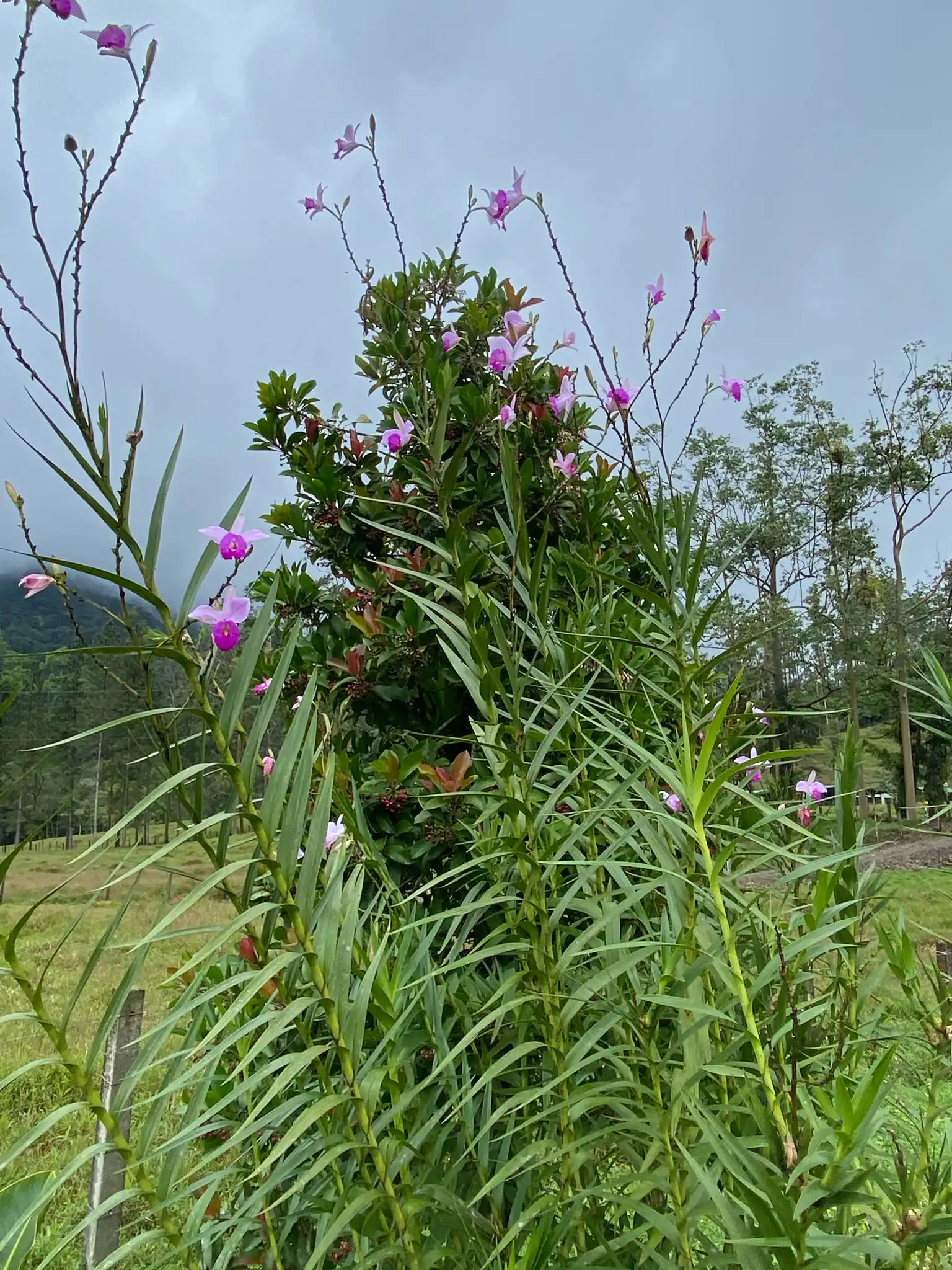
Arundina graminifolia, the bamboo orchid, is a terrestrial orchid forming clumps of reedy bamboo-like stems 3 to 6 feet tall, sheathed with narrow grass-like leaves 3 to 8 inches long. Flowers are cattleya-like and 2 to 3 inches wide, pale pink to rosy-lilac with a white throat and purple-pink lip, carried in open terminal racemes through summer to fall.
Unlike epiphytic orchids it grows in humus-rich soil and holds many thin leaves along each cane instead of storing water in pseudobulbs. Each stem produces up to 15 buds that open in succession over a long season, then forms dust-seeded capsules and sometimes rooted plantlets at the cane tips.
Uses & Benefits:
Essentials
At a Glance
Plant Type
Perennial
Height
72"
Width
36"
Light
Full Sun, Partial Sun
Zones
9, 10
Water
Moist
Humidity
High
Lifespan
Perennial
Native To
Tropical-subtropical Asia
Toxicity
Non-toxic
Bloom period
Summer – Fall
In flower about 6 months of the year
Planting
How to Grow
- Plant outdoors in zones 9-11 in full sun to partial shade with shelter from hot midday sun.
- Set in moist but well-drained humus-rich loam, or in pots in 40 percent soil, 40 percent bark and 20 percent perlite.
- Water 1 to 2 times per week to keep the mix evenly moist, never soggy or fully dry.
- Feed with balanced 20-20-20 fertilizer every two weeks during active growth.
- Bring containers indoors before frost to a bright room kept at 40 to 60F with high humidity.
Pro Tip
Give it soil, high light and constant moisture; bark mix, dim rooms and drying out stop flowering.
Keep It Thriving
Care Guide
Do
- Keep soil evenly moist through growth and bloom
- Provide Cattleya-level light with partial midday shade in hot climates
- Remove spent flower stems to prolong the display
Don't
- Do not grow as a bark-mounted epiphyte or let the root zone dry out
- Do not waterlog the pot or leave plants standing in saucers
- Do not plant out where frost occurs or dump trimmings in warm wild areas
Seasonal Care Calendar
| Task | Jan | Feb | Mar | Apr | May | Jun | Jul | Aug | Sep | Oct | Nov | Dec |
|---|---|---|---|---|---|---|---|---|---|---|---|---|
| Deadhead | ||||||||||||
| Fertilize | ||||||||||||
| Pest Check | ||||||||||||
| Propagate | ||||||||||||
| Winter Prep |
Watch Out For
Pests & Diseases
Common Pests
Common Diseases
In the Garden
Landscape Uses & Companions
Landscape Uses
Companion Plants
Multiply
Propagation Methods
Good to Know
Common Questions
Bamboo Orchid questions
What zones can Bamboo Orchid grow in?
Bamboo Orchid is hardy in USDA Zones 9–10: in that range it survives winter in the ground. Colder than Zone 9, grow it in a container you can move to shelter for the winter, or as an annual.
When does Bamboo Orchid bloom?
Bamboo Orchid typically blooms from summer to fall. Exact timing shifts a week or two with your zone — Sow's bloom calendar maps it to your garden.
Does Bamboo Orchid need full sun?
Bamboo Orchid does best in full sun to part shade. In hot climates, afternoon shade keeps blooms fresher longer.
Keep exploring
Explore the genus
Hardy in your zone?
Grow Bamboo Orchid with confidence
See it in a design of your actual yard, get zone-matched care reminders, and track it season by season in your garden journal.