The Story
Plant Bio
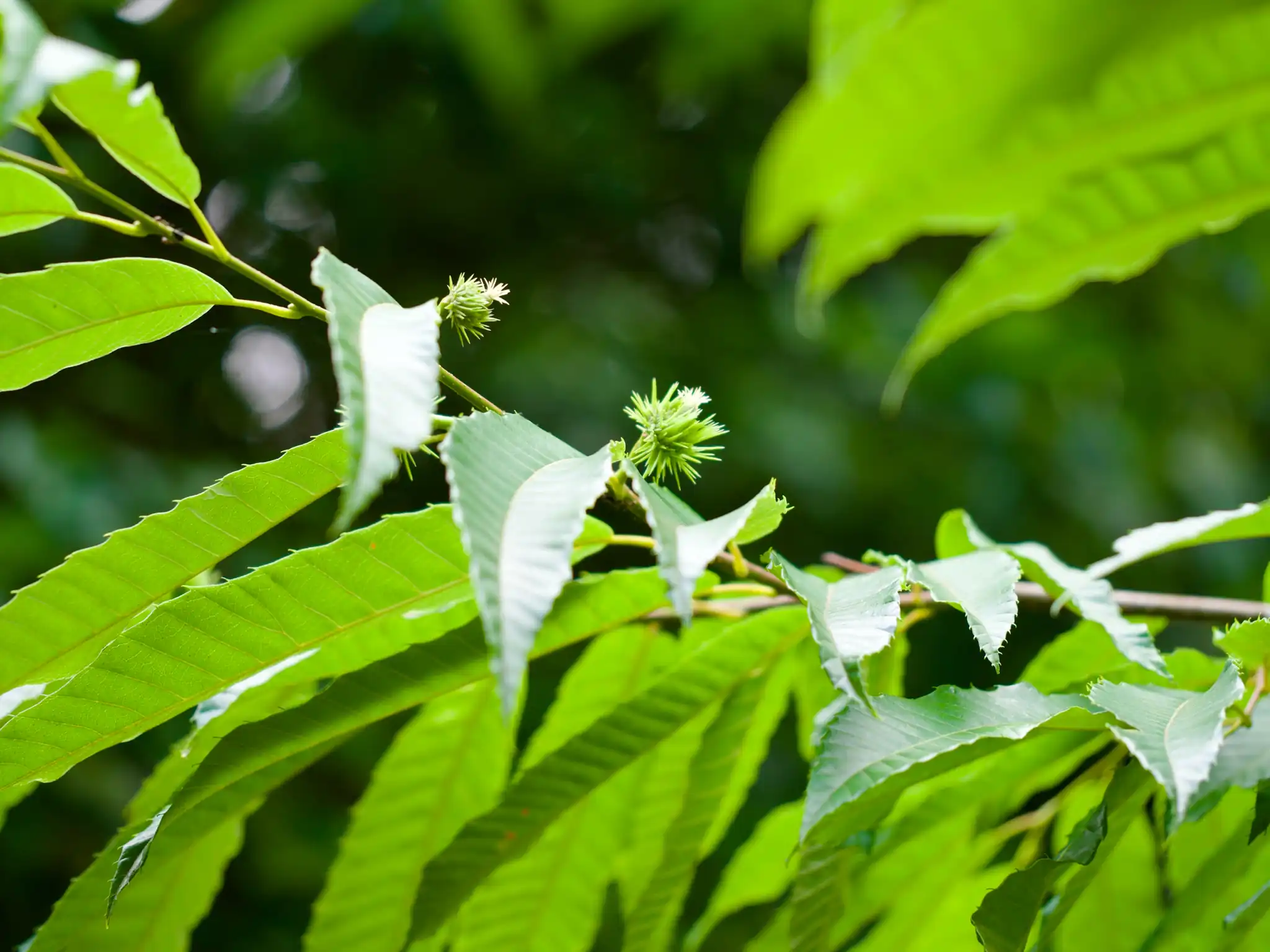
Castanea crenata, the Japanese chestnut, is a small to medium-sized deciduous tree forming a broad, rounded crown of strong, spreading branches. It produces oblong-lanceolate leaves with bristly-toothed margins that turn yellow to bronze in fall, alongside upright, creamy-white catkins in late spring.
This species is highly valued in North America for its strong genetic resistance to chestnut blight and ink disease. The tree produces edible nuts encased in sharply spiny burs that split open upon maturity in fall.
Uses & Benefits:
Essentials
At a Glance
Plant Type
Tree
Height
590"
Width
472"
Light
Full Sun, Partial Sun
Zones
4, 5, 6, 7, 8
Water
Medium
Humidity
High
Lifespan
Long
Native To
Asia (Japan, South Korea)
Toxicity
Non-toxic (spiny burs present physical hazard)
Bloom period
Late spring – Early summer
In flower about 2 months of the year
Planting
How to Grow
- Select a planting site in full sun with deep, well-drained acidic loam, avoiding low spots prone to standing water.
- Dig a hole twice as wide as the root ball and of equal depth, ensuring the graft union remains above the soil line.
- Backfill with native soil without adding soil amendments, then water thoroughly to settle the roots.
- Apply a thick layer of organic mulch around the base to retain moisture, keeping it several inches away from the trunk.
Pro Tip
Plant at least two different seedlings or cultivars nearby to ensure successful cross-pollination, as single isolated trees fail to produce significant nut crops.
Keep It Thriving
Care Guide
Do
- Prune during winter dormancy to remove dead, diseased, or crossing branches.
- Water young trees regularly during dry spells until their root systems are fully established.
- Wear heavy leather gloves when harvesting nuts to protect hands from the sharp spines of the fallen burs.
Don't
- Do not plant in heavy, poorly drained clay soils that hold water and trigger root rot.
- Do not prune heavily into old, leafless wood, as regrowth from old wood is slow and patchy.
- Do not plant near high-traffic walkways or patios where the dropping spiny burs will create a physical hazard.
Seasonal Care Calendar
| Task | Jan | Feb | Mar | Apr | May | Jun | Jul | Aug | Sep | Oct | Nov | Dec |
|---|---|---|---|---|---|---|---|---|---|---|---|---|
| Harvest | ||||||||||||
| Mulch | ||||||||||||
| Pest Check | ||||||||||||
| Prune |
Watch Out For
Pests & Diseases
Common Pests
Common Diseases
In the Garden
Landscape Uses & Companions
Landscape Uses
Companion Plants
Multiply
Propagation Methods
Good to Know
Common Questions
Japanese Chestnut questions
What zones can Japanese Chestnut grow in?
Japanese Chestnut is hardy in USDA Zones 4–8. Inside that range it survives winter in the ground; outside it, grow it as an annual or a container plant you protect.
Is Japanese Chestnut deer resistant?
Not reliably. Deer may browse Japanese Chestnut, especially tender spring growth — plan on repellents or fencing where pressure is high.
When does Japanese Chestnut bloom?
Japanese Chestnut typically blooms in late spring through early summer. Exact timing shifts a week or two with your zone — Sow's bloom calendar maps it to your garden.
Does Japanese Chestnut need full sun?
Japanese Chestnut does best in full sun to part shade. In hot climates, afternoon shade keeps blooms fresher longer.
Is Japanese Chestnut drought tolerant?
Yes — once established (usually after the first full season), Japanese Chestnut handles dry spells with minimal watering. Water deeply its first year to build the root system that makes that possible.
More Castanea to compare
Keep exploring
Explore the genus
Hardy in your zone?
Grow Japanese Chestnut with confidence
See it in a design of your actual yard, get zone-matched care reminders, and track it season by season in your garden journal.