
The Story
Plant Bio
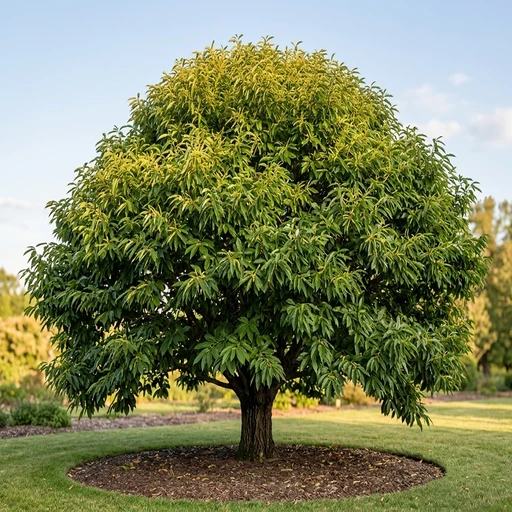
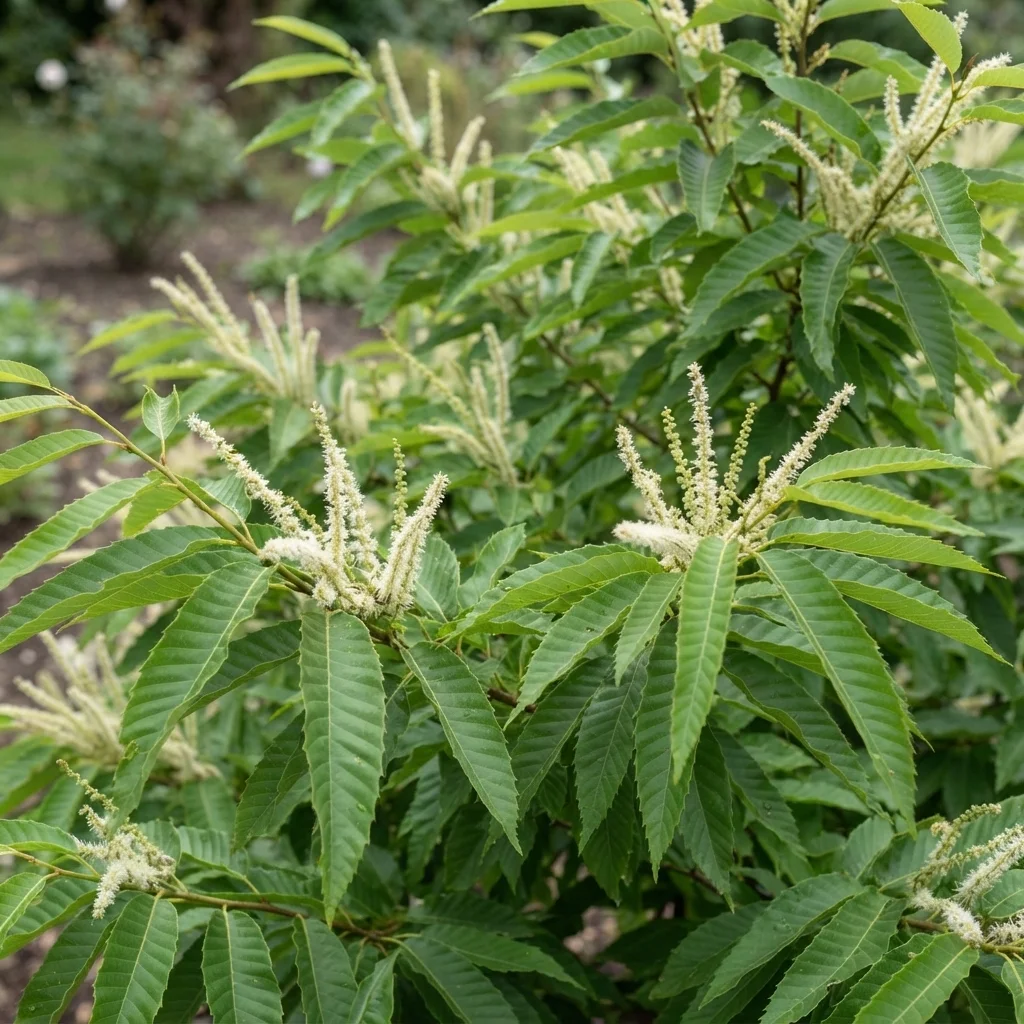
Castanea dentata, the American chestnut, is a large deciduous forest tree native to eastern North America with a broad, rounded crown. It carries alternate, oblong-lanceolate leaves with coarse, sharply hooked teeth along the margins and light green emerging foliage.
In early summer, mature branches produce long, pale yellow to cream staminate catkins that emit a sharp, pungent aroma. Although chestnut blight causes wild stems to die back into multi-stemmed root sprouts, established root systems remain persistent in forest understories.
Uses & Benefits:
Essentials
At a Glance
Plant Type
Tree
Height
787"
Width
472"
Light
Full Sun, Partial Sun
Zones
4, 5, 6, 7, 8
Water
Moderate
Humidity
Moderate
Lifespan
Perennial
Native To
Eastern North America
Toxicity
Non-toxic (edible nuts)
Bloom period
Summer
In flower about 3 months of the year
Marketplace
Where to Buy
Shipping costs Year-round shipping Free shipping
Planting
How to Grow
- Select an open site in full sun or light partial shade with well-drained, acidic soil.
- Dig a planting hole twice as wide as the root mass, keeping the root collar level with the surrounding grade.
- Backfill with unamended native topsoil and water deeply to settle air pockets around the roots.
- Apply a three-inch layer of organic mulch around the base, keeping it clear of the direct trunk.
- Enclose young stems in wire fencing or tree guards to block deer and rabbit browsing.
Pro Tip
Plant on elevated, sloping ground in acidic, sandy loam; standing moisture at the root collar rapidly induces fatal Phytophthora rot.
Keep It Thriving
Care Guide
Do
- Provide deep, weekly irrigation during the first two seasons until roots establish.
- Test soil pH to ensure acidic to slightly acidic conditions below 6.5.
- Wear heavy leather gloves when gathering mature burs to protect hands from spiny tips.
Don't
- Do not plant in poorly drained, heavy clay soils prone to waterlogging.
- Do not cut back into old leafless wood; restrict pruning to removing dead or blighted stems.
- Do not apply high-nitrogen fertilizers, which stimulate soft growth vulnerable to fungal infection.
Seasonal Care Calendar
| Task | Jan | Feb | Mar | Apr | May | Jun | Jul | Aug | Sep | Oct | Nov | Dec |
|---|---|---|---|---|---|---|---|---|---|---|---|---|
| Fertilize | ||||||||||||
| Harvest | ||||||||||||
| Pest Check | ||||||||||||
| Prune | ||||||||||||
| Winter Prep |
Watch Out For
Pests & Diseases
Common Pests
Common Diseases
In the Garden
Landscape Uses & Companions
Landscape Uses
Companion Plants
Multiply
Propagation Methods
Good to Know
Common Questions
American Chestnut questions
What zones can American Chestnut grow in?
American Chestnut is hardy in USDA Zones 4–8. Inside that range it survives winter in the ground; outside it, grow it as an annual or a container plant you protect.
Is American Chestnut deer resistant?
Not reliably. Deer may browse American Chestnut, especially tender spring growth — plan on repellents or fencing where pressure is high.
When does American Chestnut bloom?
American Chestnut typically blooms in summer through summer. Exact timing shifts a week or two with your zone — Sow's bloom calendar maps it to your garden.
Does American Chestnut need full sun?
American Chestnut does best in full sun to part shade. In hot climates, afternoon shade keeps blooms fresher longer.
Is American Chestnut drought tolerant?
Yes — once established (usually after the first full season), American Chestnut handles dry spells with minimal watering. Water deeply its first year to build the root system that makes that possible.
More Castanea to compare
Keep exploring
Explore the genus
Hardy in your zone?
Grow American Chestnut with confidence
See it in a design of your actual yard, get zone-matched care reminders, and track it season by season in your garden journal.