2 named cultivars
The Story
Plant Bio
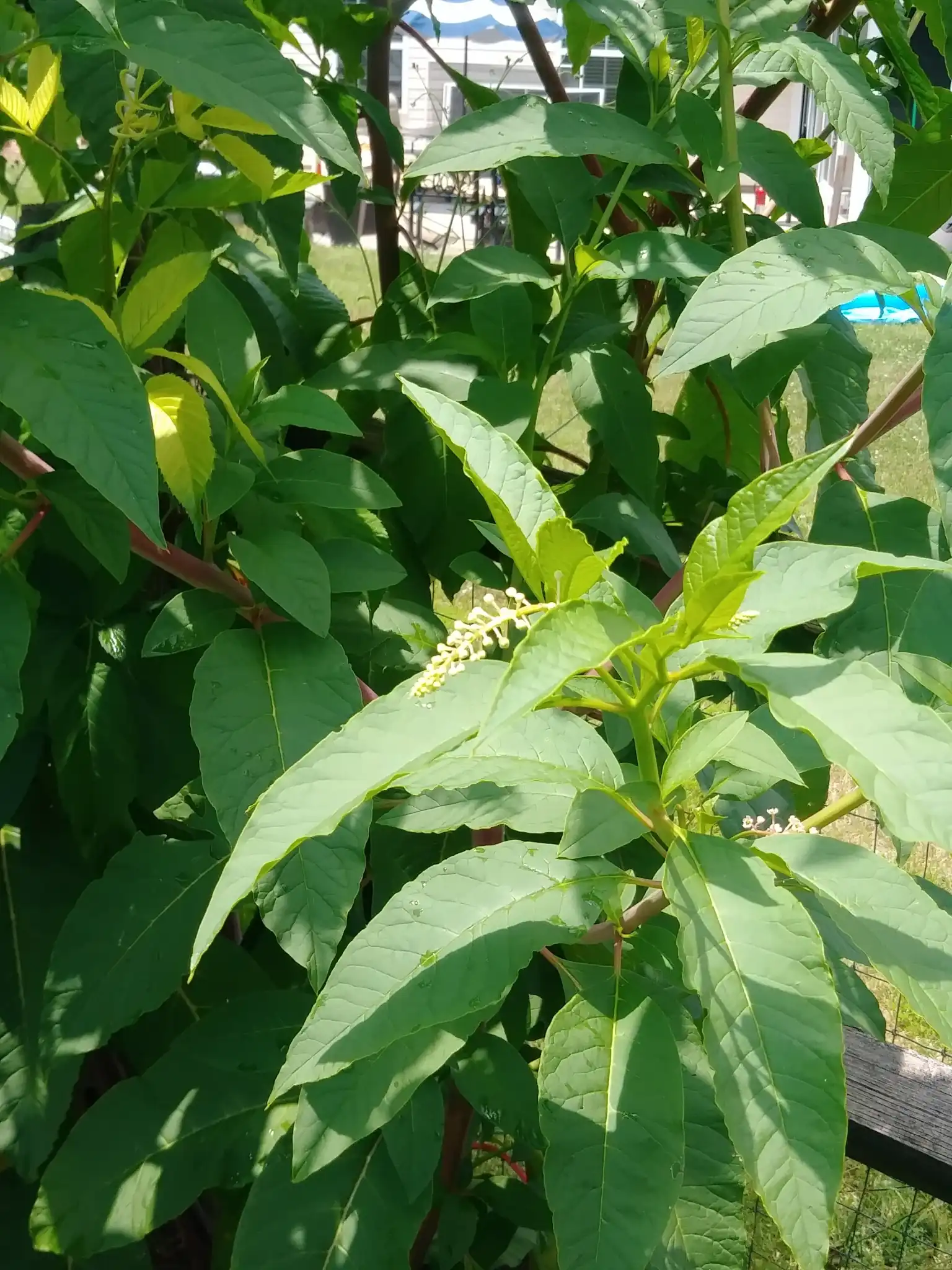
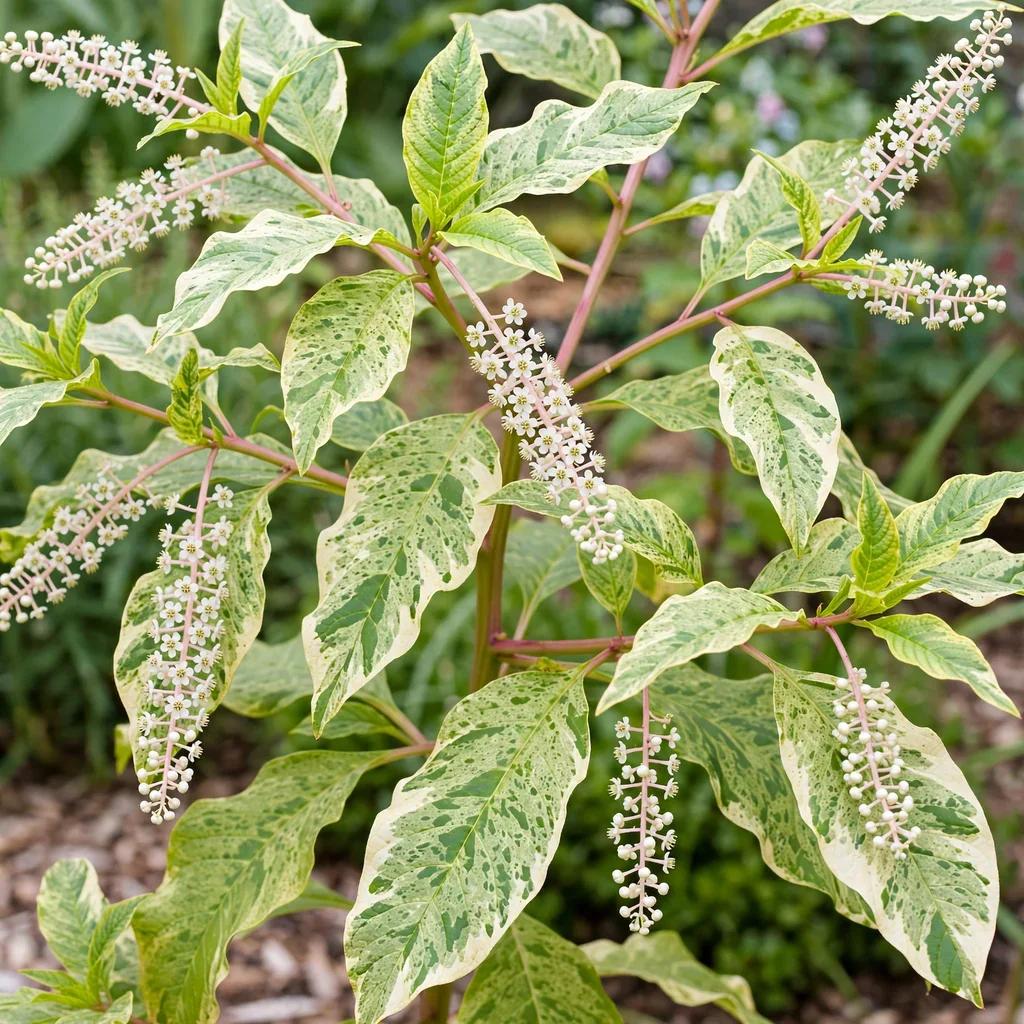
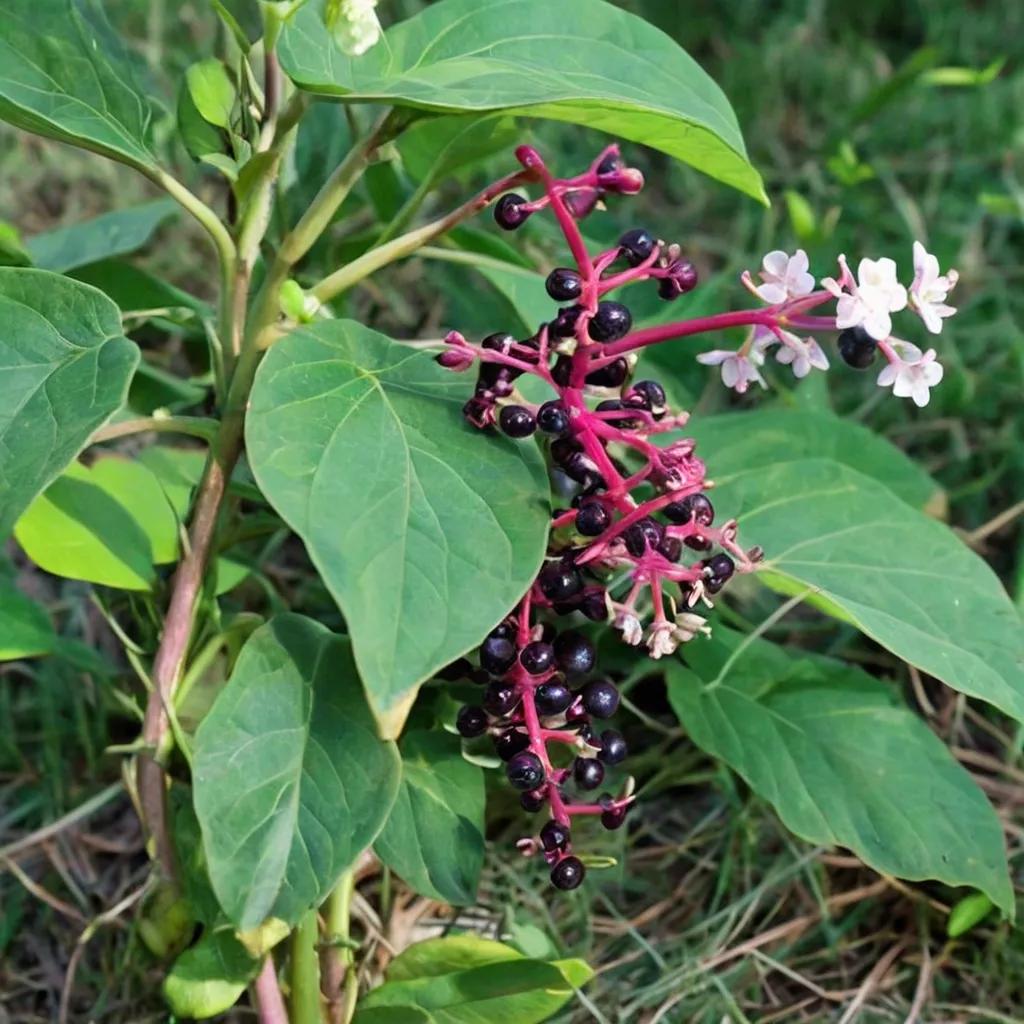
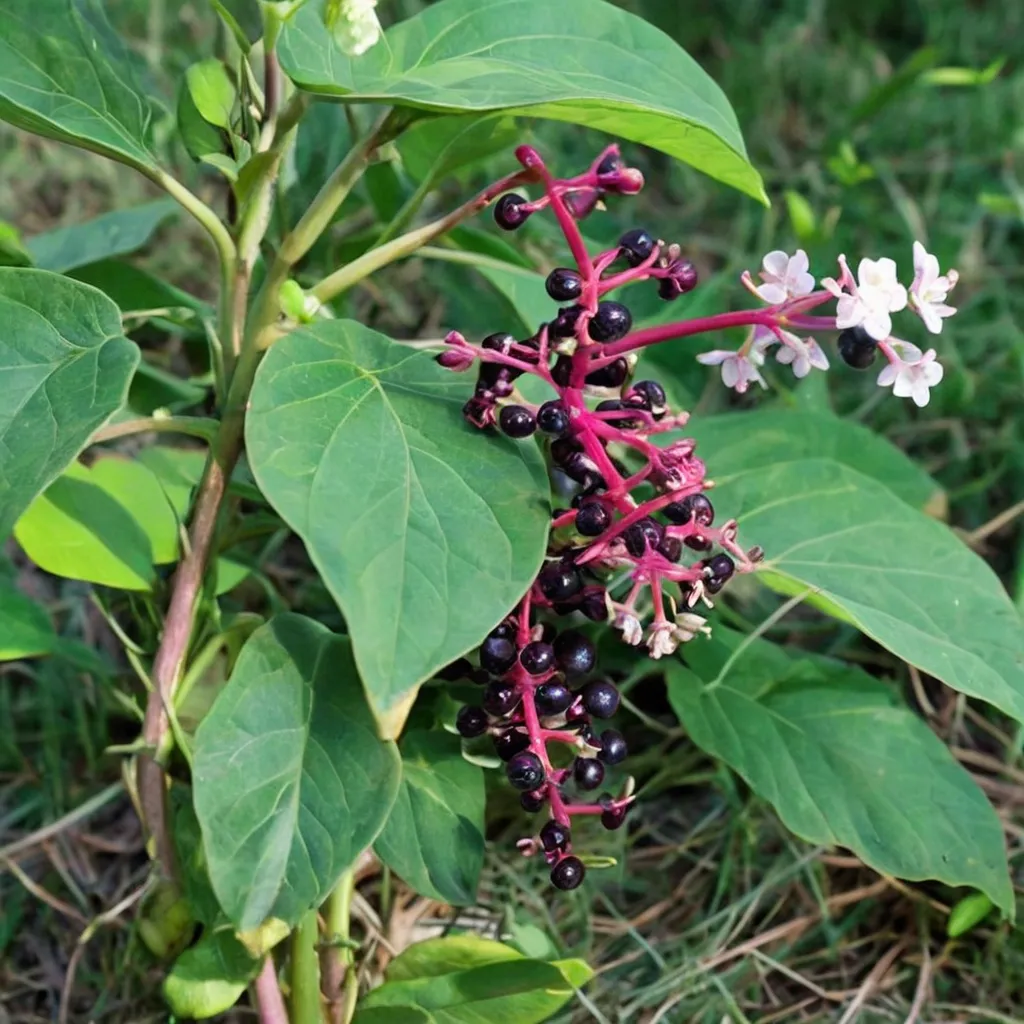
Phytolacca americana, American pokeweed, is a large herbaceous perennial native to the southeastern United States and naturalised across much of the continent, reaching four to ten feet in a single season. Thick magenta stems carry big green leaves that smell unpleasant when bruised, and drooping racemes of small white flowers give way to glossy purple-black berries. It dies back to a substantial taproot each winter.
Every part of the plant is poisonous — roots most severely, then seeds and leaves — and serious poisonings have followed people mistaking young shoots for a pot herb. Birds eat the berries without harm and distribute seed widely, which is why it appears unbidden in gardens and why it is best removed while the taproot is still small.
Uses & Benefits:
Essentials
At a Glance
Plant Type
Perennial
Height
84"
Width
36"
Light
Full Sun, Partial Sun
Zones
4, 5, 6, 7, 8, 9, 10
Water
Low
Humidity
Moderate
Lifespan
Perennial
Native To
Southeastern United States
Toxicity
Toxic if ingested
Planting
How to Grow
- It rarely needs planting; birds sow it in most gardens.
- If retained, allow full sun to partial shade and generous room.
- Site it away from paths, play areas and vegetable beds.
- No watering or feeding is needed once established.
- Cut back and remove berries before they ripen to limit spread.
- Dig out the whole taproot while the plant is young if unwanted.
Pro Tip
Pull it in its first season — after a year or two the taproot is thick and deep enough that anything left behind resprouts.
Keep It Thriving
Care Guide
Do
- Wear gloves whenever handling it 🧤
- Remove berries before they ripen if you want to limit seedlings ✂️
- Leave it at a wild margin for the birds if you have space 🐦
- Dig the whole taproot out when removing it 🌱
Don't
- Eat any part of it, including young shoots ❌
- Plant it where children or pets forage ❌
- Leave berries to ripen near paths and paving; they stain badly ❌
Seasonal Care Calendar
| Task | Jan | Feb | Mar | Apr | May | Jun | Jul | Aug | Sep | Oct | Nov | Dec |
|---|---|---|---|---|---|---|---|---|---|---|---|---|
| Monitor | ||||||||||||
| Prune |
Watch Out For
Pests & Diseases
Common Pests
Common Diseases
In the Garden
Landscape Uses & Companions
Landscape Uses
Multiply
Propagation Methods
Good to Know
Common Questions
American Pokeweed questions
What zones can American Pokeweed grow in?
American Pokeweed is hardy in USDA Zones 4–10. Inside that range it survives winter in the ground; outside it, grow it as an annual or a container plant you protect.
Is American Pokeweed deer resistant?
Yes — American Pokeweed is rated deer-resistant. Deer typically pass it over, though extreme hunger can override any plant's defenses.
When does American Pokeweed bloom?
American Pokeweed typically blooms in summer to fall through late fall. Exact timing shifts a week or two with your zone — Sow's bloom calendar maps it to your garden.
Does American Pokeweed need full sun?
American Pokeweed does best in full sun to part shade. In hot climates, afternoon shade keeps blooms fresher longer.
Is American Pokeweed drought tolerant?
Yes — once established (usually after the first full season), American Pokeweed handles dry spells with minimal watering. Water deeply its first year to build the root system that makes that possible.
More Phytolacca to compare
Keep exploring
Explore the genus
Grow American Pokeweed with confidence
See it in a design of your actual yard, get zone-matched care reminders, and track it season by season in your garden journal.