The Story
Plant Bio
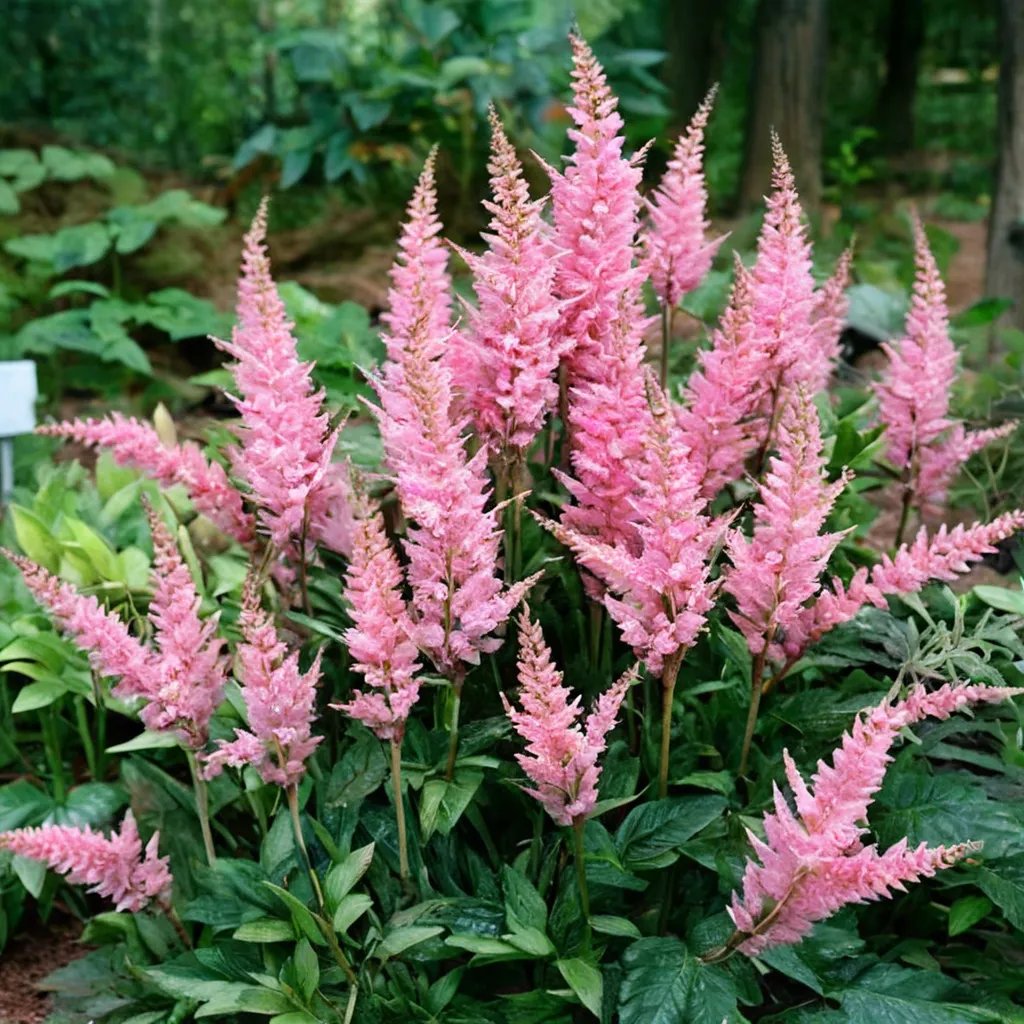
Astilbe chinensis 'Vision in Pink' is a deciduous perennial with feathery, fern-like foliage and tall, plume-like flower clusters in shades of pink, providing a soft, airy appearance during summer and early autumn.
This cultivar is distinguished by its vibrant pink flower plumes that bloom profusely, adding a striking splash of color and elegance to shaded garden borders and woodland garden settings.
Uses & Benefits:
Essentials
At a Glance
Plant Type
Perennial
Height
24"
Width
18"
Light
Partial Sun, Shade
Zones
4, 5, 6, 7, 8
Water
Moist
Humidity
High
Lifespan
Perennial
Native To
Asia
Toxicity
Non-toxic
Bloom period
Mid-summer – Late summer
In flower about 2 months of the year
Planting
How to Grow
- Choose a shaded spot with moist, well-drained soil.
- Tuck seeds or divisions into the soil in early spring or fall.
- Mist cuttings regularly to maintain humidity and encourage rooting.
- Water consistently to keep soil moist but not waterlogged.
- Mulch around plants to retain soil moisture and suppress weeds.
- Fertilize with a balanced, slow-release fertilizer in spring.
Pro Tip
Ensure consistent moisture and shade for best growth and vibrant blooms.
Keep It Thriving
Care Guide
Do
- Water regularly to keep soil moist 🌱
- Mulch to conserve moisture and regulate soil temperature
- Fertilize in spring with a balanced fertilizer
- Divide every 3-4 years to maintain vigor
Don't
- Avoid dry or overly sunny locations ❌
- Don't let soil dry out completely
- Refrain from heavy pruning after flowering
- Avoid planting in poorly drained soils
Seasonal Care Calendar
| Task | Jan | Feb | Mar | Apr | May | Jun | Jul | Aug | Sep | Oct | Nov | Dec |
|---|---|---|---|---|---|---|---|---|---|---|---|---|
| Divide | ||||||||||||
| Fertilize | ||||||||||||
| Mulch | ||||||||||||
| Plant | ||||||||||||
| Spring Cleanup |
Watch Out For
Pests & Diseases
Common Pests
Common Diseases
In the Garden
Landscape Uses & Companions
Landscape Uses
Companion Plants
Multiply
Propagation Methods
Good to Know