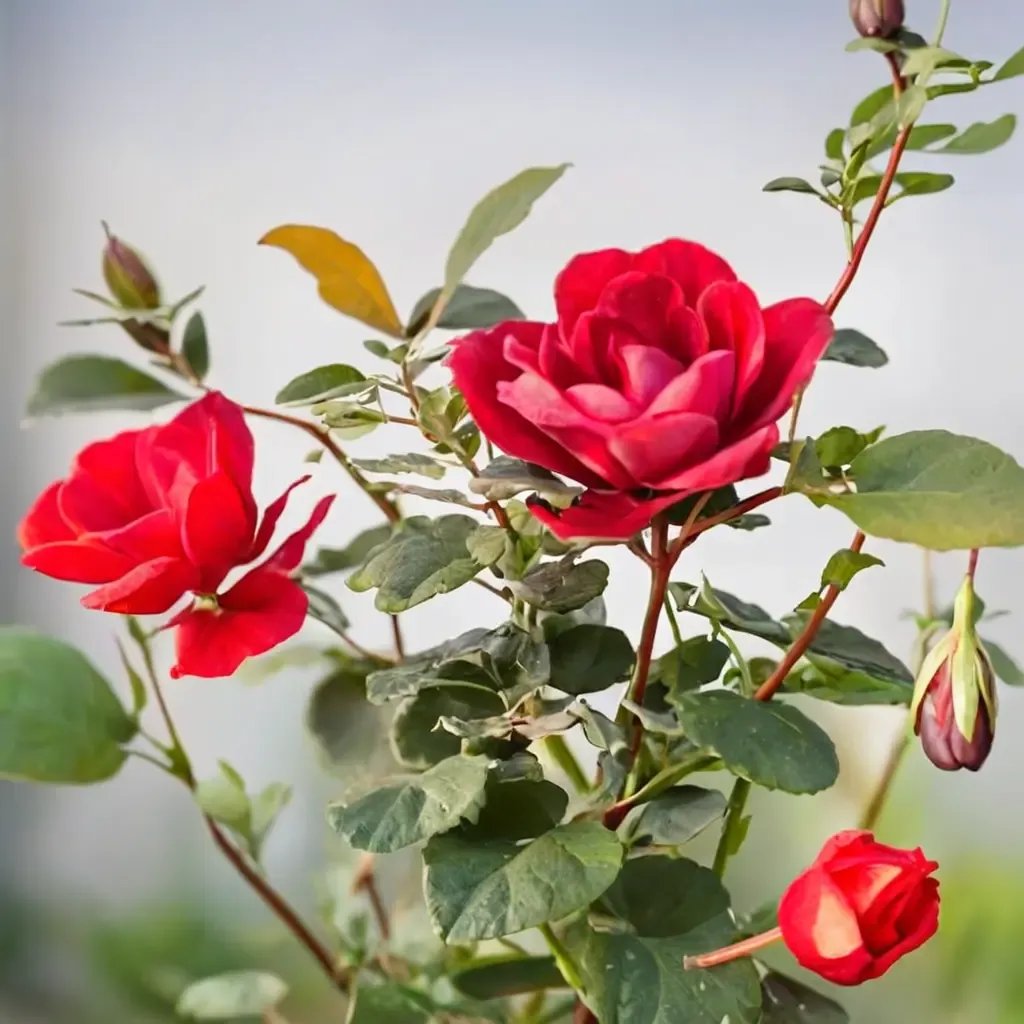
The Story
Plant Bio
Rosa rubiginosa is a large species rose known for its single pink flowers and distinctive apple-scented foliage.
Valued for its fragrant foliage, especially after rain, and its bright red hips in autumn which provide food for birds.
Uses & Benefits:
Red Beauty offers stunning, fragrant red blooms that enhance garden aesthetics and attract pollinators.
Provides a natural hedge for privacy and windbreaks with its dense, silvery foliage.
Supports bees and butterflies, contributing to local biodiversity.
Essentials
At a Glance
Plant Type
Shrub
Height
96"
Width
72"
Light
Full Sun, Partial Sun
Zones
4, 5, 6, 7, 8
Water
Moderate
Humidity
Moderate
Lifespan
Decades
Native To
Europe
Toxicity
Non-toxic
Bloom period
Mid-summer – Late summer
J
F
M
A
M
J
J
A
S
O
N
D
In flower about 2 months of the year
Planting
How to Grow
- Tuck well-draining soil around roots and water thoroughly.
- Plant in full sun for optimal flowering and health.
- Mist cuttings regularly to maintain humidity.
- Prune after blooming to shape and remove dead wood.
- Mulch around base to retain moisture and suppress weeds.
- Fertilize with balanced rose fertilizer every 6 weeks during growing season.
Pro Tip
Ensure good air circulation to prevent fungal diseases and promote healthy growth.
Keep It Thriving
Care Guide
Do
- Water deeply at the base during dry spells 🌱
- Prune in early spring to encourage new growth
- Apply balanced fertilizer during active growing season
- Monitor regularly for pests and treat promptly
Don't
- Avoid overhead watering to prevent fungal issues ❌
- Don’t ignore dead or diseased branches
- Refrain from over-fertilizing which can cause weak stems
- Do not plant in poorly drained soils
Seasonal Care Calendar
| Task | Jan | Feb | Mar | Apr | May | Jun | Jul | Aug | Sep | Oct | Nov | Dec |
|---|---|---|---|---|---|---|---|---|---|---|---|---|
| Deadhead | ||||||||||||
| Fertilize | ||||||||||||
| Mulch | ||||||||||||
| Pest Check | ||||||||||||
| Prune |
Watch Out For
Pests & Diseases
Common Pests
Common Diseases
In the Garden
Landscape Uses & Companions
Landscape Uses
Fragrant hedge with silvery foliageClimbing vine for trellises and arborsDecorative border with vibrant blooms
Multiply
Propagation Methods
Good to Know