The Story
Plant Bio
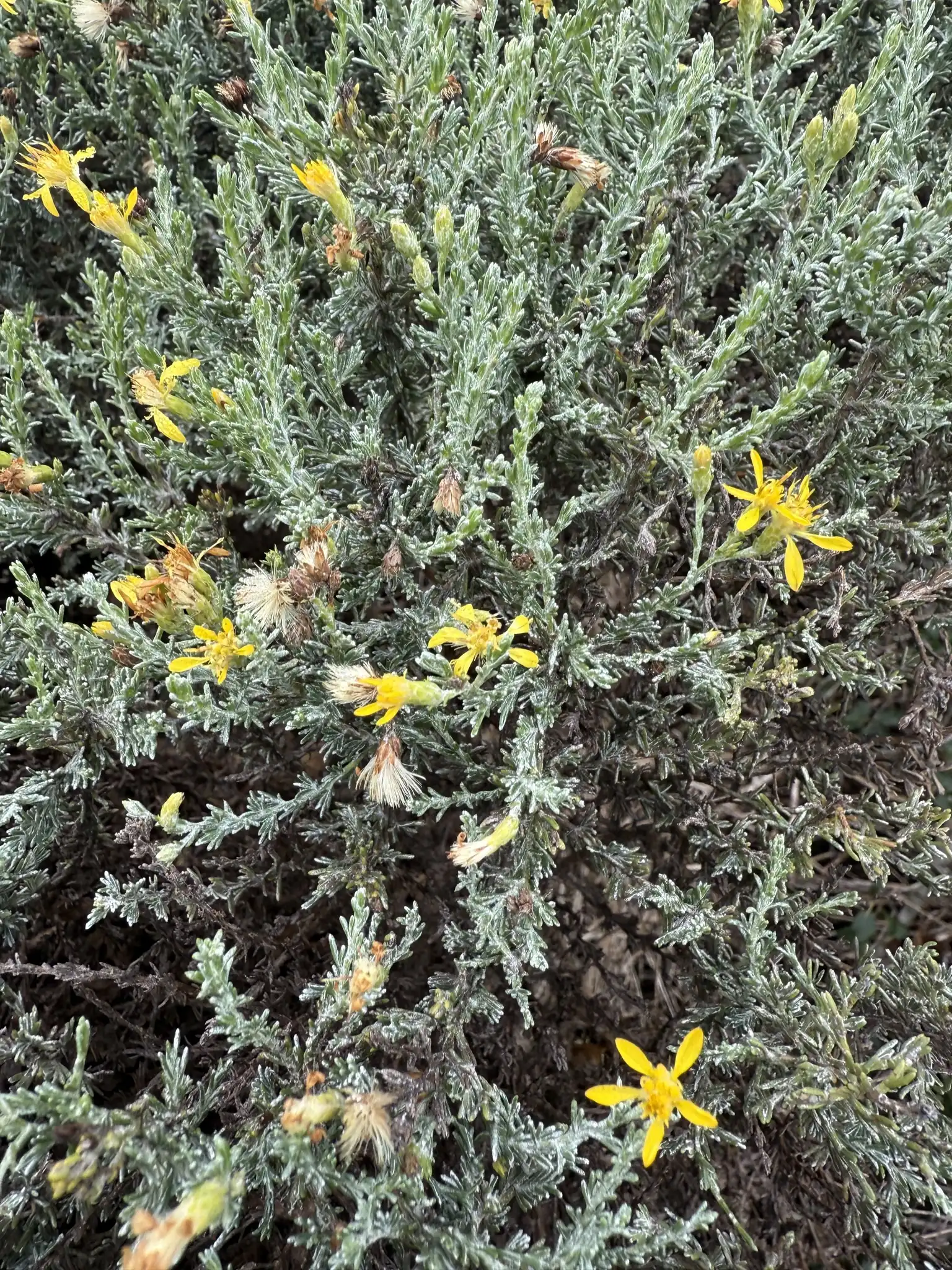
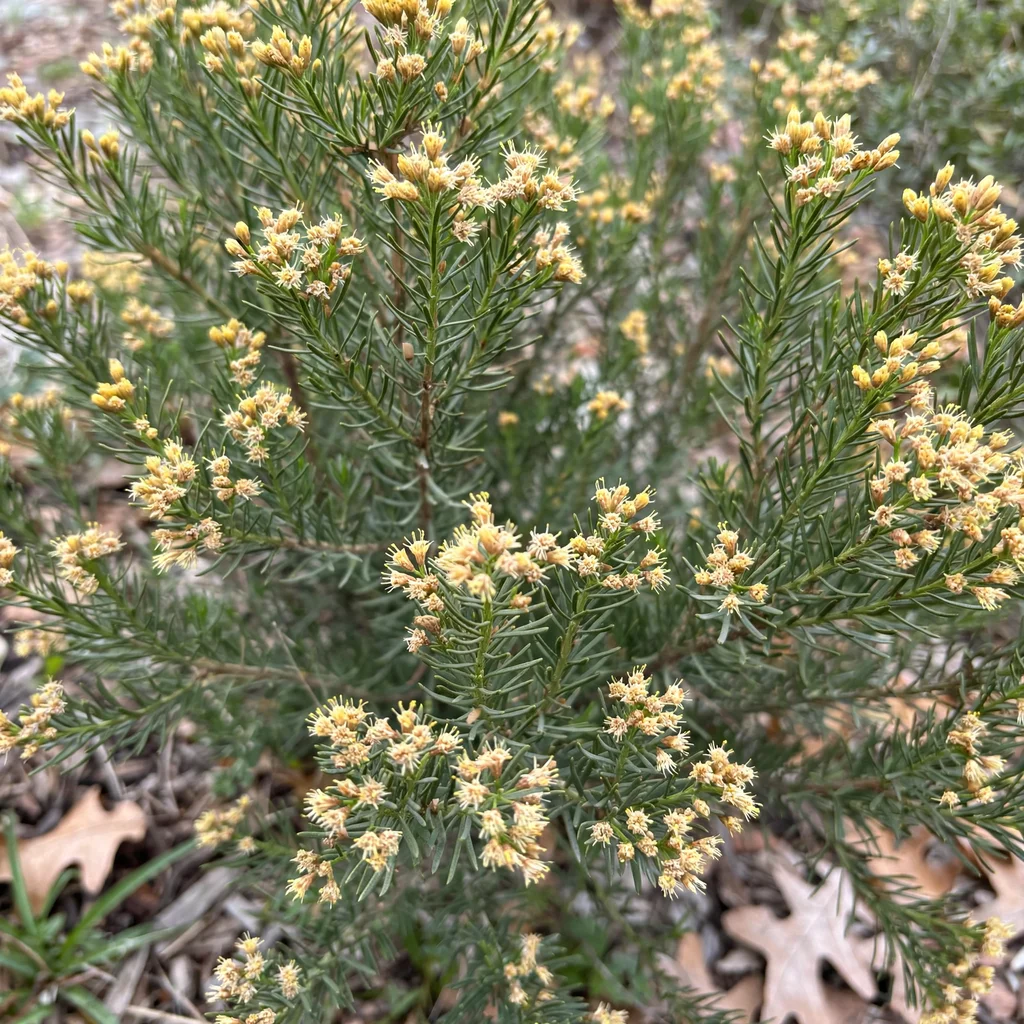
Ericameria ericoides is an evergreen coastal shrub endemic to California sand dunes and coastal hills, forming a dense, rounded mound two to five feet tall and wide. Small, needle-like, dark green leaves crowd the erect branchlets in tight fan-shaped clusters, giving the plant a heather-like texture throughout the year.
Bright golden-yellow flower heads smother the stem tips from late summer through fall, providing an essential late-season nectar source for native pollinators and hummingbirds. Resinous foliage and deep root systems allow it to thrive in nutrient-poor sand and constant maritime winds where most garden shrubs fail.
Uses & Benefits:
Essentials
At a Glance
Plant Type
Shrub
Height
60"
Width
60"
Light
Full Sun
Zones
9, 10
Water
Low
Humidity
Low
Lifespan
Perennial
Native To
California, USA
Toxicity
Non-toxic
Bloom period
Summer – Fall
In flower about 6 months of the year
Planting
How to Grow
- Select a site in full sun with loose, sandy soil or coarse, well-draining loam.
- Dig a hole the same depth as the root ball and twice as wide, keeping the root crown slightly elevated above surrounding grade.
- Settle the plant with water at planting, then water sparingly only during the first dry season to establish roots.
- Avoid applying organic mulches close to the stem, using coarse sand or gravel instead to protect the crown from excess moisture.
Pro Tip
Tip-prune lightly behind spent bloom clusters in early winter; cutting hard back into old bare stems kills the branches because they lack dormant buds.
Keep It Thriving
Care Guide
Do
- Plant in pure sand or fast-draining gritty soil mixtures.
- Provide full sun exposure to maintain compact growth.
- Lightly shear terminal branchlets after flowering ends in late fall.
Don't
- Do not apply high-nitrogen fertilizers or rich organic compost.
- Do not irrigate established plants during warm summer months.
- Do not prune hard into bare, leafless woody stems.
Seasonal Care Calendar
| Task | Jan | Feb | Mar | Apr | May | Jun | Jul | Aug | Sep | Oct | Nov | Dec |
|---|---|---|---|---|---|---|---|---|---|---|---|---|
| Pest Check | ||||||||||||
| Plant | ||||||||||||
| Propagate | ||||||||||||
| Prune |
Watch Out For
Pests & Diseases
Common Pests
Common Diseases
In the Garden
Landscape Uses & Companions
Landscape Uses
Multiply
Propagation Methods
Good to Know
Common Questions
California Goldenbush questions
What zones can California Goldenbush grow in?
California Goldenbush is hardy in USDA Zones 9–10: in that range it survives winter in the ground. Colder than Zone 9, grow it in a container you can move to shelter for the winter.
Is California Goldenbush deer resistant?
Yes — California Goldenbush is rated deer-resistant. Deer typically pass it over, though extreme hunger can override any plant's defenses.
When does California Goldenbush bloom?
California Goldenbush typically blooms from summer to fall. Exact timing shifts a week or two with your zone — Sow's bloom calendar maps it to your garden.
Does California Goldenbush need full sun?
California Goldenbush does best in full sun (6+ hours).
Is California Goldenbush drought tolerant?
Yes — once established (usually after the first full season), California Goldenbush handles dry spells with minimal watering. Water deeply its first year to build the root system that makes that possible.
More Ericameria to compare
Keep exploring
Explore the genus
Hardy in your zone?
Grow California Goldenbush with confidence
See it in a design of your actual yard, get zone-matched care reminders, and track it season by season in your garden journal.