The Story
Plant Bio
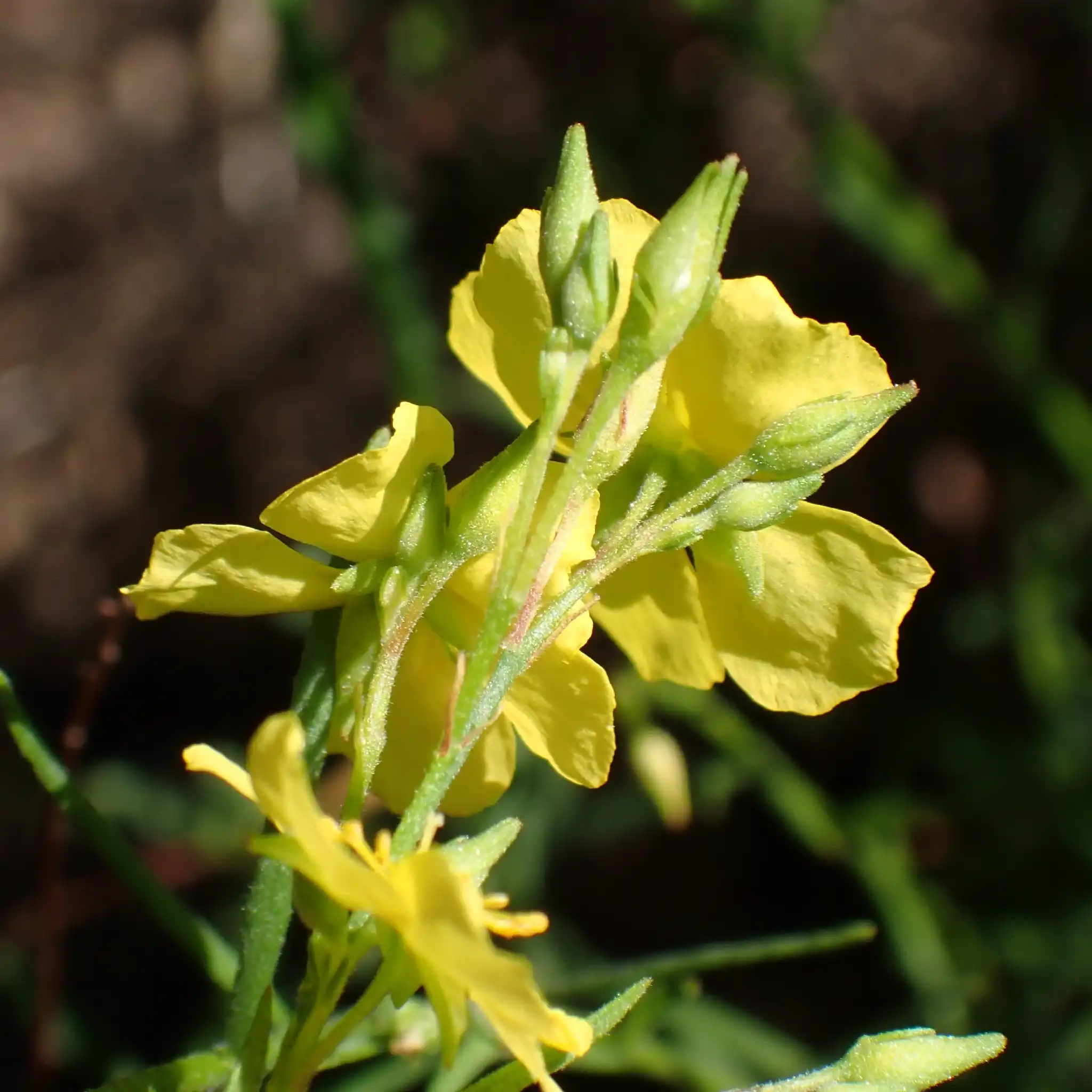
Crocanthemum scoparium is a small summer semi-deciduous subshrub from California chaparral, forming a spreading to erect broom-like mound of long smooth stems. The leaves are small and drop in summer drought, while loose clusters of bright yellow five-petaled dishes under an inch across with ten or more stamens open from spring into early summer.
This species holds its broom-like, almost leafless summer stems to 15 to 24 inches tall and 18 to 24 inches wide in gardens, smaller in the wild. It is still sold as Helianthemum scoparium and is confused with non-native Cistus rock roses and with hummingbird trumpet, which has tubular red flowers built for hummingbirds.
Uses & Benefits:
Essentials
At a Glance
Plant Type
Shrub
Height
20"
Width
24"
Light
Full Sun
Water
Very low
Humidity
Unknown
Lifespan
Perennial
Native To
California, USA
Toxicity
Unknown
Bloom period
Spring – Summer
In flower about 6 months of the year
Planting
How to Grow
- Plant in full sun in fast-draining sandy or rocky loam with pH 5.0 to 7.0, setting the crown slightly high.
- Water to establish through the first cool season, then taper to very low water with no more than one deep summer irrigation per month.
- Mulch with gravel or coarse sand and keep organic mulch and soil away from stems.
- Do not fertilize heavily or amend with rich compost; lean soil keeps growth tight and upright.
Pro Tip
Plant high in lean fast-draining soil and keep summer water to a deep soak no more than once a month; wet crowns in heat invite root rot.
Keep It Thriving
Care Guide
Do
- Give full sun and sharp drainage.
- Limit summer irrigation once established.
- Check labels to avoid Cistus substitutes.
Don't
- Do not plant in heavy clay or low wet spots.
- Do not shear into old leafless wood.
- Do not overwater restoration stock where Phytophthora spreads.
Seasonal Care Calendar
| Task | Jan | Feb | Mar | Apr | May | Jun | Jul | Aug | Sep | Oct | Nov | Dec |
|---|---|---|---|---|---|---|---|---|---|---|---|---|
| Mulch | ||||||||||||
| Pest Check | ||||||||||||
| Plant | ||||||||||||
| Spring Cleanup |
Watch Out For
Pests & Diseases
Common Pests
Common Diseases
In the Garden
Landscape Uses & Companions
Landscape Uses
Multiply
Propagation Methods
Good to Know
Common Questions
Common Sun Rose questions
When does Common Sun Rose bloom?
Common Sun Rose typically blooms from spring to summer. Exact timing shifts a week or two with your zone — Sow's bloom calendar maps it to your garden.
Does Common Sun Rose need full sun?
Common Sun Rose does best in full sun (6+ hours).
Is Common Sun Rose drought tolerant?
Yes — once established (usually after the first full season), Common Sun Rose handles dry spells with minimal watering. Water deeply its first year to build the root system that makes that possible.
Keep exploring
Explore the genus
Grow Common Sun Rose with confidence
See it in a design of your actual yard, get zone-matched care reminders, and track it season by season in your garden journal.