The Story
Plant Bio
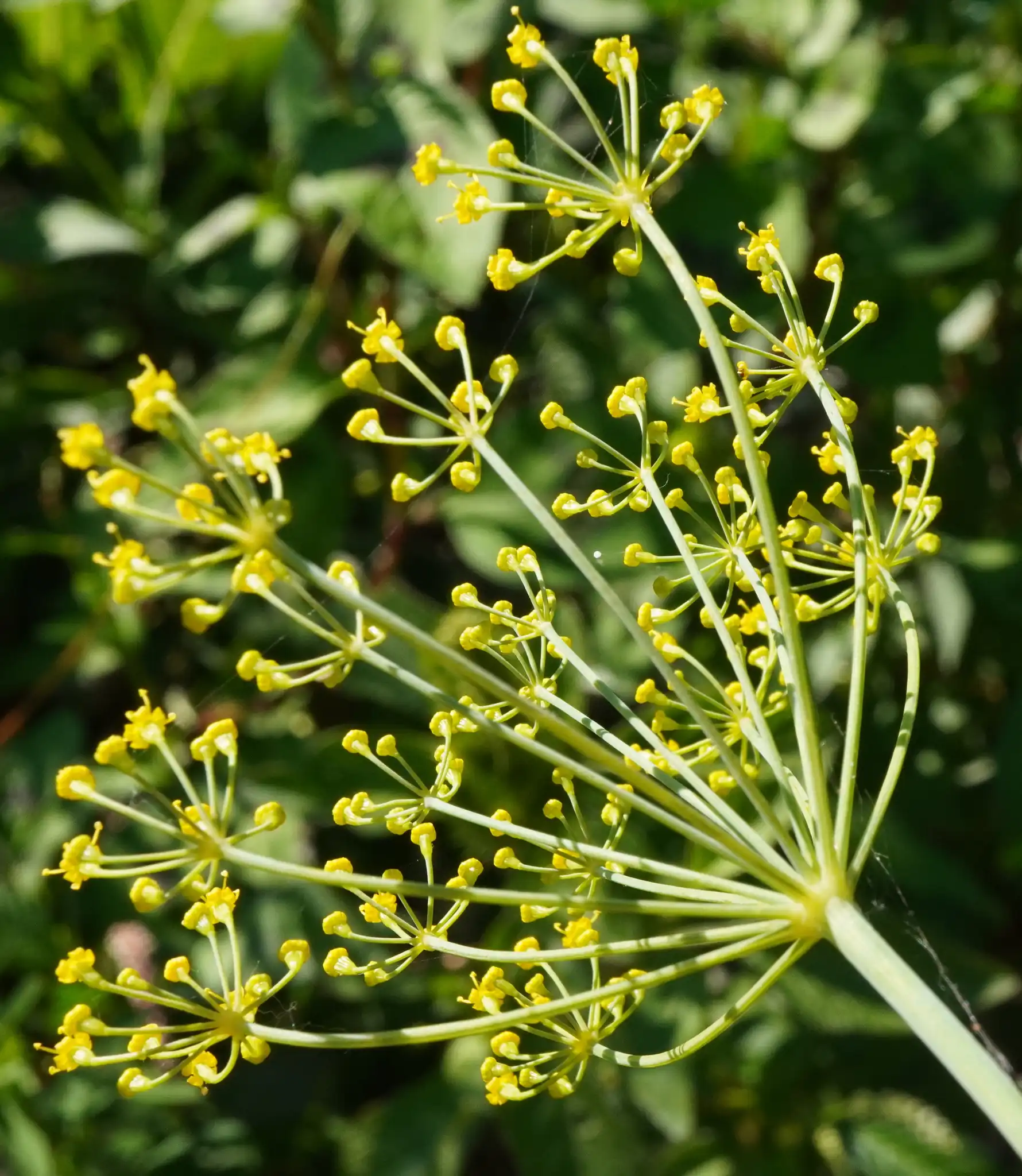
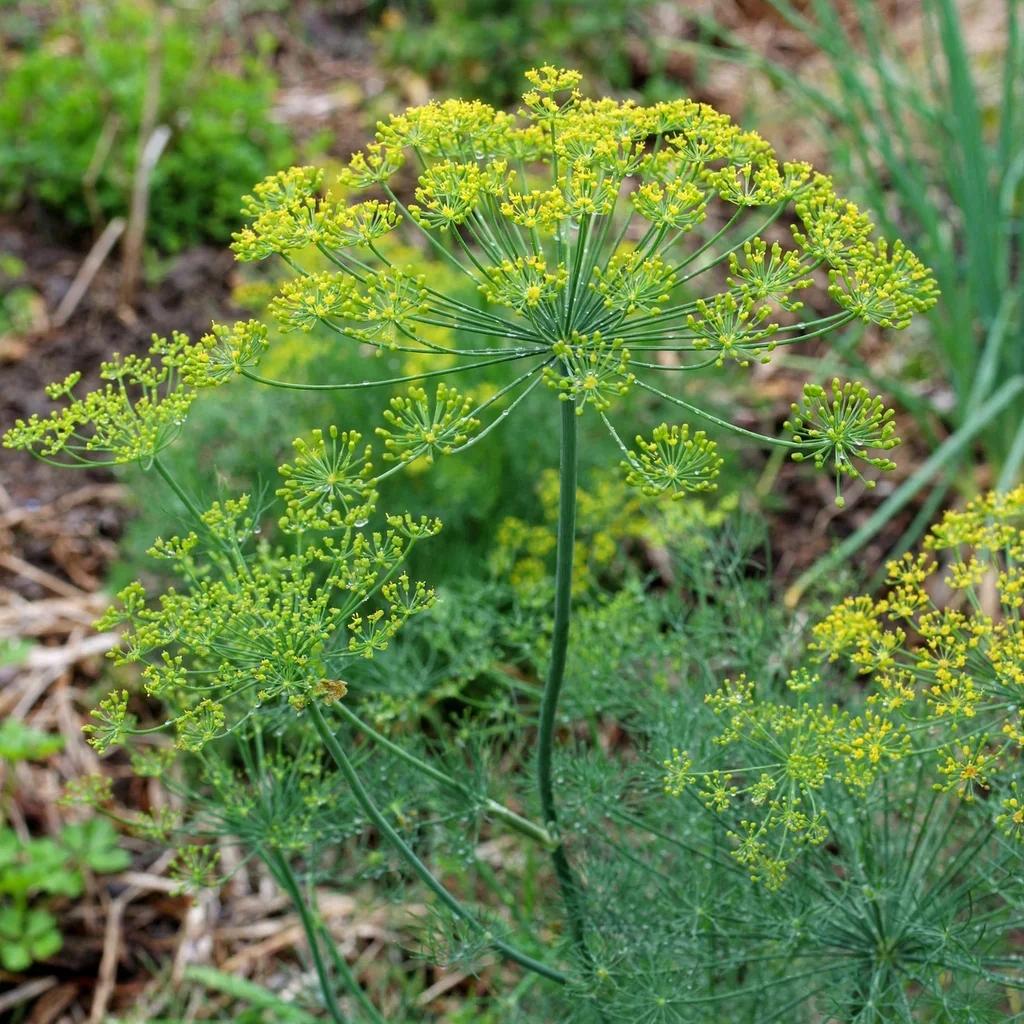
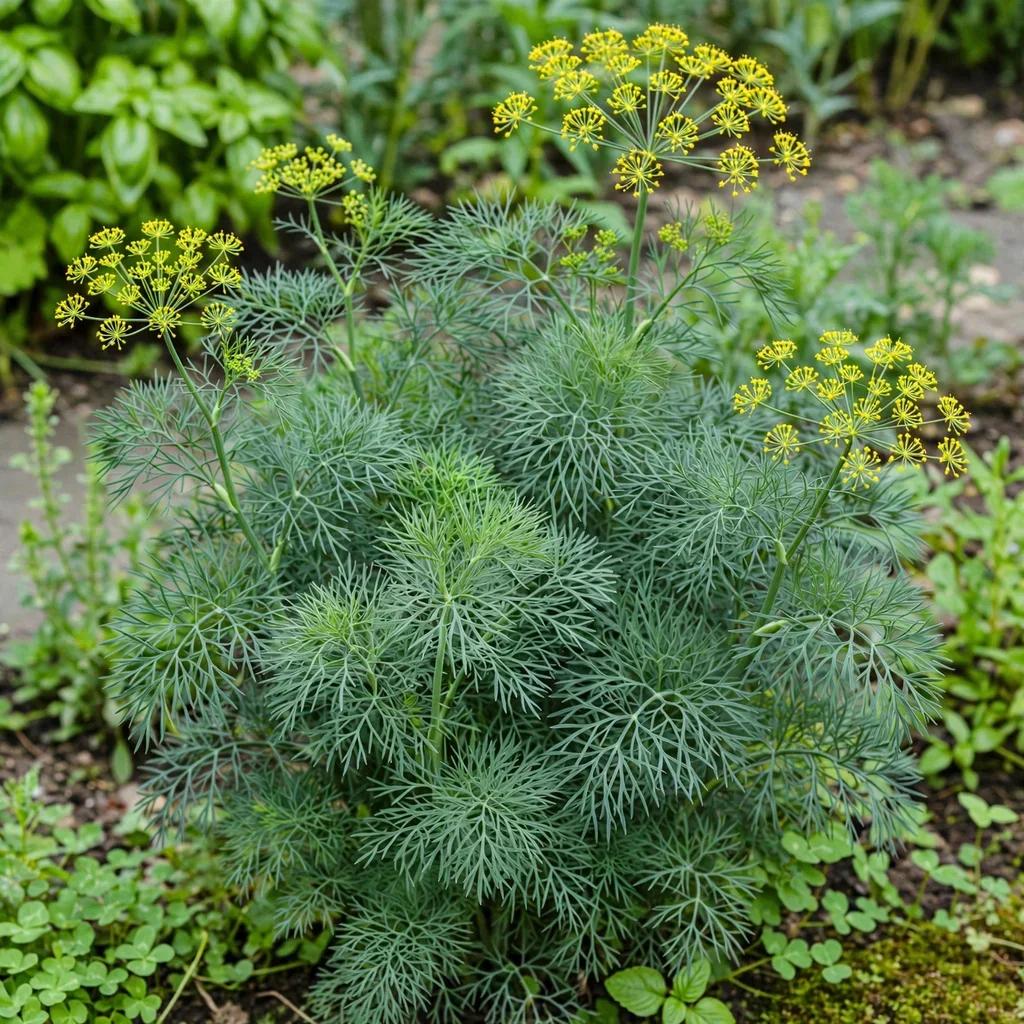
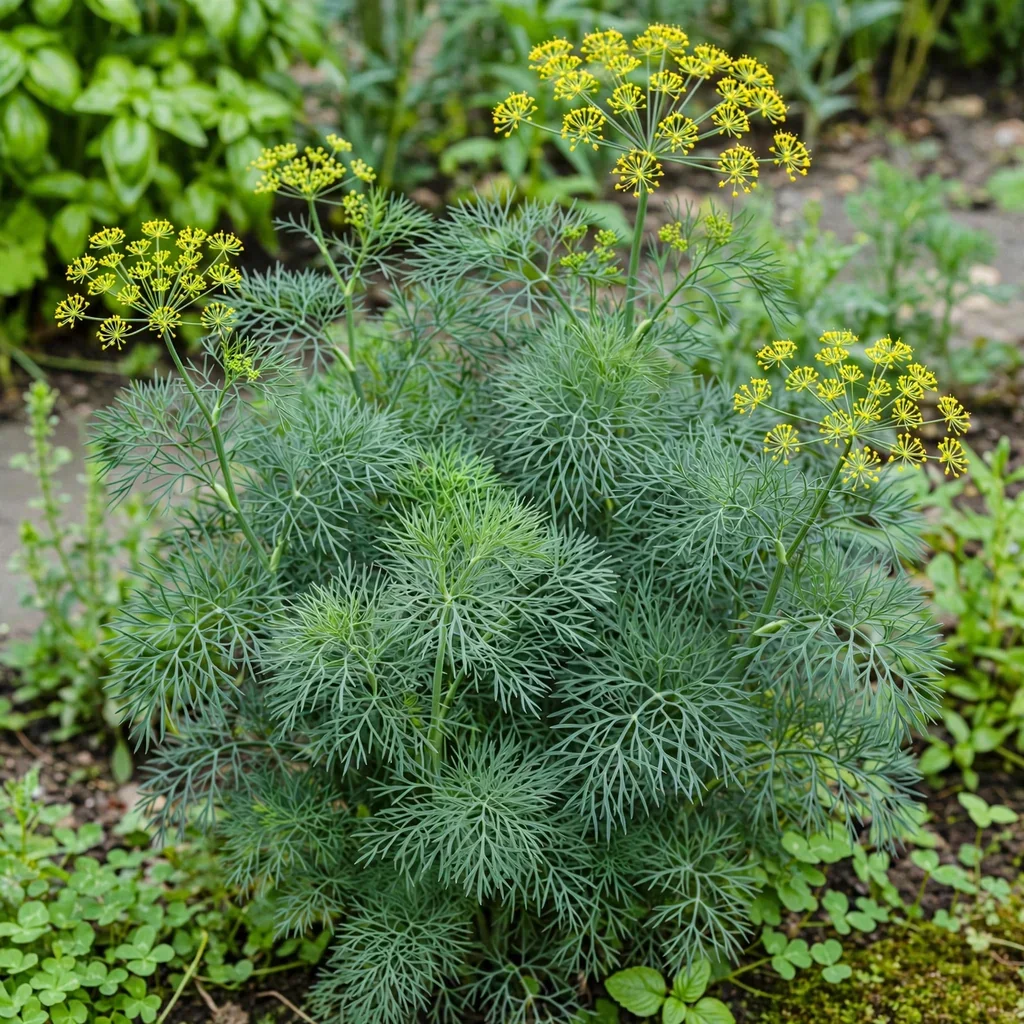
Anethum graveolens, dill, is an erect branching annual herb from the Mediterranean and western Asia, reaching two and a half to five feet in flower. Hollow ridged stems carry very finely divided blue-green feathery leaves, and broad flat umbels of tiny yellow flowers open in summer, followed by the flat ribbed seeds.
It is the larval host of the black swallowtail butterfly, so caterpillars stripping the foliage are worth planting extra for rather than removing. Dill bolts to flower quickly in heat and once it does the leaf crop is over, so sow a short row every three weeks through the season rather than one large sowing.
Uses & Benefits:
Essentials
At a Glance
Plant Type
Annual
Height
45"
Width
30"
Light
Full Sun, Partial Sun
Zones
5, 6, 7, 8
Water
Moderate
Humidity
Moderate
Lifespan
Annual
Native To
Mediterranean and western Asia
Toxicity
Non-toxic; leaves and seeds are edible
Planting
How to Grow
- Sow direct where it is to grow; it dislikes transplanting.
- Choose full sun and freely draining soil.
- Sow a short row every three weeks for continuity.
- Thin seedlings rather than moving them.
- Plant extra to share with swallowtail caterpillars.
- Let a few plants flower and seed for next year.
Pro Tip
Dill resents root disturbance, so sow it where it will grow — transplanted seedlings bolt almost immediately.
Keep It Thriving
Care Guide
Do
- Sow direct rather than transplanting 🌱
- Sow a short row every three weeks 📆
- Plant extra for swallowtail caterpillars 🦋
- Let a few plants self-seed 🌾
Don't
- Transplant seedlings ❌
- Grow it right beside fennel ❌
- Remove swallowtail caterpillars ❌
Seasonal Care Calendar
| Task | Jan | Feb | Mar | Apr | May | Jun | Jul | Aug | Sep | Oct | Nov | Dec |
|---|---|---|---|---|---|---|---|---|---|---|---|---|
| Harvest Seed | ||||||||||||
| Sow |
Watch Out For
Pests & Diseases
Common Pests
Common Diseases
In the Garden
Landscape Uses & Companions
Landscape Uses
Multiply
Propagation Methods
Good to Know
Common Questions
Dill questions
What zones can Dill grow in?
Dill is hardy in USDA Zones 5–8. Inside that range it survives winter in the ground; outside it, grow it as an annual or a container plant you protect.
Is Dill deer resistant?
Yes — Dill is rated deer-resistant. Deer typically pass it over, though extreme hunger can override any plant's defenses.
When does Dill bloom?
Dill typically blooms in summer through late summer. Exact timing shifts a week or two with your zone — Sow's bloom calendar maps it to your garden.
Does Dill need full sun?
Dill does best in full sun to part shade. In hot climates, afternoon shade keeps blooms fresher longer.
Is Dill drought tolerant?
Yes — once established (usually after the first full season), Dill handles dry spells with minimal watering. Water deeply its first year to build the root system that makes that possible.
More Anethum to compare
Keep exploring
Explore the genus
Hardy in your zone?
Grow Dill with confidence
See it in a design of your actual yard, get zone-matched care reminders, and track it season by season in your garden journal.