The Story
Plant Bio
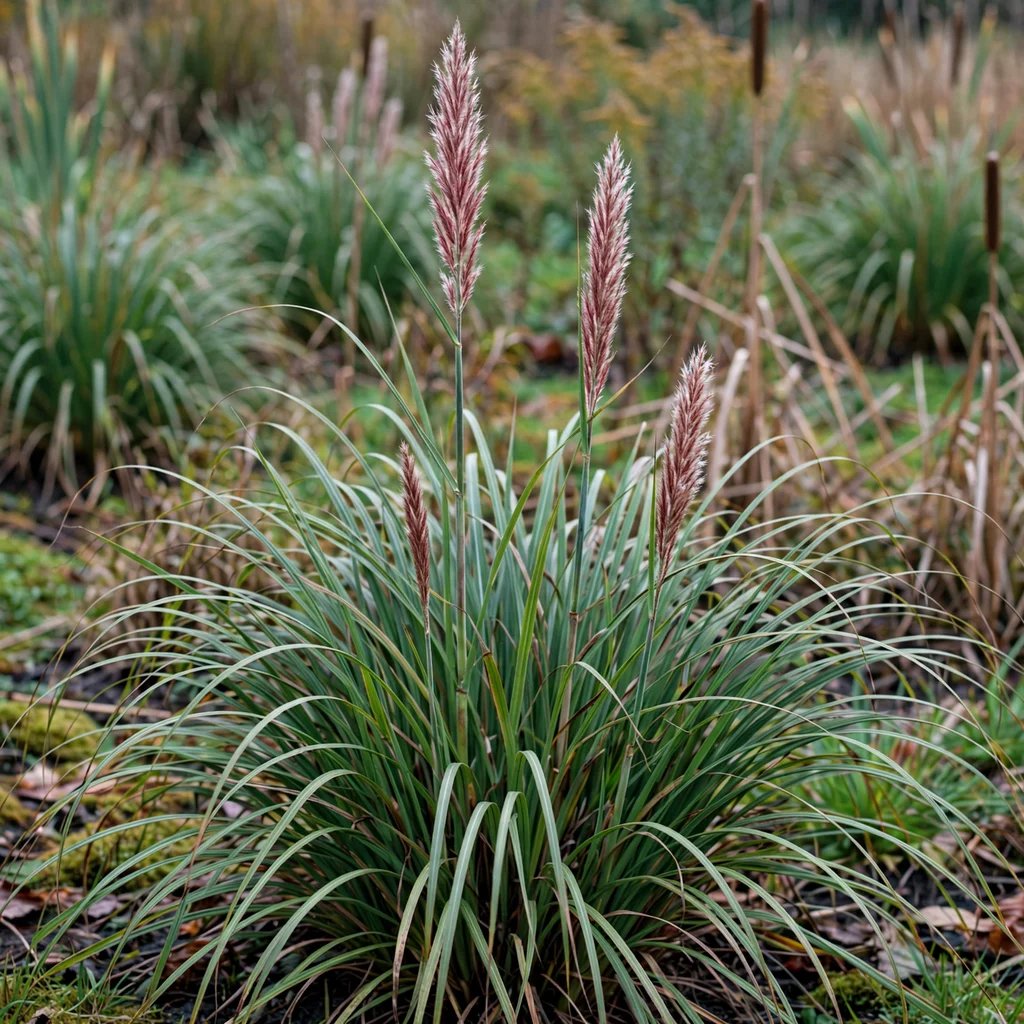
Saccharum giganteum, the sugarcane plumegrass, is a tall clump-forming perennial grass of bogs and wet ditches, reaching 3 to 8 feet in leaf with feathery plumes to 10 feet. The long narrow leaves sheath the lower stems with white hairs at the base and turn brown to copper-purple in fall, while the flowers carry no petals and open as a large fluffy terminal panicle.
Erianthus giganteus is the name it still sells under, but it is the same species and needs constantly moist acidic soil at a pond edge or swale, not dry ground despite its size. Clumps widen to 3 to 4 feet and hold cover through winter, with sharp leaf margins that cut and foliage that deer leave alone while skippers and Common Wood-Nymph use it as a larval host.
Uses & Benefits:
Essentials
At a Glance
Plant Type
Grass
Height
120"
Width
48"
Light
Full Sun
Zones
4, 5, 6, 7, 8, 9, 10
Water
High
Humidity
High
Lifespan
Perennial
Native To
Eastern and Southeastern USA to Mexico, Caribbean and South America
Toxicity
Unknown - sharp leaf edges can cut skin
Bloom period
Autumn
In flower about 3 months of the year
Planting
How to Grow
- Plant divisions in spring in full sun in acidic sandy loam to clay that stays moist to wet.
- Set the crown at soil level, water deeply, and mulch 2 to 3 inches to hold moisture.
- Water through dry spells; do not let the root zone dry out in summer.
- Cut all old stems to the ground in late winter before new growth starts.
- Divide only when the center thins, lifting the clump during dormancy.
Pro Tip
Give it full sun and soil that never fully dries; cut the old stems to the ground in late winter before growth resumes, wearing gloves against the sharp leaf edges.
Keep It Thriving
Care Guide
Do
- Keep soil consistently moist, especially the first season.
- Mulch to conserve moisture in sandy soils.
- Wear gloves when handling foliage with sharp edges.
- Give each clump 3 to 4 feet of space for air and size.
Don't
- Do not plant in dry or alkaline soil and expect it to thrive.
- Do not cut back in fall; leave plumes and cover for winter.
- Do not divide every year; disturb the clump only as needed.
Seasonal Care Calendar
| Task | Jan | Feb | Mar | Apr | May | Jun | Jul | Aug | Sep | Oct | Nov | Dec |
|---|---|---|---|---|---|---|---|---|---|---|---|---|
| Divide | ||||||||||||
| Mulch | ||||||||||||
| Plant | ||||||||||||
| Propagate | ||||||||||||
| Spring Cleanup |
Watch Out For
Pests & Diseases
Common Pests
Common Diseases
In the Garden
Landscape Uses & Companions
Landscape Uses
Multiply
Propagation Methods
Good to Know
Common Questions
Sugarcane Plumegrass questions
What zones can Sugarcane Plumegrass grow in?
Sugarcane Plumegrass is hardy in USDA Zones 4–10: in that range it survives winter in the ground.
Is Sugarcane Plumegrass deer resistant?
Yes — Sugarcane Plumegrass is rated deer-resistant. Deer typically pass it over, though extreme hunger can override any plant's defenses.
When does Sugarcane Plumegrass bloom?
Sugarcane Plumegrass typically blooms in fall. Exact timing shifts a week or two with your zone — Sow's bloom calendar maps it to your garden.
Does Sugarcane Plumegrass need full sun?
Sugarcane Plumegrass does best in full sun (6+ hours).
More Saccharum to compare

Keep exploring
Explore the genus
Grow Sugarcane Plumegrass with confidence
See it in a design of your actual yard, get zone-matched care reminders, and track it season by season in your garden journal.