The Story
Plant Bio
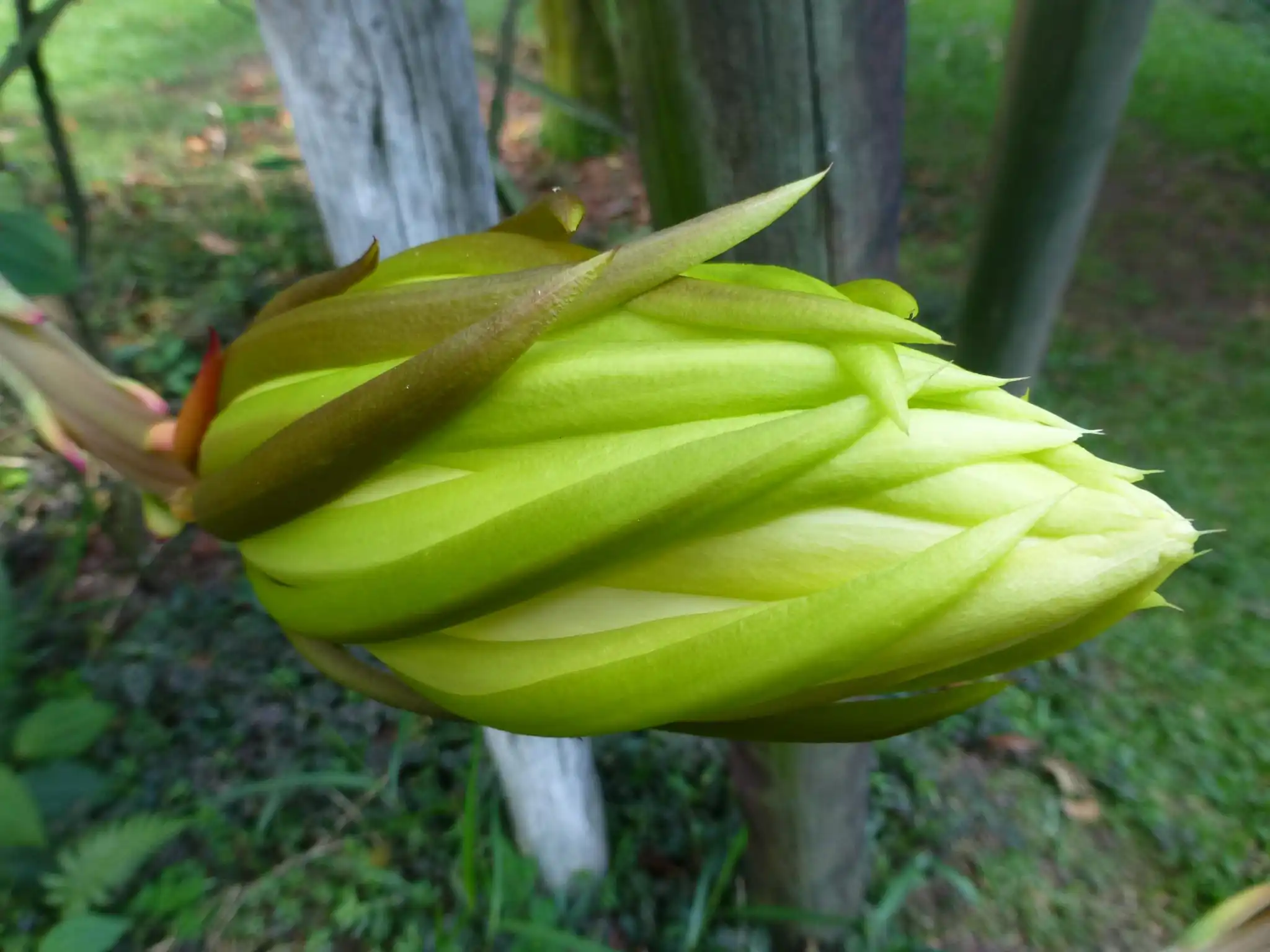
Selenicereus megalanthus is a climbing epiphytic cactus from tropical forests of Colombia to Peru and Central America, clinging by aerial roots and reaching 10 to 15 feet untrained. It forms thick three-angled green stems without horny margins and opens very large white night flowers with yellow stamens, the largest in the cactus family.
It differs from red-skinned pitayas as a tetraploid with slender stems and yellow knobby fruit armed with small spines that detach at ripeness. Flowers open at night across repeated summer to fall cycles and set fruit 30 to 50 days later, with five to six harvests a year in the tropics.
Uses & Benefits:
Essentials
At a Glance
Plant Type
Fruit Vegetable
Height
96"
Width
108"
Light
Full Sun, Partial Sun
Zones
9, 10
Water
Low to moderate, deep soak then dry
Humidity
Tolerates humidity, rots in excess rain
Lifespan
Long-lived climbing perennial
Native To
Colombia, Costa Rica, Ecuador, Nicaragua, Panama, Peru, Trinidad-Tobago, Venezuela
Toxicity
Unknown, not listed as poisonous; stems and unripe fruit are spiny
Bloom period
Summer – Fall
In flower about 6 months of the year
Planting
How to Grow
- Plant in a fast-draining sandy loam cactus mix in full sun to part shade, with shade cloth in hot inland valleys to prevent sunburn.
- Set a stout 6-foot post with a crossarm top, train one strong stem up with soft ties, then let top growth branch and weep.
- Water deeply then let the mix dry, watering less in winter; never leave roots waterlogged.
- Feed lightly in spring and summer with a balanced cactus or fruit fertilizer.
- Protect from frost; grow outdoors in zones 10-11 and in a pot or greenhouse where winter drops below freezing.
Pro Tip
Hand-pollinate newly opened night flowers with a soft brush and harvest when the small spines wipe easily from the yellow skin; most failures are fruit split and rot from overwatering and hard pruning.
Keep It Thriving
Care Guide
Do
- Provide a strong trellis and tie new growth until aerial roots grip
- Prune after fruiting to remove spent, crowded, or damaged stems for airflow
- Hand-pollinate night flowers for reliable set
Don't
- Do not overwater or leave in soggy soil
- Do not cut hard back into old stems every year
- Do not let fruit sit wet through rain without drainage
Seasonal Care Calendar
| Task | Jan | Feb | Mar | Apr | May | Jun | Jul | Aug | Sep | Oct | Nov | Dec |
|---|---|---|---|---|---|---|---|---|---|---|---|---|
| Fertilize | ||||||||||||
| Harvest | ||||||||||||
| Pest Check | ||||||||||||
| Prune | ||||||||||||
| Winter Prep |
Watch Out For
Pests & Diseases
Common Pests
Common Diseases
In the Garden
Landscape Uses & Companions
Landscape Uses
Companion Plants
Multiply
Propagation Methods
Good to Know
Common Questions
Yellow Dragon Fruit questions
What zones can Yellow Dragon Fruit grow in?
Yellow Dragon Fruit is hardy in USDA Zones 9–10: in that range it survives winter in the ground. Colder than Zone 9, grow it in a container you can move to shelter for the winter, or as an annual.
When does Yellow Dragon Fruit bloom?
Yellow Dragon Fruit typically blooms from summer to fall. Exact timing shifts a week or two with your zone — Sow's bloom calendar maps it to your garden.
Does Yellow Dragon Fruit need full sun?
Yellow Dragon Fruit does best in full sun to part shade. In hot climates, afternoon shade keeps blooms fresher longer.
Is Yellow Dragon Fruit drought tolerant?
Yes — once established (usually after the first full season), Yellow Dragon Fruit handles dry spells with minimal watering. Water deeply its first year to build the root system that makes that possible.
Keep exploring
Explore the genus
Hardy in your zone?
Grow Yellow Dragon Fruit with confidence
See it in a design of your actual yard, get zone-matched care reminders, and track it season by season in your garden journal.