The Story
Plant Bio
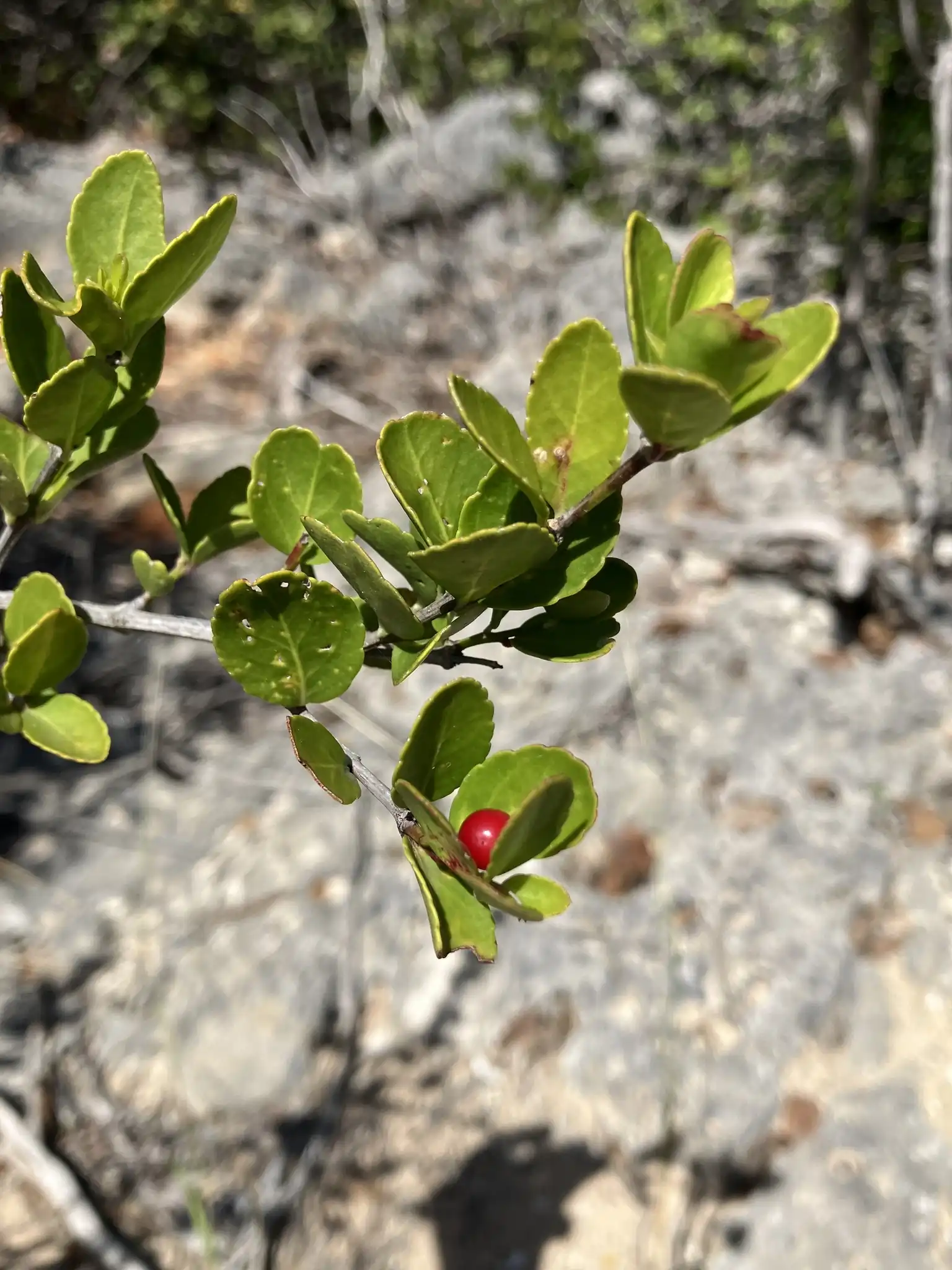
Crossopetalum rhacoma is an evergreen shrub to small multi-stemmed tree reaching 2 to 6 feet in cultivation, with fountain-like arching stems set with opposite 1-inch oval leathery bright green leaves. Flowers are tiny four-petaled green to pink clusters in the leaf axils on 7 to 12 mm stalks, followed by bright red to maroon drupes that hold on the plant for months.
The display is fruit, not flower — plants carry pea-sized red berries nearly all year against crenate evergreen foliage. It roots in sand and limestone with fast drainage in full sun to light shade, persisting through long dry periods once established and dropping out where soil floods or hard frost occurs.
Uses & Benefits:
Essentials
At a Glance
Plant Type
Shrub
Height
72"
Width
96"
Light
Full Sun, Partial Sun
Zones
10
Water
Low
Humidity
Tolerant of hot humid air
Lifespan
Long-lived evergreen shrub
Native To
South Florida, Caribbean, Mexico to northern South America
Toxicity
Berries reported sweet, not poisonous
Bloom period
Year round
In flower about 12 months of the year
Planting
How to Grow
- Plant in full sun to light shade in sand or limestone that drains fast.
- Water to settle, then water through the first dry season until rooted.
- Mulch with 2 inches of pine bark or leaf litter kept off stems.
- Leave unpruned except to remove dead wood; feed little or not at all.
Pro Tip
Set nursery-propagated plants in lime sand above standing saltwater and leave the arching stems unclipped; fruit forms on current growth without feeding.
Keep It Thriving
Care Guide
Do
- Plant in well-drained lime sand or broken limestone
- Water until established, then leave dry between rains
- Buy nursery-propagated plants
Don't
- Do not plant where water stands or floods
- Do not collect from wild Florida populations
- Do not plant where winter falls below zone 10A
Seasonal Care Calendar
| Task | Jan | Feb | Mar | Apr | May | Jun | Jul | Aug | Sep | Oct | Nov | Dec |
|---|---|---|---|---|---|---|---|---|---|---|---|---|
| Mulch | ||||||||||||
| Plant | ||||||||||||
| Propagate | ||||||||||||
| Prune |
Watch Out For
Pests & Diseases
Common Pests
Common Diseases
In the Garden
Landscape Uses & Companions
Landscape Uses
Multiply
Propagation Methods
Good to Know
Common Questions
Maidenberry questions
What zones can Maidenberry grow in?
Maidenberry is hardy in USDA Zone 10: in that range it survives winter in the ground. Colder than Zone 10, grow it in a container you can move to shelter for the winter.
When does Maidenberry bloom?
Maidenberry typically blooms year-round. Exact timing shifts a week or two with your zone — Sow's bloom calendar maps it to your garden.
Does Maidenberry need full sun?
Maidenberry does best in full sun to part shade. In hot climates, afternoon shade keeps blooms fresher longer.
Is Maidenberry drought tolerant?
Yes — once established (usually after the first full season), Maidenberry handles dry spells with minimal watering. Water deeply its first year to build the root system that makes that possible.
More Crossopetalum to compare
Keep exploring
Explore the genus
Hardy in your zone?
Grow Maidenberry with confidence
See it in a design of your actual yard, get zone-matched care reminders, and track it season by season in your garden journal.