The Story
Plant Bio
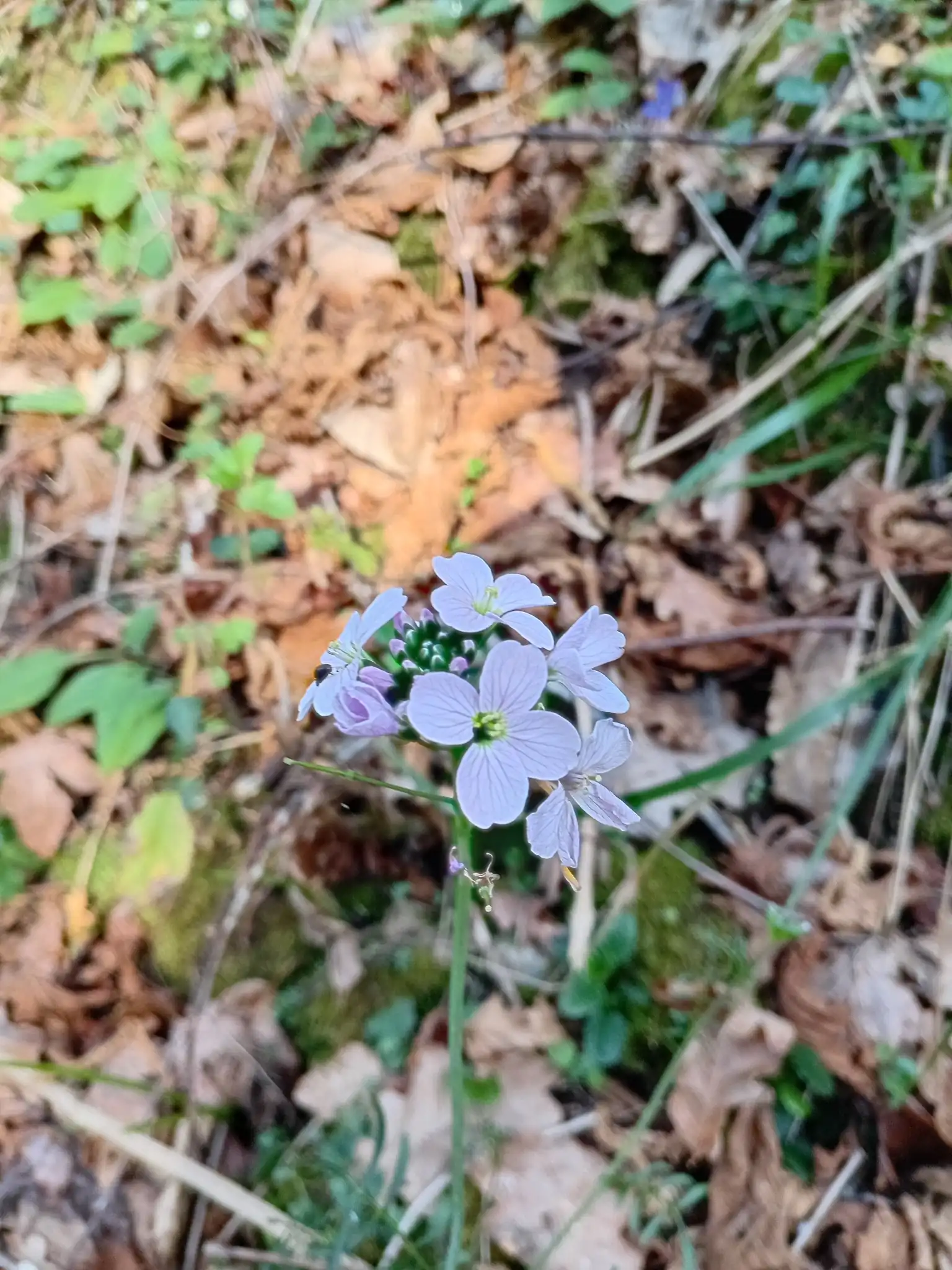
Cardamine pratensis is an herbaceous perennial native to moist meadows, stream banks, and damp ditches across circumpolar Eurasia and North America. It forms a loose basal rosette of compound pinnate leaves that spreads slowly by short underground rhizomes.
In spring, upright stems emerge bearing terminal clusters of delicate four-petaled flowers in shades of pale lilac-pink or white. The small rounded leaflets remain fresh green through the growing season when planted in wet, humus-rich soils.
Uses & Benefits:
Essentials
At a Glance
Plant Type
Perennial
Height
16"
Width
18"
Light
Full Sun, Partial Sun
Zones
4, 5, 6, 7
Water
High
Humidity
High
Lifespan
Perennial
Native To
Eurasia, North America
Toxicity
Non-toxic
Bloom period
Spring – Late spring
In flower about 3 months of the year
Planting
How to Grow
- Select a planting site in full sun to partial shade with rich, damp to wet soil.
- Work organic compost or leaf mold into the soil to improve moisture retention.
- Plant crowns at soil level, spacing them 12 to 15 inches apart.
- Water thoroughly after planting and maintain consistent moisture at all times.
Pro Tip
Site this plant in permanently damp or boggy soil, as dry soil conditions trigger rapid foliar scorching and premature summer dormancy.
Keep It Thriving
Care Guide
Do
- Keep soil consistently wet to moist throughout spring and summer.
- Mulch around basal rosettes with organic compost to retain soil moisture.
- Plant near water edges, rain gardens, or damp woodland depressions.
Don't
- Do not let the soil dry out during warm weather.
- Avoid cutting deep into the crown base when trimming spent stems.
- Do not apply heavy synthetic fertilizers; light compost mulching is sufficient.
Seasonal Care Calendar
| Task | Jan | Feb | Mar | Apr | May | Jun | Jul | Aug | Sep | Oct | Nov | Dec |
|---|---|---|---|---|---|---|---|---|---|---|---|---|
| Deadhead | ||||||||||||
| Divide | ||||||||||||
| Mulch | ||||||||||||
| Spring Cleanup |
Watch Out For
Pests & Diseases
Common Pests
Common Diseases
In the Garden
Landscape Uses & Companions
Landscape Uses
Multiply
Propagation Methods
Good to Know
Common Questions
Cuckoo Flower questions
What zones can Cuckoo Flower grow in?
Cuckoo Flower is hardy in USDA Zones 4–7: in that range it survives winter in the ground. Warmer than Zone 7, winter isn't the problem: it prefers colder winters, and summer heat can shorten its life.
When does Cuckoo Flower bloom?
Cuckoo Flower typically blooms in spring. Exact timing shifts a week or two with your zone — Sow's bloom calendar maps it to your garden.
Does Cuckoo Flower need full sun?
Cuckoo Flower does best in full sun to part shade. In hot climates, afternoon shade keeps blooms fresher longer.
Keep exploring
Explore the genus
Hardy in your zone?
Grow Cuckoo Flower with confidence
See it in a design of your actual yard, get zone-matched care reminders, and track it season by season in your garden journal.