The Story
Plant Bio
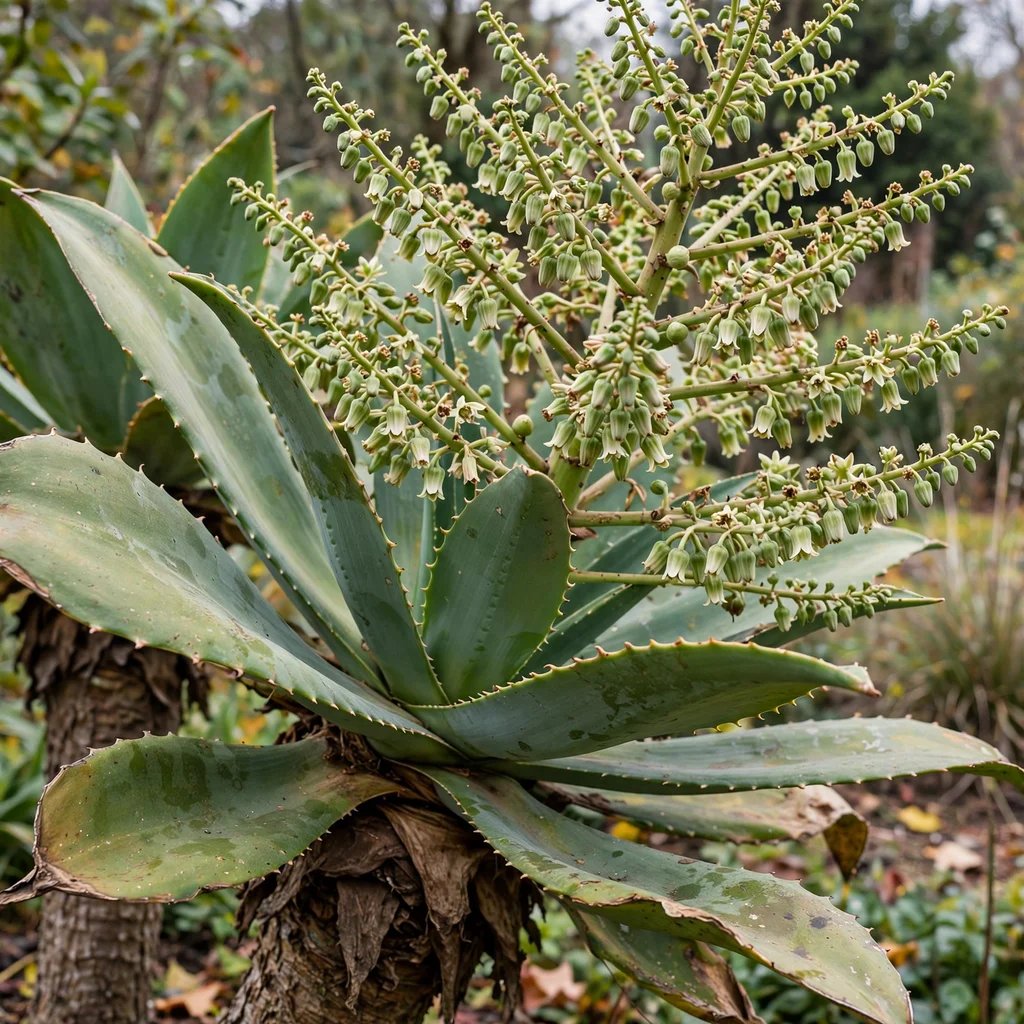
Furcraea macdougallii is a tree-forming rosette succulent from southern Mexico, building a single unbranched trunk topped by a rosette of stiff upright leaves. The leaves reach six feet long with regularly spaced hooked marginal teeth, and the rosette dies after sending up a tall terminal panicle that sets bulbils.
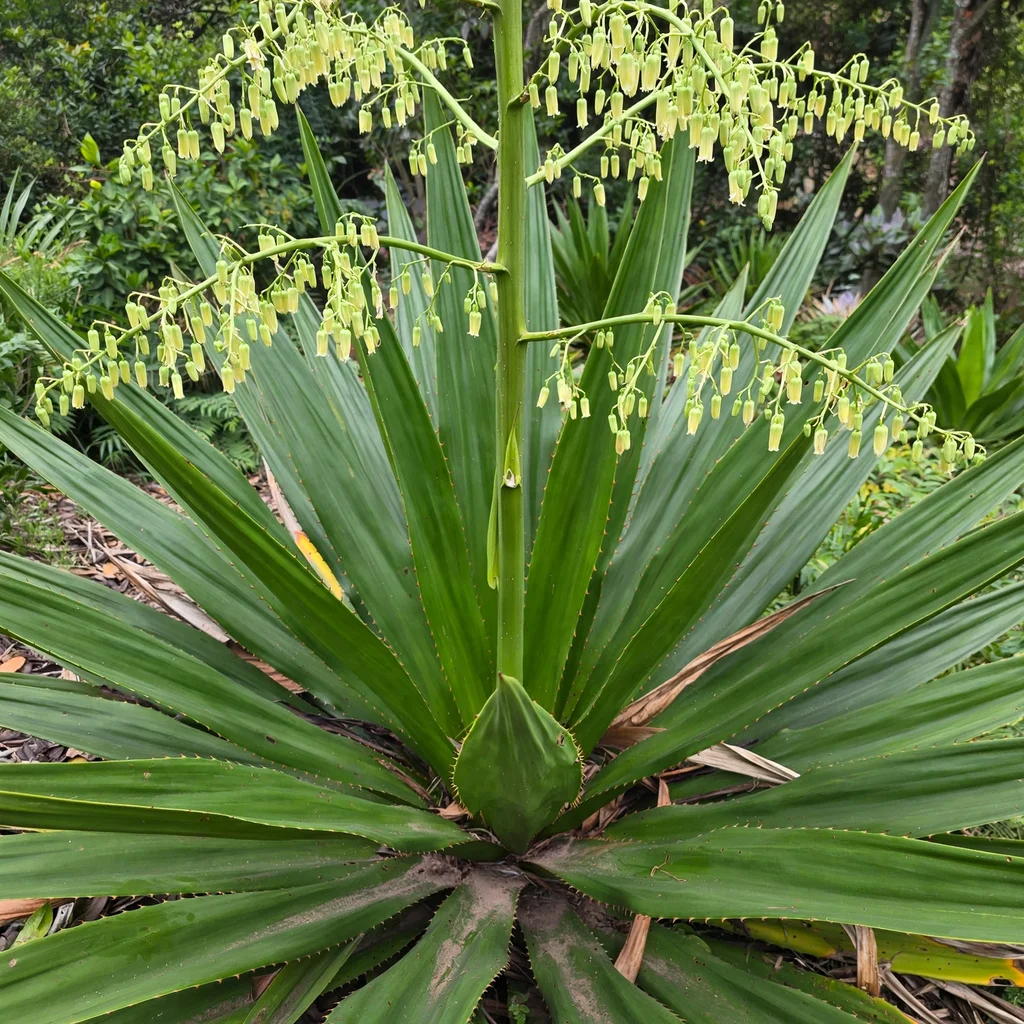
True plants form a taller trunk to fifteen feet with dark green new growth, less blue than Furcraea bedinghausii with which nursery stock is often confused. After about thirty years the trunked rosette flowers once with greenish-white hanging bells on a twenty to thirty foot spike, then collapses and is replaced by the bulbils that form at the flower bases.
Uses & Benefits:
Essentials
At a Glance
Plant Type
Cactus Succulent
Height
180"
Width
120"
Light
Full Sun, Partial Sun
Zones
8, 9, 10
Water
Very low
Humidity
Low - prefers dry air
Lifespan
Monocarpic, about 30 years then replaced by bulbils
Native To
Mexico - Puebla, Oaxaca, Chiapas
Toxicity
Unknown - hooked teeth cause injury
Bloom period
Fall
In flower about 3 months of the year
Planting
How to Grow
- Plant in full sun in very well-drained calcareous or sandy soil with the crown set above grade.
- Water deeply at planting, then irrigate little to none once established.
- Allow room for a 10-foot rosette and an eventual 15-foot trunk clear of paths and eaves.
- Do not fertilize; it thrives in poor thin soils.
- After the monocarpic flowering, leave bulbils on the spike to root and replace the spent rosette.
Pro Tip
Buy seed-grown plants with stiff upright green leaves; much bulb-grown stock sold as Furcraea longaeva is Furcraea bedinghausii with shorter bluer leaves.
Keep It Thriving
Care Guide
Do
- Plant in full sun with sharp drainage on limestone or sand.
- Give it space for trunk height and hooked leaf spread.
- Monitor the base in summer for snout weevil damage.
Don't
- Do not overwater or set it in clay that stays wet.
- Do not cut the trunk or prune live leaves.
- Do not fertilize regularly.
Seasonal Care Calendar
| Task | Jan | Feb | Mar | Apr | May | Jun | Jul | Aug | Sep | Oct | Nov | Dec |
|---|---|---|---|---|---|---|---|---|---|---|---|---|
| Pest Check | ||||||||||||
| Plant | ||||||||||||
| Prune | ||||||||||||
| Winter Prep |
Watch Out For
Pests & Diseases
Common Pests
Common Diseases
In the Garden
Landscape Uses & Companions
Landscape Uses
Multiply
Propagation Methods
Good to Know
Common Questions
MacDougall's Century Plant questions
What zones can MacDougall's Century Plant grow in?
MacDougall's Century Plant is hardy in USDA Zones 8–10: in that range it survives winter in the ground. Colder than Zone 8, grow it in a container you can move to shelter for the winter, or as an annual.
Is MacDougall's Century Plant deer resistant?
Yes — MacDougall's Century Plant is rated deer-resistant. Deer typically pass it over, though extreme hunger can override any plant's defenses.
When does MacDougall's Century Plant bloom?
MacDougall's Century Plant typically blooms in fall. Exact timing shifts a week or two with your zone — Sow's bloom calendar maps it to your garden.
Does MacDougall's Century Plant need full sun?
MacDougall's Century Plant does best in full sun to part shade. In hot climates, afternoon shade keeps blooms fresher longer.
Is MacDougall's Century Plant drought tolerant?
Yes — once established (usually after the first full season), MacDougall's Century Plant handles dry spells with minimal watering. Water deeply its first year to build the root system that makes that possible.
More Furcraea to compare
Keep exploring
Explore the genus
Hardy in your zone?
Grow MacDougall's Century Plant with confidence
See it in a design of your actual yard, get zone-matched care reminders, and track it season by season in your garden journal.