The Story
Plant Bio
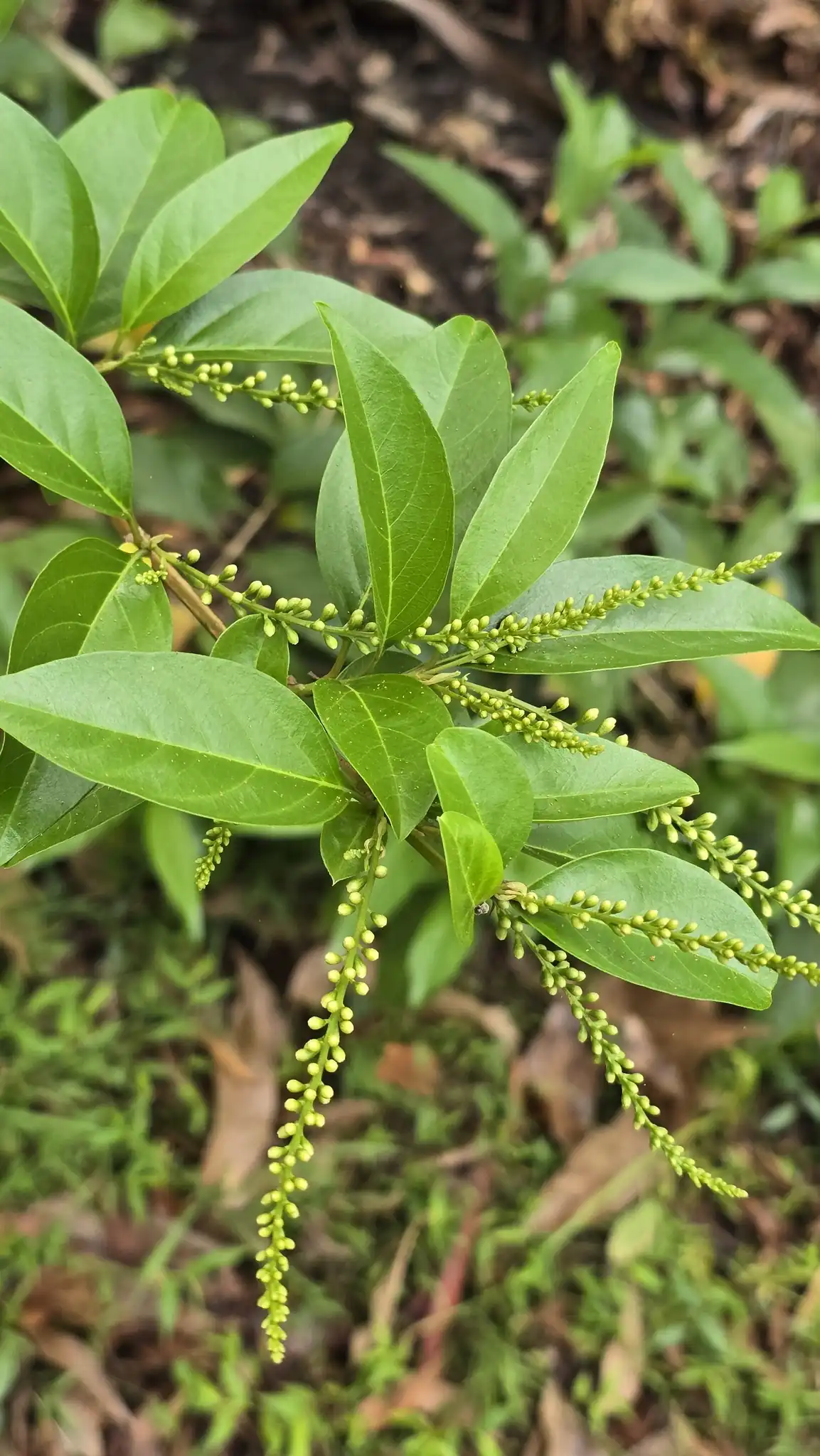
Citharexylum spinosum is an evergreen shrub to small tree from southern Florida, the Caribbean and northern South America, reaching about 25 feet in gardens with a straight, fast-growing, multi-stemmed frame. The foliage is glossy elliptical leaves held evergreen, with new leaves emerging bright glossy green with undulating margins.
Despite the epithet spinosum it bears no spines or thorns. Plants are dioecious, with pendant racemes of small fragrant white flowers borne spring through fall, followed by fleshy orange berries ripening to brown-black on female plants only.
Uses & Benefits:
Essentials
At a Glance
Plant Type
Tree
Height
300"
Width
180"
Light
Full Sun, Partial Sun
Zones
10
Water
Low once established
Humidity
Tolerates humid subtropical
Lifespan
Long-lived tree
Native To
Southern Florida, Caribbean, Panama to the Guianas
Toxicity
Unknown - no toxicity reported
Bloom period
Spring – Fall
In flower about 9 months of the year
Planting
How to Grow
- Plant in full sun to partial shade in sandy, free-draining soil with room for a 15-foot spread.
- Water regularly until established, then taper off; established plants tolerate very dry to very wet soil.
- Train to a single trunk early for a tree, or leave multi-stemmed for a screen or hedge.
- Prune after the spring flower flush to shape and control size.
Pro Tip
Train to a single trunk early if a tree is wanted; left untrained it stays multi-stemmed, and plant a female if berries for birds are wanted as males never fruit.
Keep It Thriving
Care Guide
Do
- Do plant in well-drained sandy soil in zones 10b-11.
- Do train early for a single-trunk tree form.
- Do leave berries on female plants for birds.
Don't
- Don't plant where hard frost occurs; it is frost tender.
- Don't expect spines or fruit on every plant; males never fruit.
- Don't plant in Hawaii where it can invade native vegetation.
Seasonal Care Calendar
| Task | Jan | Feb | Mar | Apr | May | Jun | Jul | Aug | Sep | Oct | Nov | Dec |
|---|---|---|---|---|---|---|---|---|---|---|---|---|
| Fertilize | ||||||||||||
| Mulch | ||||||||||||
| Pest Check | ||||||||||||
| Plant | ||||||||||||
| Prune |
Watch Out For
Pests & Diseases
Common Pests
Common Diseases
In the Garden
Landscape Uses & Companions
Landscape Uses
Multiply
Propagation Methods
Good to Know
Common Questions
Florida Fiddlewood questions
What zones can Florida Fiddlewood grow in?
Florida Fiddlewood is hardy in USDA Zone 10: in that range it survives winter in the ground. Colder than Zone 10, winters are too cold for it to survive outdoors.
When does Florida Fiddlewood bloom?
Florida Fiddlewood typically blooms from spring to fall. Exact timing shifts a week or two with your zone — Sow's bloom calendar maps it to your garden.
Does Florida Fiddlewood need full sun?
Florida Fiddlewood does best in full sun to part shade. In hot climates, afternoon shade keeps blooms fresher longer.
Is Florida Fiddlewood drought tolerant?
Yes — once established (usually after the first full season), Florida Fiddlewood handles dry spells with minimal watering. Water deeply its first year to build the root system that makes that possible.
Keep exploring
Explore the genus
Hardy in your zone?
Grow Florida Fiddlewood with confidence
See it in a design of your actual yard, get zone-matched care reminders, and track it season by season in your garden journal.