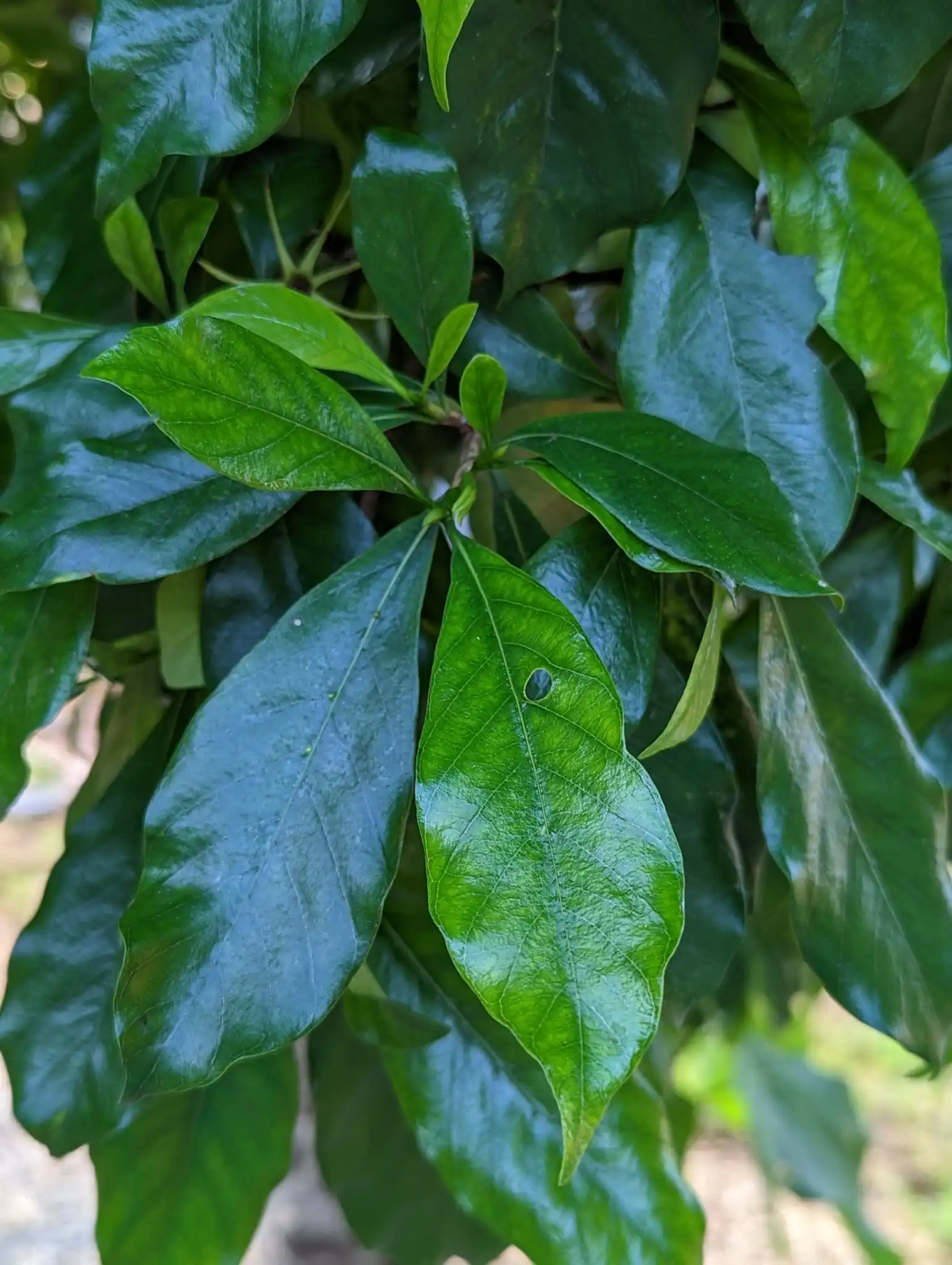
18 named cultivars
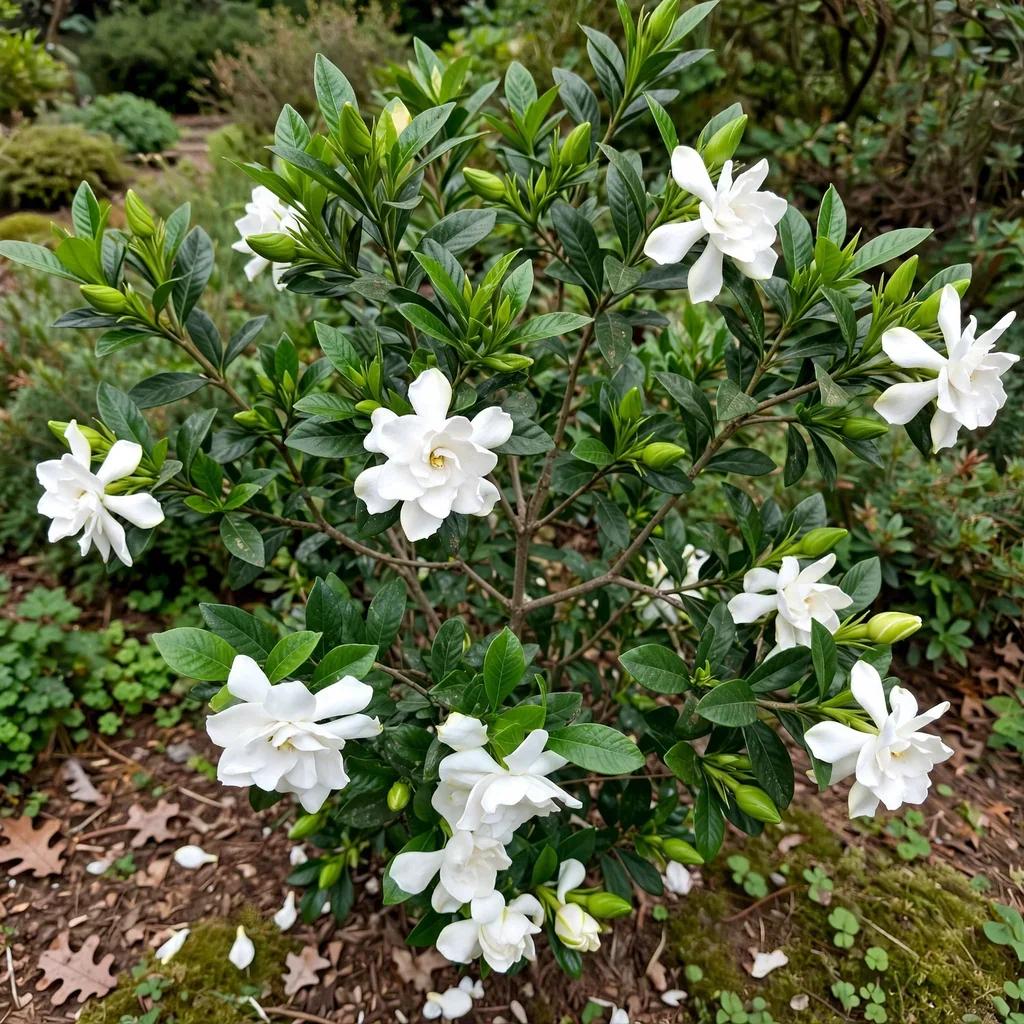 ‘Jubilation’Gardenia Jubilation
 ‘Steady As She Goes’Steady As She Goes Gardenia
 ‘Diamond Spire’Gardenia jasminoides Diamond Spire
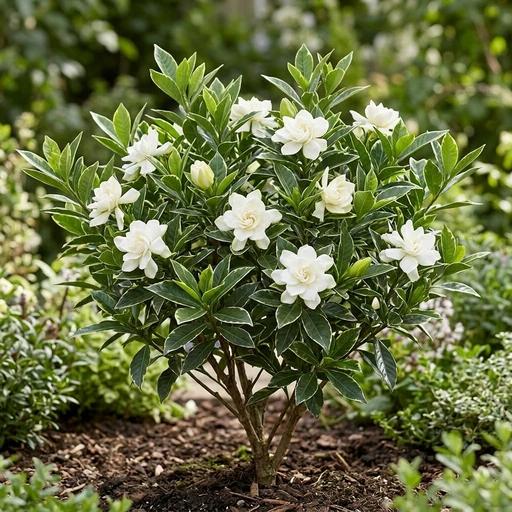 ‘Scent Amazing’ScentAmazing Gardenia
 ‘Radicans’Dwarf Gardenia
 ‘Double Mint’Double Mint Gardenia
 ‘Leefive’Leefive Double Mint Gardenia
 ‘Kleim’Kleim's Hardy Gardenia
 ‘Leeone’Jubilation Gardenia
 ‘Prince Charles’Prince Charles Gardenia
 ‘Buttons’Buttons Gardenia
 ‘WAH-LM’Snow Girl Gardenia
 ‘Kimura’Gardenia
 ‘Golden Pathway’Golden Pathway Gardenia
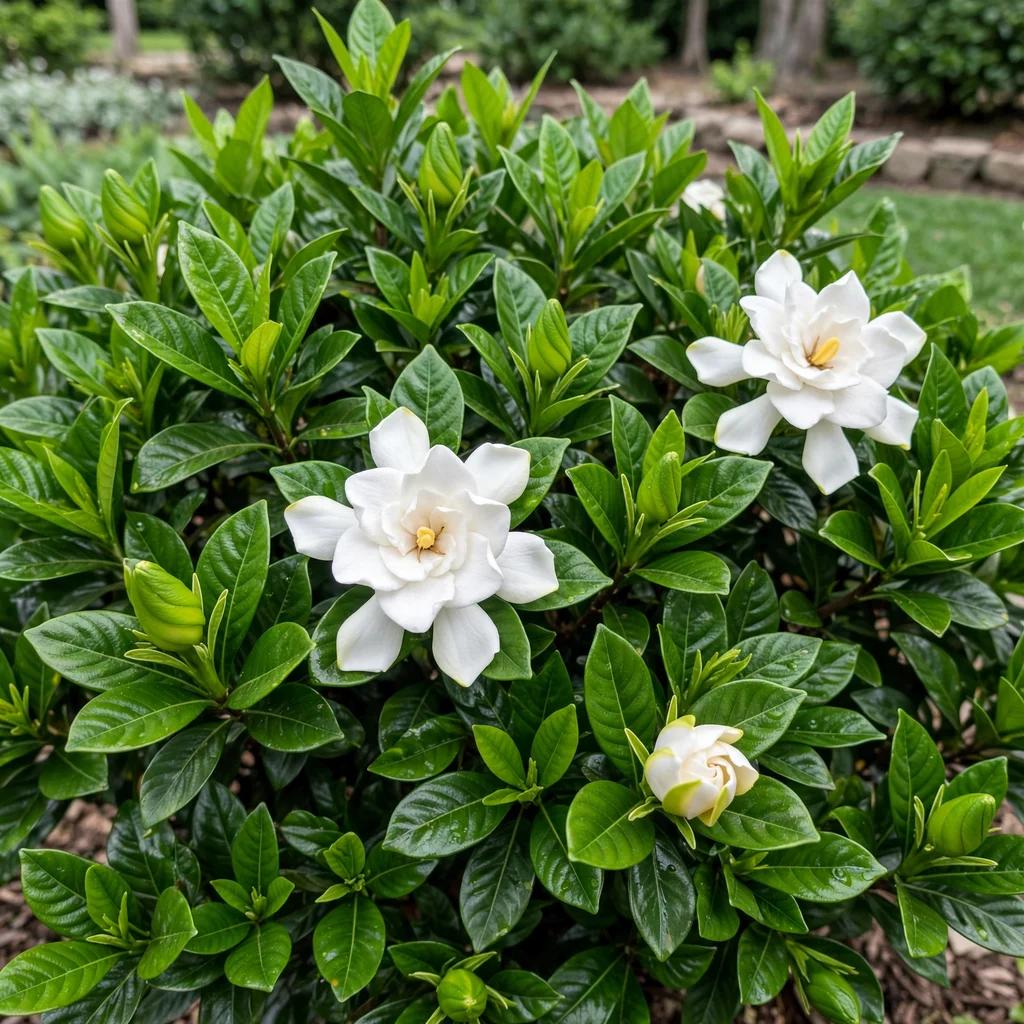 ‘Frostproof’Gardenia
 ‘Fragrant Pathways’Dwarf Gardenia
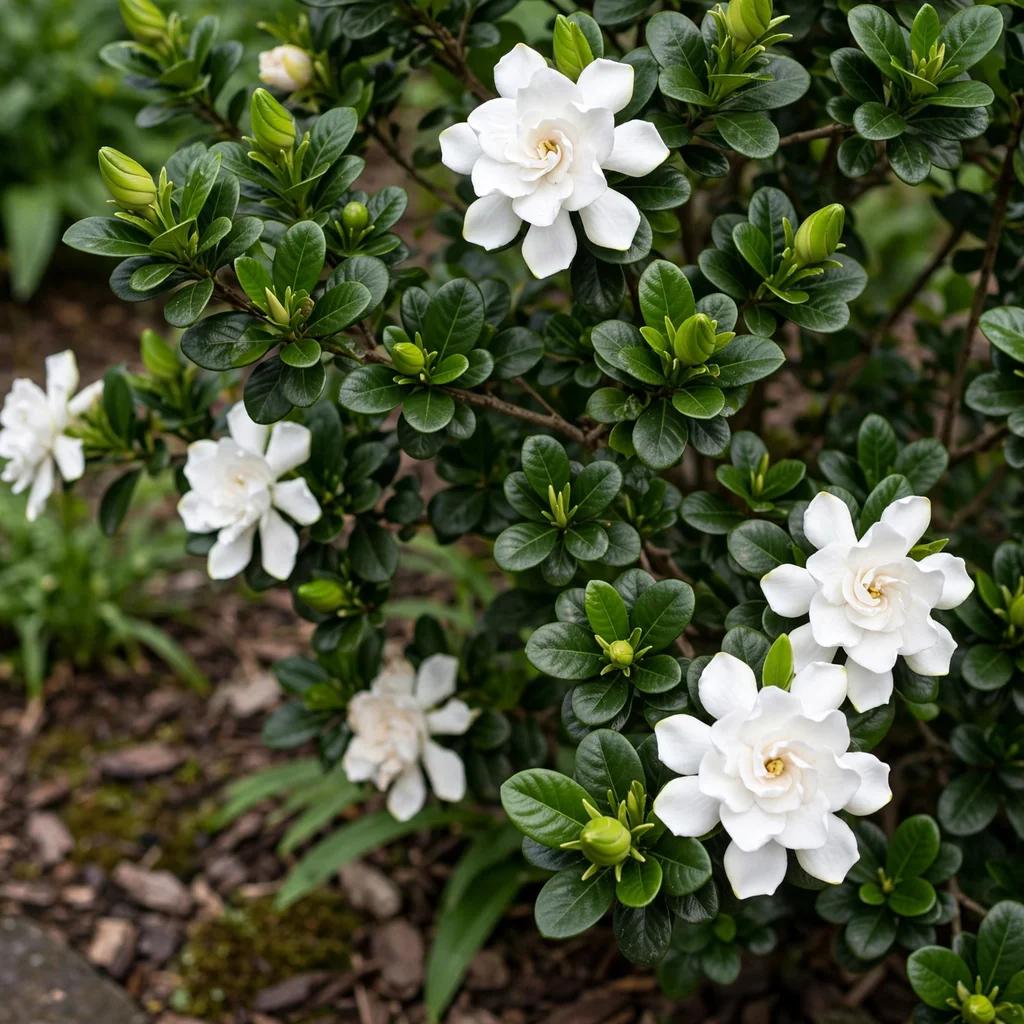 ‘Crown Jewel’Crown Jewel Gardenia
 ‘Fortuniana’Cape Jasmine
The Story
Plant Bio
Gardenia jasminoides is a dense, mounding broadleaf evergreen shrub from southern China, Taiwan, Japan and Vietnam, reaching 4 to 8 ft tall and wide. Opposite or whorled leaves are 2 to 4 in long, rugose, glossy dark emerald above and duller beneath, with deeply impressed veins. Growth is medium and multi-stemmed.
The waxy white flowers, 1 to 3 in across, carry one of the strongest fragrances of any hardy shrub, and they age from white to cream-yellow as they fade. Flower buds drop readily when the plant is moved, chilled, dried out or overwatered, which is the single most common complaint about this species.
Uses & Benefits:
Essentials
At a Glance
Plant Type
Shrub
Height
72"
Width
72"
Light
Full Sun, Partial Sun
Zones
7, 8, 9, 10
Water
Medium; even moisture, never waterlogged
Humidity
Prefers humid air; dislikes dry indoor heat
Lifespan
Moderate to long; often 20 years or more
Native To
Southern China, Taiwan, Japan and Vietnam
Toxicity
No significant toxicity reported
Marketplace
Where to Buy
Shipping costs Year-round shipping Free shipping
Planting
How to Grow
- Choose a sheltered site in sun to partial shade, out of cold wind.
- Test the soil; it must be acid, ideally pH 5.0 to 6.0.
- Plant into rich, well-drained ground high, with the root ball proud.
- Mulch with pine bark or leaf mould, kept off the stems.
- Water steadily and evenly; both drought and waterlogging drop buds.
- Feed with an acid fertiliser after flowering, not in autumn.
Pro Tip
Bud drop is almost always inconsistent watering or a sudden move, not disease; settle the plant and hold moisture even.
Keep It Thriving
Care Guide
Do
- Keep the soil acid and feed with an acid fertiliser 🧪
- Water evenly; avoid swings between dry and sodden 💧
- Site it near a door or window for the scent 🌸
- Check leaf undersides for whitefly regularly 🔍
Don't
- Do not move or repot a plant in bud ❌
- Do not let alkaline soil or hard water raise the pH ❌
- Do not feed late in the season; soft growth will be frosted ❌
Seasonal Care Calendar
| Task | Jan | Feb | Mar | Apr | May | Jun | Jul | Aug | Sep | Oct | Nov | Dec |
|---|---|---|---|---|---|---|---|---|---|---|---|---|
| Feed And Prune | ||||||||||||
| Pest Inspection |
Watch Out For
Pests & Diseases
Common Pests
Common Diseases
In the Garden
Landscape Uses & Companions
Landscape Uses
Multiply
Propagation Methods
Good to Know
Common Questions
Common Gardenia questions
What zones can Common Gardenia grow in?
Common Gardenia is hardy in USDA Zones 7–10. Inside that range it survives winter in the ground; outside it, grow it as an annual or a container plant you protect.
Is Common Gardenia deer resistant?
Yes — Common Gardenia is rated deer-resistant. Deer typically pass it over, though extreme hunger can override any plant's defenses.
When does Common Gardenia bloom?
Common Gardenia typically blooms in late spring into summer through mid-summer. Exact timing shifts a week or two with your zone — Sow's bloom calendar maps it to your garden.
Does Common Gardenia need full sun?
Common Gardenia does best in full sun to part shade. In hot climates, afternoon shade keeps blooms fresher longer.
More Gardenia to compare
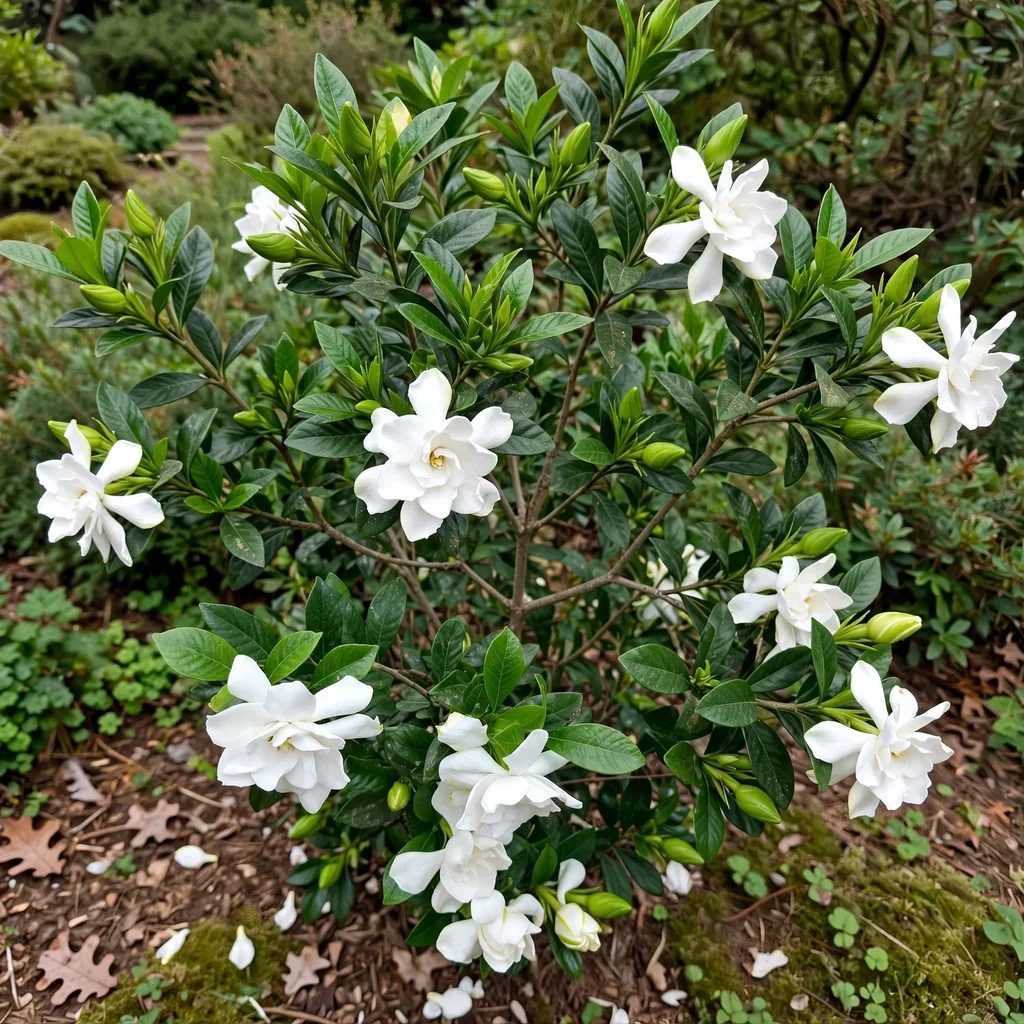
Gardenia Jubilation
Gardenia jasminoides 'Jubilation'
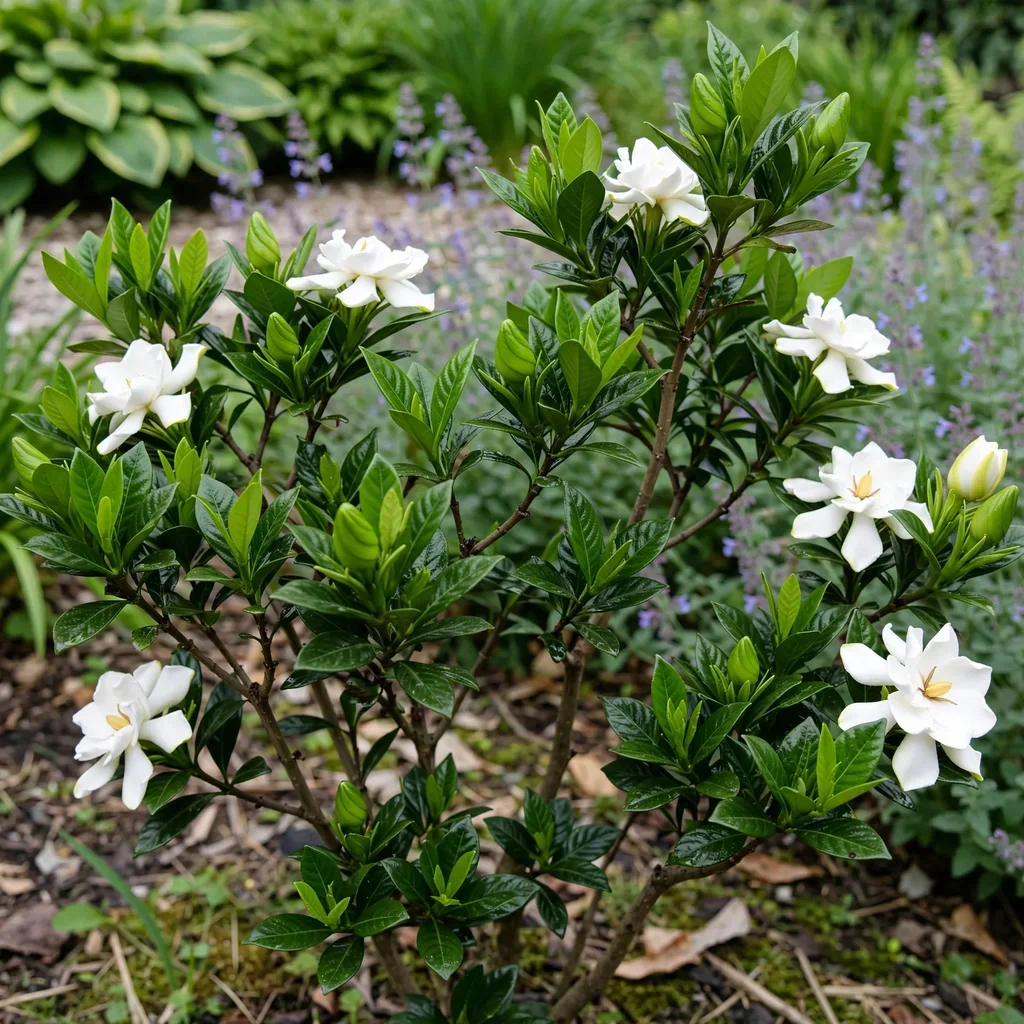
Steady As She Goes Gardenia
Gardenia jasminoides 'Steady As She Goes'
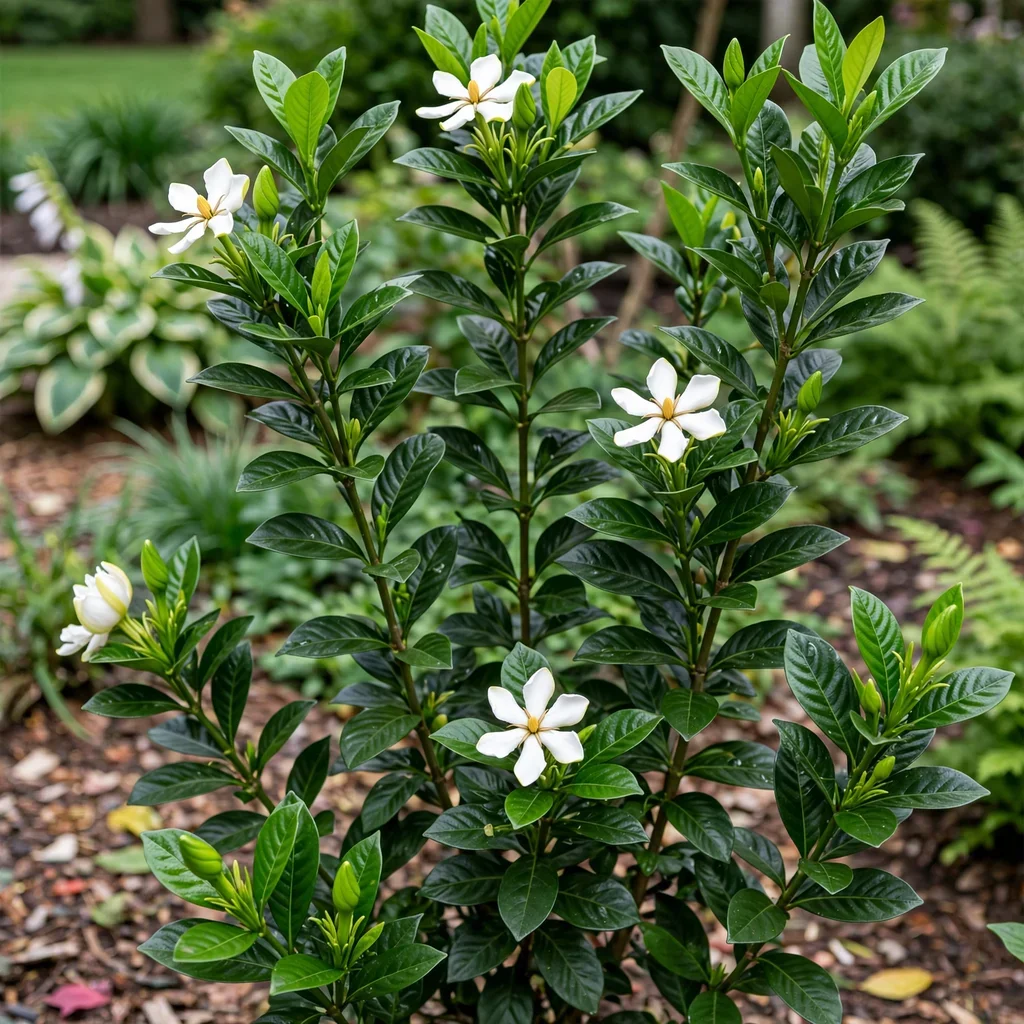
Gardenia jasminoides Diamond Spire
Gardenia jasminoides 'Diamond Spire'
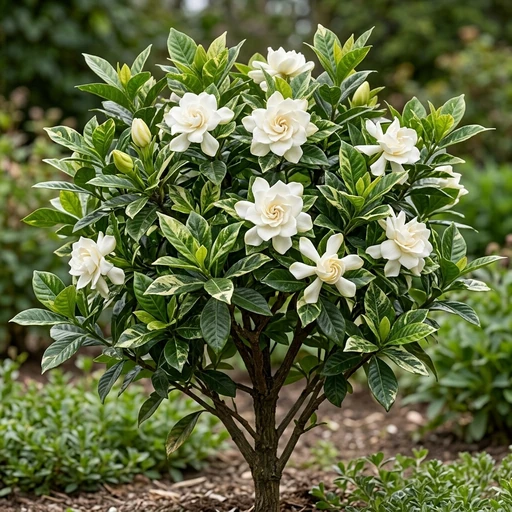
August Beauty Gardenia
Gardenia augusta 'August Beauty'
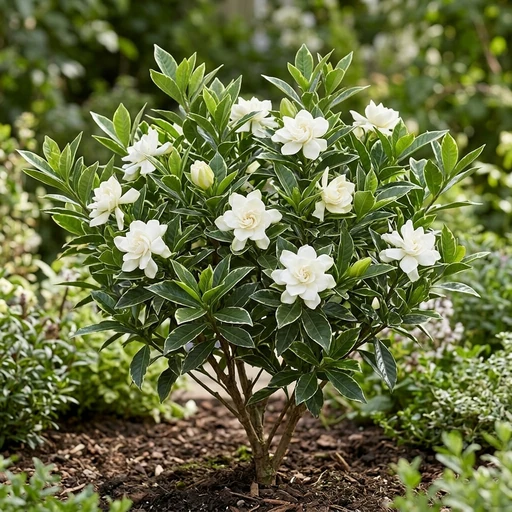
ScentAmazing Gardenia
Gardenia jasminoides 'Scent Amazing'
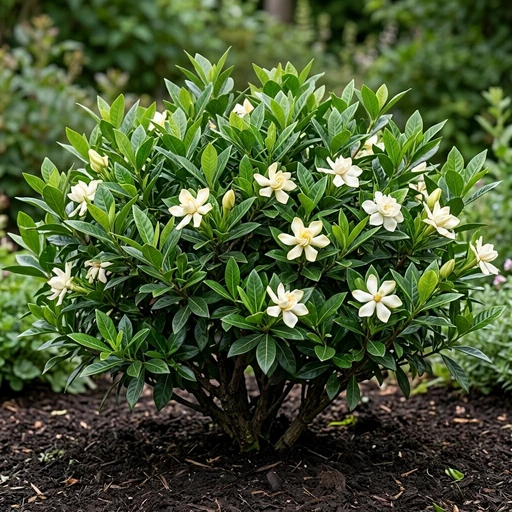
Dwarf Gardenia
Gardenia jasminoides 'Radicans'
Keep exploring
Explore the genus
Hardy in your zone?
Grow Common Gardenia with confidence
See it in a design of your actual yard, get zone-matched care reminders, and track it season by season in your garden journal.