The Story
Plant Bio
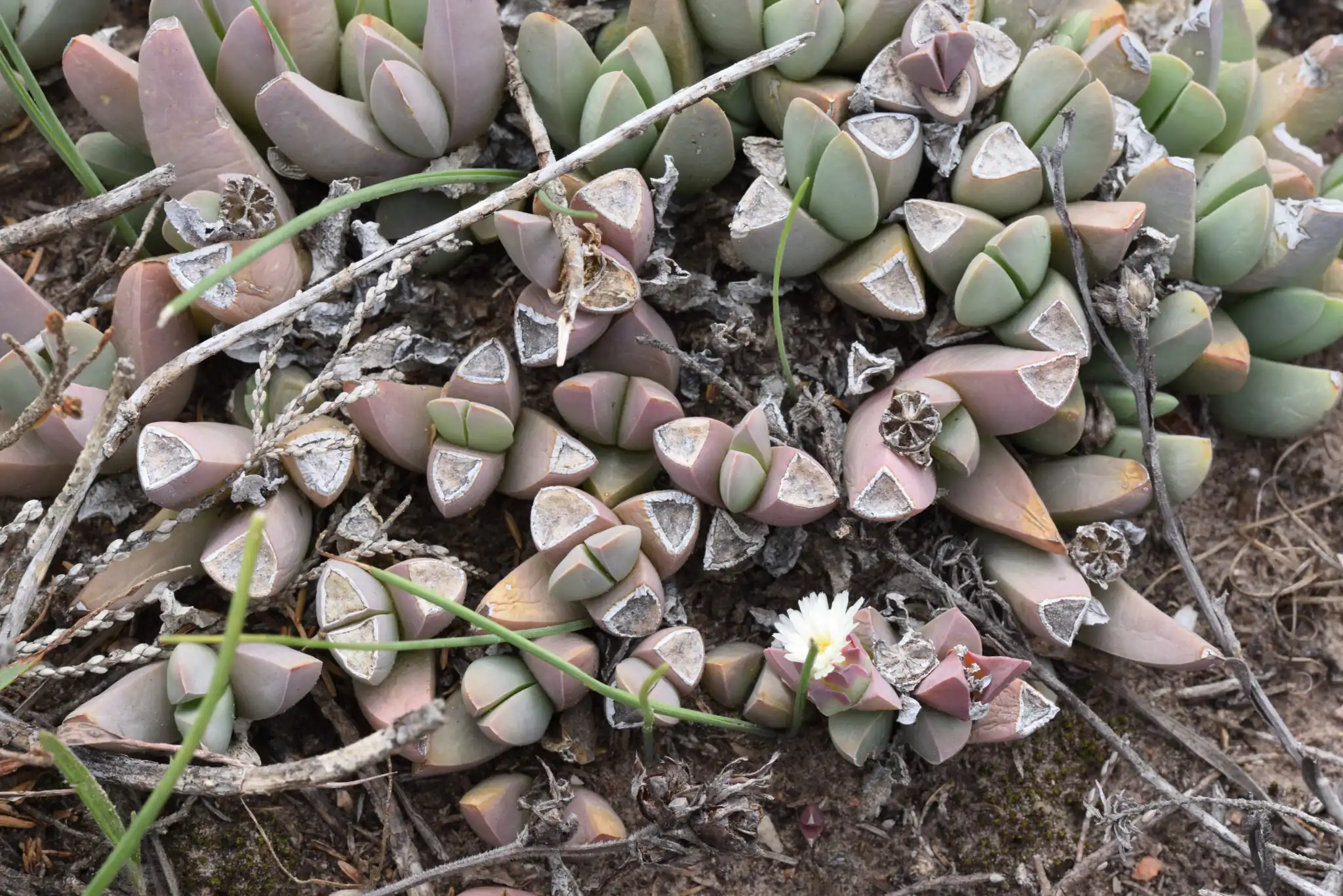
Corpuscularia lehmannii is a compact evergreen succulent shrub forming a dense cushion to about eight inches tall and spreading to two feet wide. The thick three-angled leaves are grey-green to blue-green and held in tight opposite pairs along reddish stems, with solitary butter-yellow daisy flowers to four centimeters across.
It is set apart by smooth ice-cube-shaped leaves to four centimeters long, quite distinct from the flat leaves of hardy Delosperma and Lampranthus groundcovers. The flowers open in morning sun and close at night from spring into summer, and the plant is frost-tender and killed by prolonged wet rather than hardy in the ground.
Uses & Benefits:
Essentials
At a Glance
Plant Type
Cactus Succulent
Height
8"
Width
24"
Light
Full Sun, Partial Sun
Zones
9, 10
Water
Low
Humidity
Low - needs dry air
Lifespan
Perennial
Native To
South Africa (Eastern Cape)
Toxicity
Non-toxic to humans and pets
Bloom period
Spring – Summer
In flower about 6 months of the year
Planting
How to Grow
- Plant in a shallow terracotta pot with drainage holes using a sandy-gritty cactus mix.
- Place in full sun or the brightest indoor window with strong air movement.
- Water deeply only when the mix is completely dry, withholding water in cool winter weeks.
- Move pots indoors before first frost and overwinter above 41F in a dry bright spot.
Pro Tip
Let the gritty mix dry completely between waterings; roots kept wet in cool weather rot within days.
Keep It Thriving
Care Guide
Do
- Provide full sun and sharp drainage.
- Allow soil to dry fully between waterings.
- Bring containers indoors north of zone 9.
Don't
- Do not overwater or let pots sit in saucers of water.
- Do not over-pot in heavy soil or cut back into old bare wood.
- Do not ingest; do not hold in humid, airless conditions.
Seasonal Care Calendar
| Task | Jan | Feb | Mar | Apr | May | Jun | Jul | Aug | Sep | Oct | Nov | Dec |
|---|---|---|---|---|---|---|---|---|---|---|---|---|
| Pest Check | ||||||||||||
| Plant | ||||||||||||
| Propagate | ||||||||||||
| Winter Prep |
Watch Out For
Pests & Diseases
Common Pests
Common Diseases
In the Garden
Landscape Uses & Companions
Landscape Uses
Companion Plants
Multiply
Propagation Methods
Good to Know
Common Questions
Ice Plant questions
What zones can Ice Plant grow in?
Ice Plant is hardy in USDA Zones 9–10: in that range it survives winter in the ground. Colder than Zone 9, grow it in a container you can move to shelter for the winter, or as an annual.
When does Ice Plant bloom?
Ice Plant typically blooms from spring to summer. Exact timing shifts a week or two with your zone — Sow's bloom calendar maps it to your garden.
Does Ice Plant need full sun?
Ice Plant does best in full sun to part shade. In hot climates, afternoon shade keeps blooms fresher longer.
Is Ice Plant drought tolerant?
Yes — once established (usually after the first full season), Ice Plant handles dry spells with minimal watering. Water deeply its first year to build the root system that makes that possible.
Keep exploring
Explore the genus
Hardy in your zone?
Grow Ice Plant with confidence
See it in a design of your actual yard, get zone-matched care reminders, and track it season by season in your garden journal.