The Story
Plant Bio
Aiphanes horrida is a solitary evergreen palm that carries a single slender trunk to about 30 feet in cultivation, with feather leaves divided into wedge-shaped ruffled leaflets. Male and female flowers form together on a once-branched stalk among the leaves, followed by clusters of spherical red fruits with black seeds.
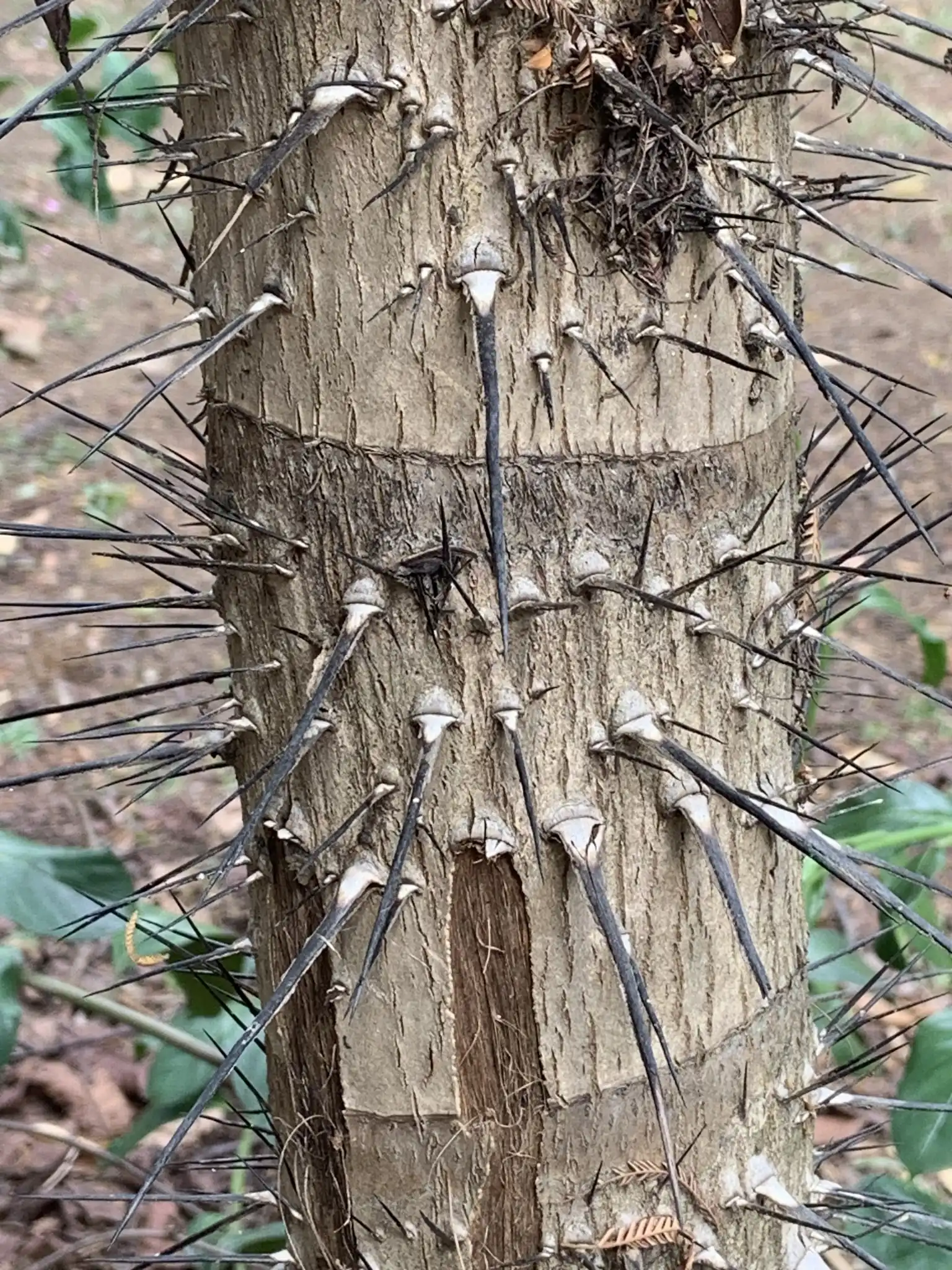
Long sharp black spines arm nearly every part from trunk and sheaths to stalks and leaf blades, piercing light clothing and skin. The wedge-shaped leaflets have a bitten-off ruffled tip and carry spines only on the underside, which separates it from close relatives armed on both sides.
Uses & Benefits:
Essentials
At a Glance
Plant Type
Tree
Height
360"
Width
120"
Light
Full Sun, Partial Sun, Shade
Zones
10
Water
High
Humidity
High
Lifespan
Long-lived
Native To
Northern South America to Bolivia, Brazil and Trinidad-Tobago
Toxicity
Unknown, severe spine hazard
Bloom period
Summer – Fall
In flower about 6 months of the year
Planting
How to Grow
- Plant in enriched loam that drains freely but stays moist, in full sun to low shade.
- Water deeply and often to keep the root zone constantly moist, never allowing it to dry hard.
- Mulch widely to conserve moisture while keeping mulch off the spiny stem.
- Remove only fully brown fronds with heavy gloves and eye protection; leave the central spear intact.
Pro Tip
Keep the soil constantly moist and site it well clear of paths; the single stem cannot replace its growing point if damaged.
Keep It Thriving
Care Guide
Do
- Keep the soil constantly moist
- Site the palm well away from foot traffic
- Wear heavy gloves and eye protection when working near it
- Mulch widely to hold soil moisture
Don't
- Do not divide the single stem
- Do not cut the central growing point
- Do not allow the soil to dry out hard
- Do not plant beside paths or play areas
Seasonal Care Calendar
| Task | Jan | Feb | Mar | Apr | May | Jun | Jul | Aug | Sep | Oct | Nov | Dec |
|---|---|---|---|---|---|---|---|---|---|---|---|---|
| Mulch | ||||||||||||
| Pest Check | ||||||||||||
| Plant | ||||||||||||
| Prune |
Watch Out For
Pests & Diseases
Common Pests
In the Garden
Landscape Uses & Companions
Landscape Uses
Multiply
Propagation Methods
Good to Know
Common Questions
Ruffle Palm questions
What zones can Ruffle Palm grow in?
Ruffle Palm is hardy in USDA Zone 10: in that range it survives winter in the ground. Colder than Zone 10, winters are too cold for it to survive outdoors.
When does Ruffle Palm bloom?
Ruffle Palm typically blooms from summer to fall. Exact timing shifts a week or two with your zone — Sow's bloom calendar maps it to your garden.
Does Ruffle Palm need full sun?
Ruffle Palm does best in full sun to part shade. In hot climates, afternoon shade keeps blooms fresher longer.
Keep exploring
Explore the genus
Hardy in your zone?
Grow Ruffle Palm with confidence
See it in a design of your actual yard, get zone-matched care reminders, and track it season by season in your garden journal.