The Story
Plant Bio
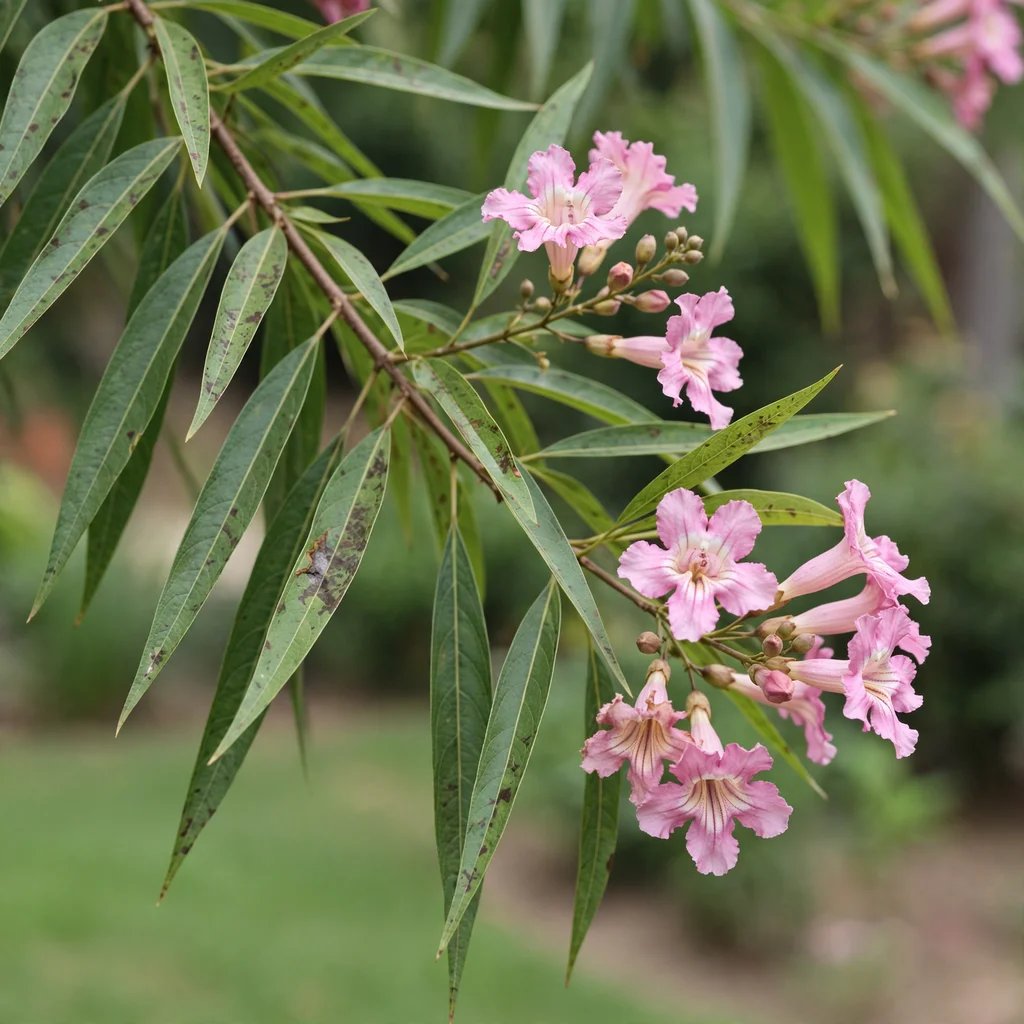
× Chitalpa tashkentensis is a fast-growing deciduous tree, originating as a sterile intergeneric hybrid between Chilopsis linearis and Catalpa bignonioides. It develops a broad, spreading, multi-trunked crown clothed in narrow, lanceolate green leaves that remain clean in dry climates.
The tree produces upright terminal clusters of trumpet-shaped, frilled pink or white flowers with purple interior nectar guides from late spring through autumn. Because the hybrid is completely sterile, it produces no messy seed pods and directs its energy entirely into continuous blooming.
Uses & Benefits:
Essentials
At a Glance
Plant Type
Tree
Height
417"
Width
417"
Light
Full Sun
Zones
6, 7, 8, 9
Water
Low
Humidity
Low
Lifespan
Long-lived
Native To
Central Asia (cultivated hybrid)
Toxicity
Non-toxic
Bloom period
Spring – Late fall
In flower about 9 months of the year
Planting
How to Grow
- Select a planting site in full sun with deep, well-drained soil.
- Dig a hole twice as wide as the root ball and of equal depth.
- Gently loosen any circling roots before placing the tree in the hole.
- Backfill with native soil, firm gently, and water thoroughly to settle.
Pro Tip
Water established trees deeply but infrequently; planting them in heavily irrigated turfgrass or damp shade triggers severe powdery mildew and root rot.
Keep It Thriving
Care Guide
Do
- Plant in a location that receives at least six to eight hours of direct sunlight daily.
- Ensure the soil drains rapidly to prevent root rot.
- Prune out basal suckers regularly to maintain a clean trunk structure.
Don't
- Do not plant in heavily irrigated lawns or damp, low-lying areas.
- Avoid over-fertilizing, which produces weak, lush growth and reduces flower production.
- Do not hack back into old, leafless wood as recovery is slow and patchy.
Seasonal Care Calendar
| Task | Jan | Feb | Mar | Apr | May | Jun | Jul | Aug | Sep | Oct | Nov | Dec |
|---|---|---|---|---|---|---|---|---|---|---|---|---|
| Fertilize | ||||||||||||
| Mulch | ||||||||||||
| Pest Check | ||||||||||||
| Prune | ||||||||||||
| Spring Cleanup |
Watch Out For
Pests & Diseases
Common Pests
Common Diseases
In the Garden
Landscape Uses & Companions
Landscape Uses
Companion Plants
Multiply
Propagation Methods
Good to Know
Common Questions
Chitalpa questions
What zones can Chitalpa grow in?
Chitalpa is hardy in USDA Zones 6–9: in that range it survives winter in the ground. Colder than Zone 6, winters are too cold for it to survive outdoors. Warmer than Zone 9, winter isn't the problem: it prefers colder winters, and summer heat can shorten its life.
Is Chitalpa deer resistant?
Yes — Chitalpa is rated deer-resistant. Deer typically pass it over, though extreme hunger can override any plant's defenses.
When does Chitalpa bloom?
Chitalpa typically blooms from spring to fall. Exact timing shifts a week or two with your zone — Sow's bloom calendar maps it to your garden.
Does Chitalpa need full sun?
Chitalpa does best in full sun (6+ hours).
Is Chitalpa drought tolerant?
Yes — once established (usually after the first full season), Chitalpa handles dry spells with minimal watering. Water deeply its first year to build the root system that makes that possible.
Keep exploring
Explore the genus
Hardy in your zone?
Grow Chitalpa with confidence
See it in a design of your actual yard, get zone-matched care reminders, and track it season by season in your garden journal.