The Story
Plant Bio
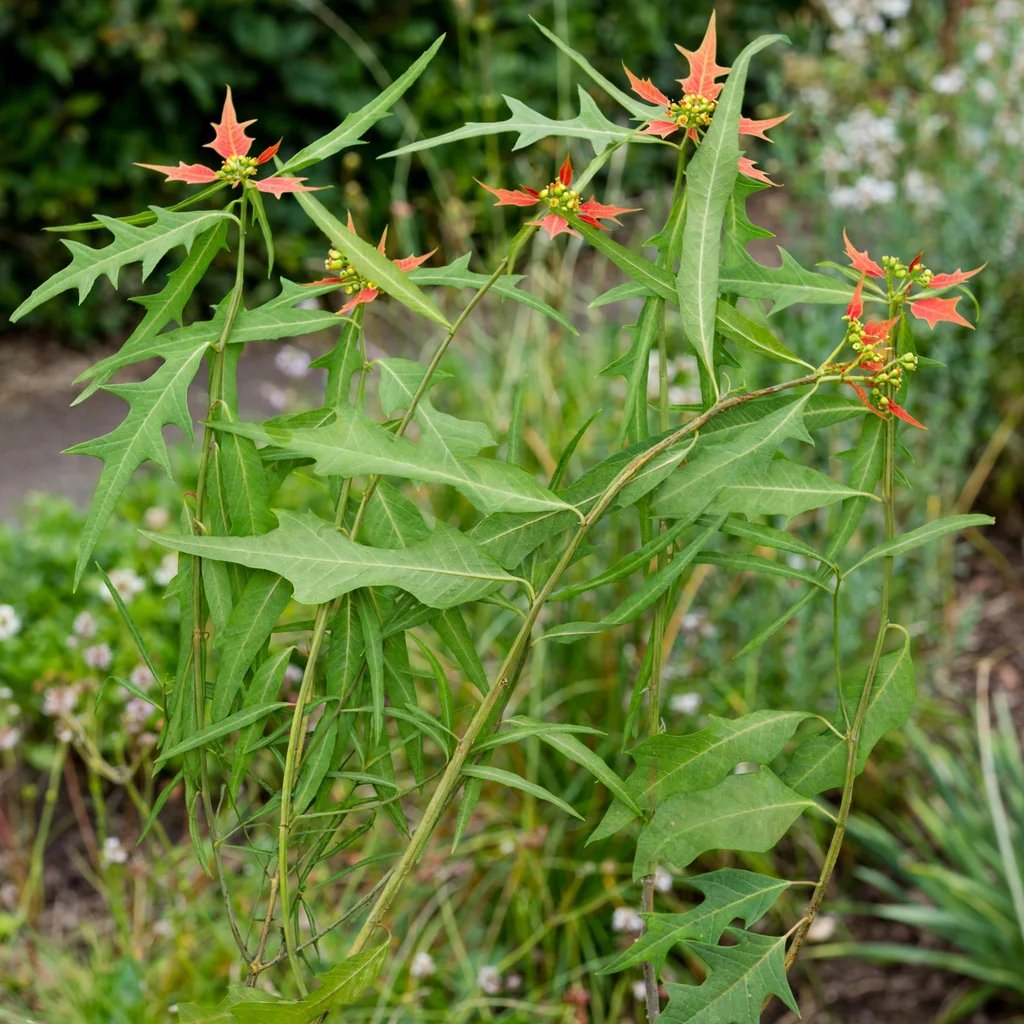
Euphorbia cyathophora is an erect annual spurge reaching two to three feet in one season, with branched stems and alternate bright green leaves that are often lobed like holly. Like all euphorbias it carries milky latex in stems and leaves that irritates skin and is poisonous if eaten.
The showy color comes not from petals but from upper bract-leaves flushed red-orange around the center, framing tiny yellow-green cup-like cyathia with one or two bilobed glands. It is very close to Euphorbia heterophylla and self-sows freely, forming weedy colonies in sandy or disturbed ground if seed is left to ripen.
Uses & Benefits:
Essentials
At a Glance
Plant Type
Annual
Height
36"
Width
24"
Light
Full Sun
Zones
4, 5, 6, 7, 8, 9, 10
Water
Medium
Humidity
Average
Lifespan
Annual
Native To
Southeastern and midwestern USA to Argentina
Toxicity
Toxic if ingested, skin irritant
Bloom period
Summer – Fall
In flower about 6 months of the year
Planting
How to Grow
- Sow seed outdoors after last frost in full sun, barely covering seed on sandy well-drained soil.
- Thin or space seedlings 12 to 18 inches apart to allow erect branching.
- Water to establish, then water only when the top inch dries; do not enrich with heavy compost or fertilizer.
- Leave plants unpruned through summer and fall for bract color.
- Remove plants before seed capsules split if self-sowing is unwanted, wearing gloves to avoid sap.
Pro Tip
Pull unwanted seedlings before they set seed; one plant left to ripen will reseed the bed.
Keep It Thriving
Care Guide
Do
- Grow in full sun with 6 or more hours of direct light.
- Wear gloves and eye protection when handling or pulling plants.
- Remove spent plants before seed drops to limit volunteers.
Don't
- Do not plant where children or pets chew plants; sap burns mouth and eyes.
- Do not cut back expecting perennial regrowth; plants die after seed.
- Do not overwater or plant in soggy soil; crowns rot.
Seasonal Care Calendar
| Task | Jan | Feb | Mar | Apr | May | Jun | Jul | Aug | Sep | Oct | Nov | Dec |
|---|---|---|---|---|---|---|---|---|---|---|---|---|
| Deadhead | ||||||||||||
| Pest Check | ||||||||||||
| Plant | ||||||||||||
| Propagate |
Watch Out For
Pests & Diseases
Common Pests
Common Diseases
In the Garden
Landscape Uses & Companions
Landscape Uses
Multiply
Propagation Methods
Good to Know
Common Questions
Wild Poinsettia questions
What zones can Wild Poinsettia grow in?
Wild Poinsettia is an annual: it grows, flowers and sets seed in one season, so winter cold doesn't limit where it grows. Gardeners in any zone can grow it by planting at the right time, usually after the last spring frost.
When does Wild Poinsettia bloom?
Wild Poinsettia typically blooms from summer to fall. Exact timing shifts a week or two with your zone — Sow's bloom calendar maps it to your garden.
Does Wild Poinsettia need full sun?
Wild Poinsettia does best in full sun (6+ hours).
Keep exploring
Explore the genus
Grow Wild Poinsettia with confidence
See it in a design of your actual yard, get zone-matched care reminders, and track it season by season in your garden journal.