The Story
Plant Bio
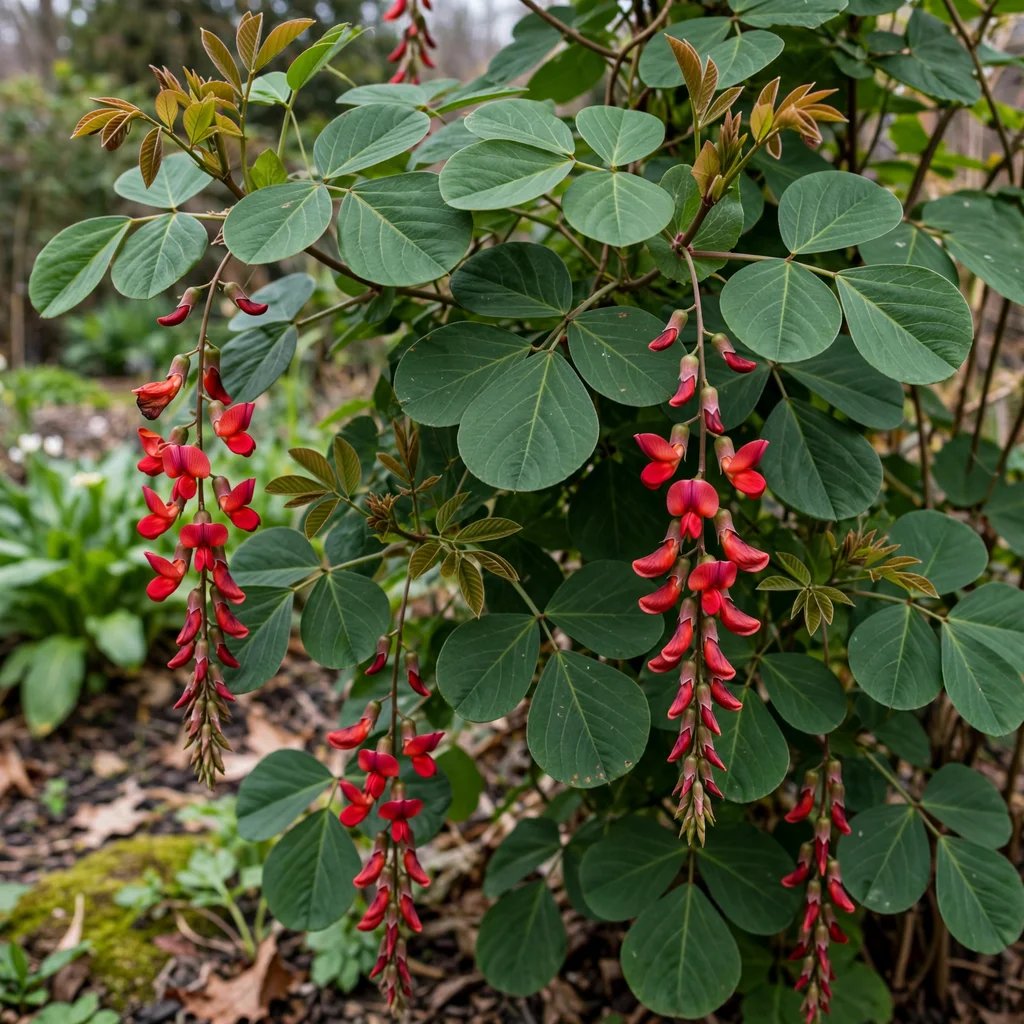
Camptosema grandiflorum is a woody-based evergreen twiner from Brazil, climbing 10 to 20 feet by coiling stems around support. Leaves are trifoliate and dark green with a smooth surface, with new growth emerging bronze-green before hardening.
It carries long, heavy pendulous racemes of large scarlet pea-flowers from late fall through winter, each chain held clear of the foliage. It is sold as Dwarf Red Jade Vine but flowers more reliably in full sun and tolerates brief dips to 28F, unlike the true red jade vine that demands equatorial heat.
Uses & Benefits:
Essentials
At a Glance
Plant Type
Vine
Height
236"
Width
118"
Light
Full Sun, Partial Sun
Zones
9, 10
Water
Moderate
Humidity
Moderate to high
Lifespan
Woody perennial vine
Native To
Brazil, South America
Toxicity
Low - seeds may cause stomach upset if eaten
Bloom period
Late fall – Early spring
In flower about 5 months of the year
Planting
How to Grow
- Plant in spring in fertile, well-drained loam or sandy loam at pH 6.0-7.0, with the crown level with the soil.
- Set a stout arbor, pergola, or trellis at planting; tie twining stems in until they coil on their own.
- Water deeply to establish, then keep soil evenly moist but never soggy through summer.
- Feed with balanced slow-release fertilizer in early spring and prune flowered stems to strong buds after bloom.
Pro Tip
Cut flowered stems back to strong buds right after winter bloom; cutting into old leafless wood regrows slowly or not at all.
Keep It Thriving
Care Guide
Do
- Do provide a load-bearing arbor or pergola for the heavy winter racemes.
- Do keep drainage sharp, especially in winter.
- Do tie new stems in regularly to control the 10-foot spread.
Don't
- Don't overwater in winter dormancy; soggy roots rot fast.
- Don't push high-nitrogen fertilizer; it grows leaves at the expense of flowers.
- Don't prune into old leafless wood with no dormant buds.
Seasonal Care Calendar
| Task | Jan | Feb | Mar | Apr | May | Jun | Jul | Aug | Sep | Oct | Nov | Dec |
|---|---|---|---|---|---|---|---|---|---|---|---|---|
| Fertilize | ||||||||||||
| Pest Check | ||||||||||||
| Plant | ||||||||||||
| Prune | ||||||||||||
| Winter Prep |
Watch Out For
Pests & Diseases
Common Pests
Common Diseases
In the Garden
Landscape Uses & Companions
Landscape Uses
Multiply
Propagation Methods
Good to Know
Common Questions
Dwarf Red Jade Vine questions
What zones can Dwarf Red Jade Vine grow in?
Dwarf Red Jade Vine is hardy in USDA Zones 9–10: in that range it survives winter in the ground. Colder than Zone 9, grow it in a container you can move to shelter for the winter, or as an annual.
Is Dwarf Red Jade Vine deer resistant?
Not reliably. Deer may browse Dwarf Red Jade Vine, especially tender spring growth — plan on repellents or fencing where pressure is high.
When does Dwarf Red Jade Vine bloom?
Dwarf Red Jade Vine typically blooms from late fall to early spring. Exact timing shifts a week or two with your zone — Sow's bloom calendar maps it to your garden.
Does Dwarf Red Jade Vine need full sun?
Dwarf Red Jade Vine does best in full sun to part shade. In hot climates, afternoon shade keeps blooms fresher longer.
Is Dwarf Red Jade Vine drought tolerant?
Yes — once established (usually after the first full season), Dwarf Red Jade Vine handles dry spells with minimal watering. Water deeply its first year to build the root system that makes that possible.
Keep exploring
Explore the genus
Hardy in your zone?
Grow Dwarf Red Jade Vine with confidence
See it in a design of your actual yard, get zone-matched care reminders, and track it season by season in your garden journal.