The Story
Plant Bio
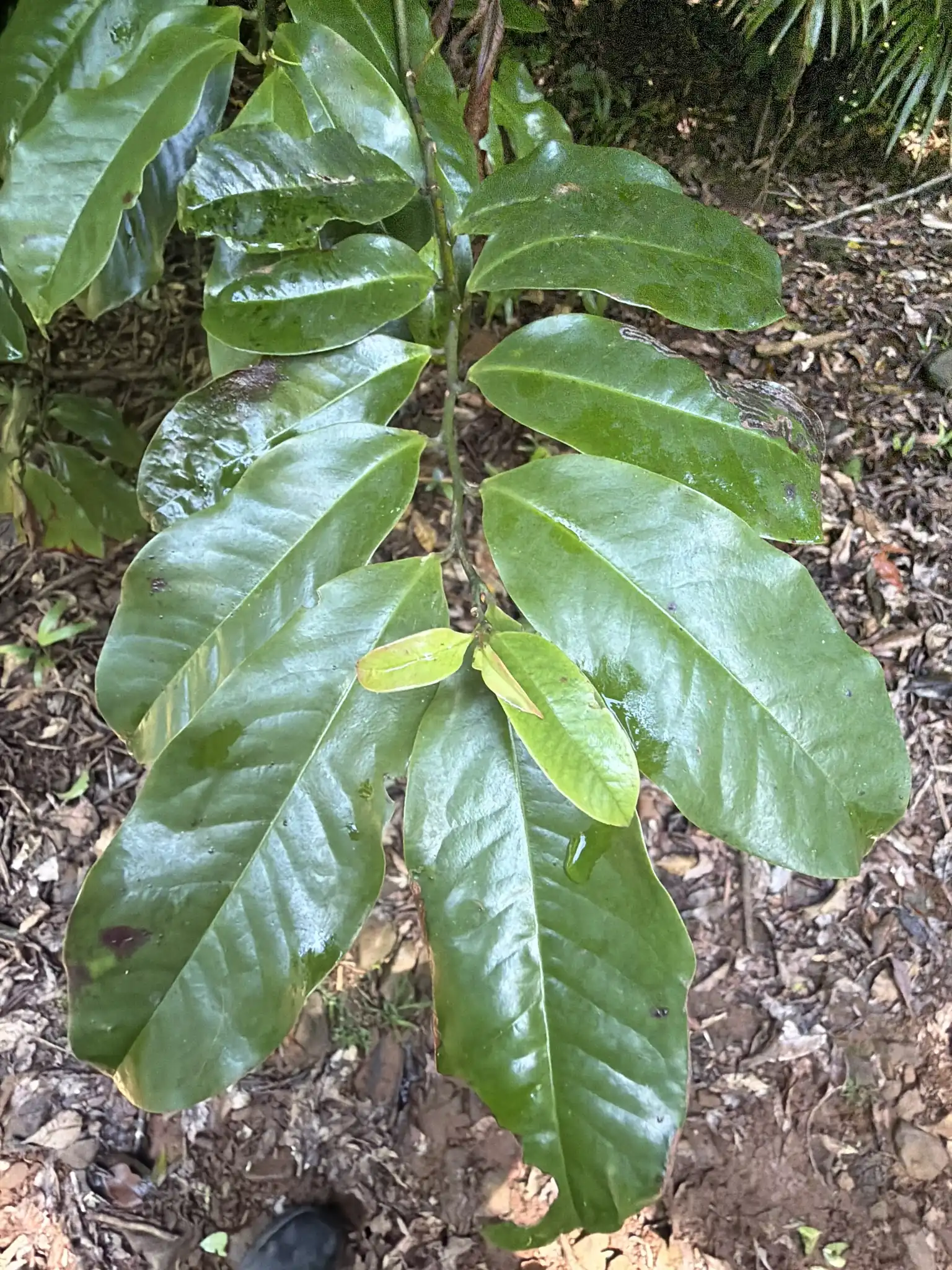
Eupomatia laurina, commonly known as bolwarra, is an evergreen rainforest shrub or small tree with arching stems and glossy dark green foliage that flushes red-bronze in cool weather. Solitary cream flowers bloom in spring, dropping a distinct cap to expose fragrant stamens that emit a sweet, ether-like perfume before forming urn-shaped edible fruit.
This primitive flowering species relies on a specialized mutualism with native weevils for pollination in its natural habitat. Its arching habit and copper-tinted foliage make it an exceptional structural specimen for sheltered understory spaces.
Uses & Benefits:
Essentials
At a Glance
Plant Type
Shrub
Height
197"
Width
138"
Light
Full Sun, Partial Sun, Shade
Zones
9, 10
Water
Moderate to high
Humidity
High
Lifespan
Perennial
Native To
Australia and New Guinea
Toxicity
Non-toxic
Bloom period
Spring – Summer
In flower about 6 months of the year
Planting
How to Grow
- Select a planting location in partial or full shade that stays protected from cold winds and scorching afternoon sun.
- Work organic compost or leaf mold into the soil to improve moisture retention and drainage.
- Set the root ball flush with the surrounding soil level and firm gently to eliminate air pockets.
- Apply a 3-inch layer of organic mulch around the drip line, keeping it clear of the main stems.
- Water deeply and regularly to establish consistent soil moisture.
Pro Tip
Plant in a sheltered microclimate with rich organic soil and consistent moisture, as scorching sun and freezing temperatures cause severe dieback.
Keep It Thriving
Care Guide
Do
- Keep soil consistently moist, especially during hot summer periods.
- Provide shade and wind protection to prevent foliage scorch.
- Apply fresh organic mulch annually to protect surface roots.
Don't
- Do not prune aggressively into old bare wood.
- Do not allow the soil to dry out completely between waterings.
- Do not plant in exposed sites subject to hard winter freezes.
Seasonal Care Calendar
| Task | Jan | Feb | Mar | Apr | May | Jun | Jul | Aug | Sep | Oct | Nov | Dec |
|---|---|---|---|---|---|---|---|---|---|---|---|---|
| Fertilize | ||||||||||||
| Mulch | ||||||||||||
| Pest Check | ||||||||||||
| Prune | ||||||||||||
| Winter Prep |
Watch Out For
Pests & Diseases
Common Pests
Common Diseases
In the Garden
Landscape Uses & Companions
Landscape Uses
Multiply
Propagation Methods
Good to Know
Common Questions
Bolwarra questions
What zones can Bolwarra grow in?
Bolwarra is hardy in USDA Zones 9–10: in that range it survives winter in the ground. Colder than Zone 9, grow it in a container you can move to shelter for the winter.
When does Bolwarra bloom?
Bolwarra typically blooms from spring to summer. Exact timing shifts a week or two with your zone — Sow's bloom calendar maps it to your garden.
Does Bolwarra need full sun?
Bolwarra does best in full sun to part shade. In hot climates, afternoon shade keeps blooms fresher longer.
Keep exploring
Explore the genus
Hardy in your zone?
Grow Bolwarra with confidence
See it in a design of your actual yard, get zone-matched care reminders, and track it season by season in your garden journal.