The Story
Plant Bio
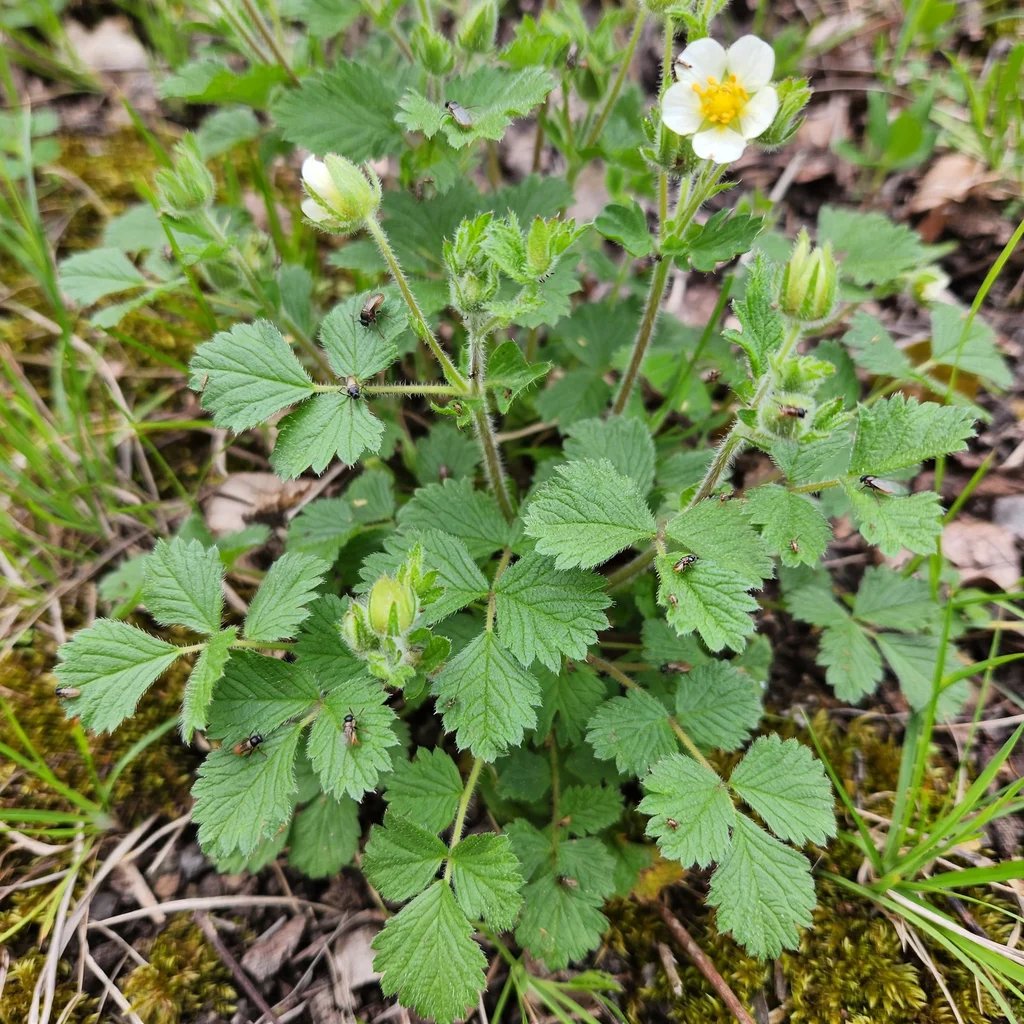
Drymocallis glandulosa is an upright native perennial forming clumping rosettes of strawberry-like foliage coated in sticky glandular hairs. From spring into early fall, loose branched stems display small open flowers ranging in shade from creamy white to pale gold.
The dense glandular hairs trap small insects, making the foliage protocarnivorous while deterring larger pests. Clumps expand cleanly from a stout branched root crown without creeping aggressively.
Uses & Benefits:
Essentials
At a Glance
Plant Type
Perennial
Height
35"
Width
20"
Light
Full Sun, Partial Sun
Zones
4, 5, 6, 7, 8, 9
Water
Low to moderate
Humidity
Low to moderate
Lifespan
Perennial
Native To
Western North America
Toxicity
Non-toxic
Bloom period
Spring – Fall
In flower about 9 months of the year
Planting
How to Grow
- Select a site in full sun or light partial shade with fast-draining, unamended soil.
- Sow stratified seeds on the soil surface in spring, as light is required for germination.
- Water sparingly during establishment and avoid overhead spray to protect foliage.
- Cut spent stems cleanly to the base in late winter before new growth emerges.
Pro Tip
Plant in lean, rocky, or sandy soil with high drainage; over-watering and rich soils induce soft growth and crown rot.
Keep It Thriving
Care Guide
Do
- Provide gritty, lean soil to mimic natural rocky woodland and hillside habitats.
- Expose sown seeds to light during propagation.
- Divide dense, overcrowded crowns every three to four years.
Don't
- Do not plant in heavy, waterlogged clay soils.
- Avoid heavy applications of nitrogen fertilizer.
- Do not cut heavily into old, leafless woody crown stems.
Seasonal Care Calendar
| Task | Jan | Feb | Mar | Apr | May | Jun | Jul | Aug | Sep | Oct | Nov | Dec |
|---|---|---|---|---|---|---|---|---|---|---|---|---|
| Divide | ||||||||||||
| Pest Check | ||||||||||||
| Plant | ||||||||||||
| Prune |
Watch Out For
Pests & Diseases
Common Pests
Common Diseases
In the Garden
Landscape Uses & Companions
Landscape Uses
Multiply
Propagation Methods
Good to Know
Common Questions
Sticky Cinquefoil questions
What zones can Sticky Cinquefoil grow in?
Sticky Cinquefoil is hardy in USDA Zones 4–9: in that range it survives winter in the ground. Warmer than Zone 9, winter isn't the problem: it prefers colder winters, and summer heat can shorten its life.
When does Sticky Cinquefoil bloom?
Sticky Cinquefoil typically blooms from spring to fall. Exact timing shifts a week or two with your zone — Sow's bloom calendar maps it to your garden.
Does Sticky Cinquefoil need full sun?
Sticky Cinquefoil does best in full sun to part shade. In hot climates, afternoon shade keeps blooms fresher longer.
Is Sticky Cinquefoil drought tolerant?
Yes — once established (usually after the first full season), Sticky Cinquefoil handles dry spells with minimal watering. Water deeply its first year to build the root system that makes that possible.
Keep exploring
Explore the genus
Grow Sticky Cinquefoil with confidence
See it in a design of your actual yard, get zone-matched care reminders, and track it season by season in your garden journal.