The Story
Plant Bio
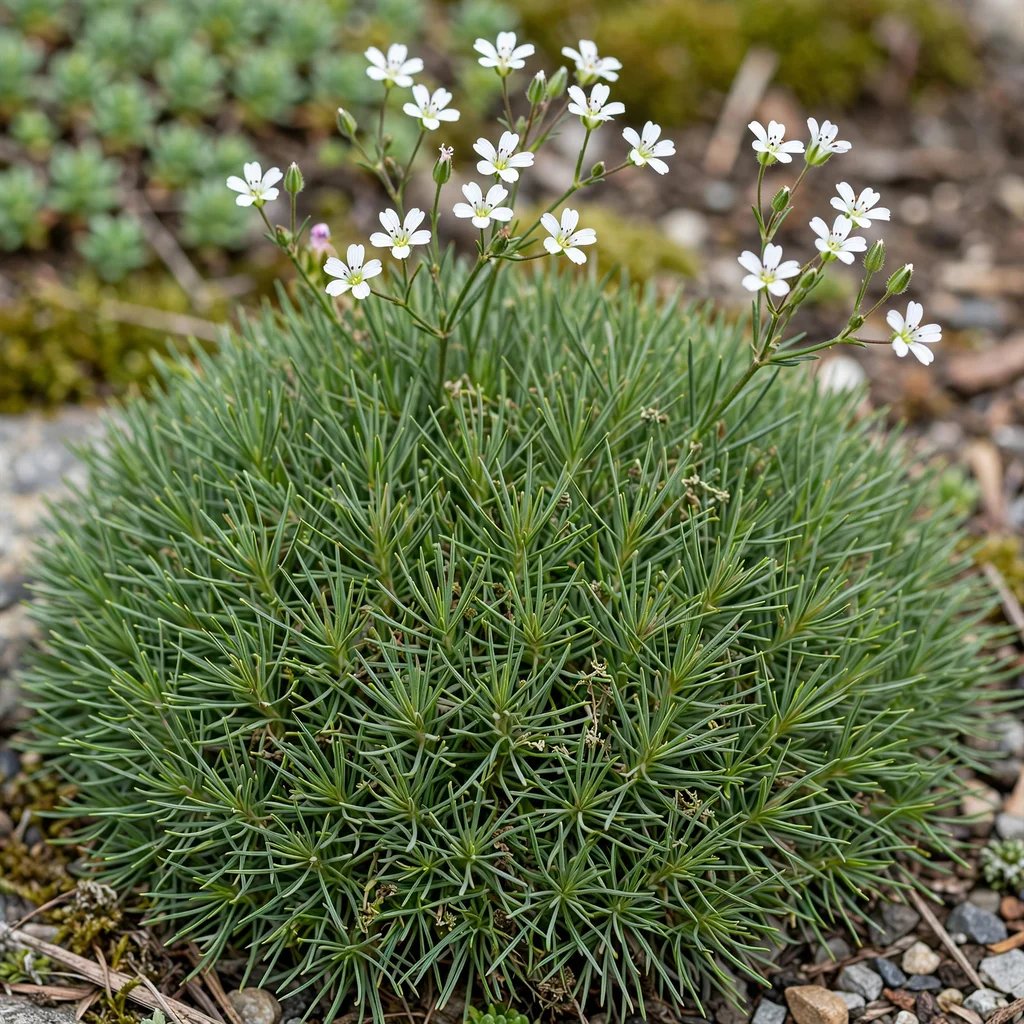
Arenaria kingii, now placed as Eremogone kingii, is a tufted to matted cushion subshrub with a woody base and stiff erect flowering stems from the dry mountains of the western United States. The basal foliage forms a dense cushion of needlelike to filiform green leaves, topped by open to congested cymes of small white flowers with petals about half again as long as the sepals.
Wild clumps stand about six inches tall and spread into low mats on rocky subalpine slopes between 5000 and 13000 feet. It flowers from late spring into summer with white blooms rarely flushed pink, held clear of the foliage for a tight cushion effect in lean grit.
Uses & Benefits:
Essentials
At a Glance
Plant Type
Perennial
Height
6"
Width
12"
Light
Full Sun
Water
Low
Humidity
Low
Lifespan
Perennial
Native To
Western USA
Toxicity
Unknown
Bloom period
Late spring – Summer
In flower about 4 months of the year
Planting
How to Grow
- Plant in full sun in sandy or gritty soil that drains instantly after watering.
- Set the crown level with the surface and firm grit around the woody base.
- Water to establish, then keep dry; do not feed for fast lush growth.
- Leave the cushion open to air and remove fallen leaves that trap moisture.
Pro Tip
Give it full sun and sharp grit drainage and keep winter wet off the crown; cold is less damaging than saturated soil.
Keep It Thriving
Care Guide
Do
- Plant in open sun with gritty drainage.
- Top-dress with gravel to keep the crown dry.
- Remove spent flower stems to keep the tuft tight.
Don't
- Do not plant in clay or irrigated beds that stay wet.
- Do not fertilize heavily or overwater in summer.
- Do not assume wild mountain size equals garden size.
Seasonal Care Calendar
| Task | Jan | Feb | Mar | Apr | May | Jun | Jul | Aug | Sep | Oct | Nov | Dec |
|---|---|---|---|---|---|---|---|---|---|---|---|---|
| Deadhead | ||||||||||||
| Pest Check | ||||||||||||
| Plant | ||||||||||||
| Spring Cleanup | ||||||||||||
| Winter Prep |
Watch Out For
Pests & Diseases
Common Pests
Common Diseases
In the Garden
Landscape Uses & Companions
Landscape Uses
Companion Plants
Multiply
Propagation Methods
Good to Know
Common Questions
King's Sandwort questions
When does King's Sandwort bloom?
King's Sandwort typically blooms from late spring to late summer. Exact timing shifts a week or two with your zone — Sow's bloom calendar maps it to your garden.
Does King's Sandwort need full sun?
King's Sandwort does best in full sun (6+ hours).
Is King's Sandwort drought tolerant?
Yes — once established (usually after the first full season), King's Sandwort handles dry spells with minimal watering. Water deeply its first year to build the root system that makes that possible.
More Arenaria to compare
Keep exploring
Explore the genus
Grow King's Sandwort with confidence
See it in a design of your actual yard, get zone-matched care reminders, and track it season by season in your garden journal.