The Story
Plant Bio
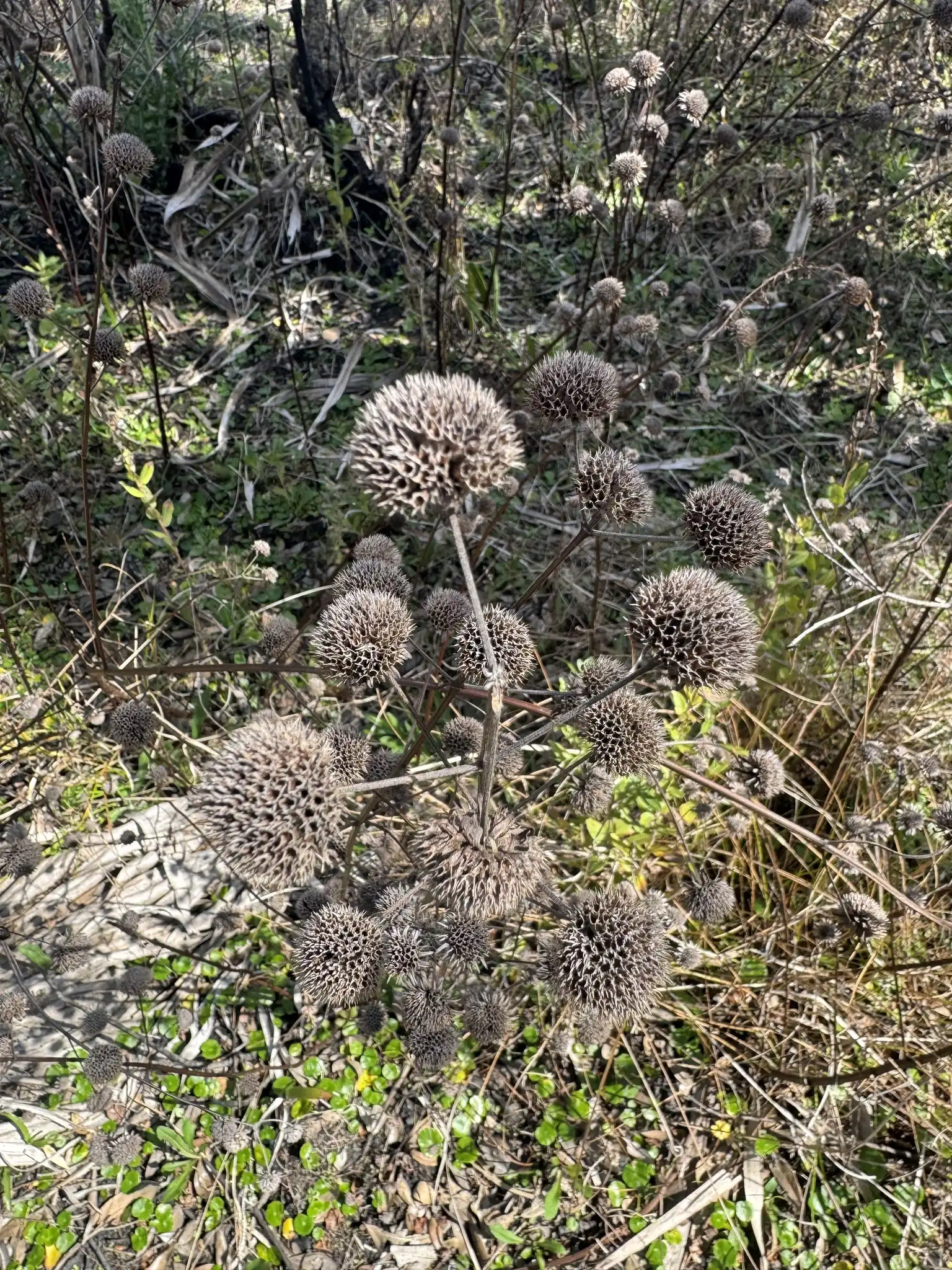
Hyptis alata is a short-lived, upright perennial mint from southeastern freshwater wetlands, reaching two to four feet in gardens with stout square stems that are green or reddish-purple. The opposite, lance-shaped leaves are toothed and gray-green, releasing a musky mint scent when crushed.
The flowers are white with pinkish-purple spots and a yellowish lower lip, borne in tight stalked balls in the leaf axils with only a few tiny blooms open at once. It flowers from late spring into fall and holds wet ground, forming upright thickets where moisture stays constant.
Uses & Benefits:
Essentials
At a Glance
Plant Type
Perennial
Height
48"
Width
24"
Light
Full Sun, Partial Sun
Zones
7, 8, 9, 10
Water
Moist to wet
Humidity
High - wet habitats
Lifespan
Short-lived perennial
Native To
Southeastern USA, West Indies, South America
Toxicity
Unknown
Bloom period
Late spring – Fall
In flower about 7 months of the year
Planting
How to Grow
- Plant in full sun to part shade in constantly moist to wet sandy or loamy soil.
- Space 18 to 24 inches apart and water in well; keep wet feet through establishment.
- Mulch to hold moisture and suppress competition.
- Cut back tall or floppy stems in summer to keep upright growth dense.
- Divide or take cuttings in late spring to renew short-lived clumps.
Pro Tip
Give it constantly moist to wet soil in full sun; it fails in dry or salty ground, and wet feet matter more than fertilizer.
Keep It Thriving
Care Guide
Do
- Keep soil consistently moist to wet.
- Give full sun for best flowering.
- Remove spotted or mildewed leaves promptly.
Don't
- Do not plant in dry upland or salty soils.
- Do not let containers dry out or sit in stagnant water.
- Do not expect drought tolerance once established.
Seasonal Care Calendar
| Task | Jan | Feb | Mar | Apr | May | Jun | Jul | Aug | Sep | Oct | Nov | Dec |
|---|---|---|---|---|---|---|---|---|---|---|---|---|
| Mulch | ||||||||||||
| Pest Check | ||||||||||||
| Plant | ||||||||||||
| Propagate | ||||||||||||
| Prune |
Watch Out For
Pests & Diseases
Common Pests
Common Diseases
In the Garden
Landscape Uses & Companions
Landscape Uses
Multiply
Propagation Methods
Good to Know
Common Questions
Clustered Bushmint questions
What zones can Clustered Bushmint grow in?
Clustered Bushmint is hardy in USDA Zones 7–10: in that range it survives winter in the ground. Colder than Zone 7, grow it in a container you can move to shelter for the winter, or as an annual.
Is Clustered Bushmint deer resistant?
Not reliably. Deer may browse Clustered Bushmint, especially tender spring growth — plan on repellents or fencing where pressure is high.
When does Clustered Bushmint bloom?
Clustered Bushmint typically blooms from late spring to late fall. Exact timing shifts a week or two with your zone — Sow's bloom calendar maps it to your garden.
Does Clustered Bushmint need full sun?
Clustered Bushmint does best in full sun to part shade. In hot climates, afternoon shade keeps blooms fresher longer.
Keep exploring
Explore the genus
Hardy in your zone?
Grow Clustered Bushmint with confidence
See it in a design of your actual yard, get zone-matched care reminders, and track it season by season in your garden journal.