The Story
Plant Bio
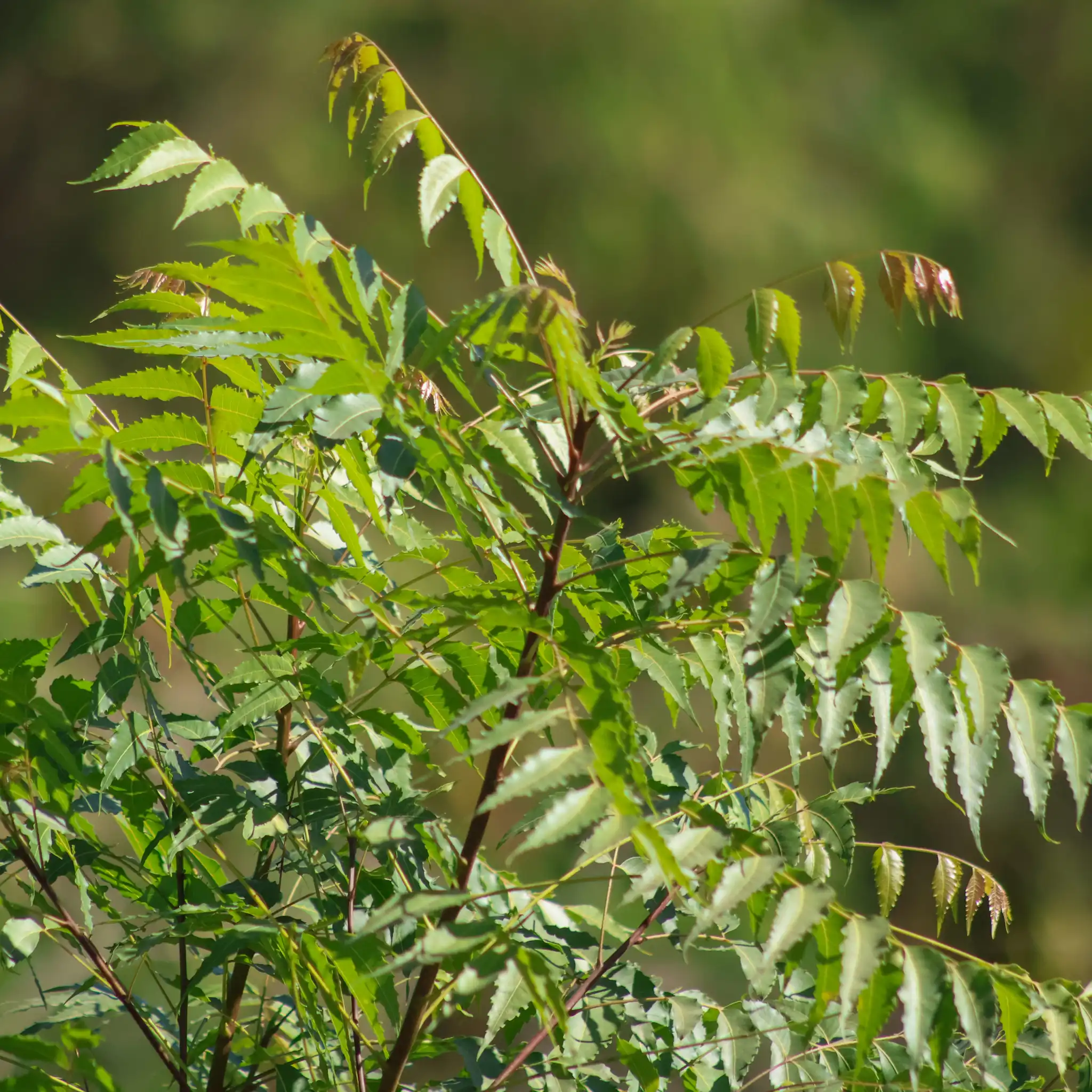
Azadirachta indica, the neem, is a fast-growing evergreen to semi-deciduous tree from seasonally dry woodlands of the Indian subcontinent, reaching 50 to 65 feet in gardens with a broad rounded crown on a clear bole of dark gray deeply fissured bark. The foliage is imparipinnate with subopposite serrate leaflets very oblique at the base, and the small white fragrant flowers open in drooping 6- to 10-inch axillary panicles in spring.
It holds canopy through extreme heat and drought on poor sandy or limestone soils, yet young growth is damaged below 40 degrees and young trees are killed by brief frost. All parts contain azadirachtin, a potent insect antifeedant, while the young shoots and flowers remain edible for people and non-toxic to warm-blooded vertebrates.
Uses & Benefits:
Essentials
At a Glance
Plant Type
Tree
Height
720"
Width
480"
Light
Full Sun
Zones
9, 10
Water
Low
Humidity
Low to moderate
Lifespan
Long-lived tree
Native To
Indian subcontinent
Toxicity
Non-toxic to humans and pets
Bloom period
Spring – Early summer
In flower about 4 months of the year
Marketplace
Where to Buy
Shipping costs Year-round shipping Free shipping
Planting
How to Grow
- Plant after last frost in full sun in well-drained sandy or loamy soil, spacing for a 25- to 40-foot crown.
- Water deeply to establish, then cut back; mature trees handle heat to 118 degrees on 16 to 60 inches of rainfall.
- Grow frost-prone plants in large containers so they can move under cover before freezing nights.
- Prune to limit height to 40 to 60 feet and to keep a clear trunk.
Pro Tip
Site in full sun with sharp drainage and keep winter soil on the dry side; cold plus wet soil kills establishment faster than any pest.
Keep It Thriving
Care Guide
Do
- Give maximum sun and sharp drainage
- Protect young trees from any frost
- Grow in containers where winters freeze
Don't
- Do not overwater or leave pots standing in water
- Do not plant outdoors below Zone 9 without winter shelter
- Do not plant near natural waterways in frost-free Hawaii and Florida
Seasonal Care Calendar
| Task | Jan | Feb | Mar | Apr | May | Jun | Jul | Aug | Sep | Oct | Nov | Dec |
|---|---|---|---|---|---|---|---|---|---|---|---|---|
| Mulch | ||||||||||||
| Pest Check | ||||||||||||
| Plant | ||||||||||||
| Prune | ||||||||||||
| Winter Prep |
Watch Out For
Pests & Diseases
Common Pests
Common Diseases
In the Garden
Landscape Uses & Companions
Landscape Uses
Multiply
Propagation Methods
Good to Know
Common Questions
Neem questions
What zones can Neem grow in?
Neem is hardy in USDA Zones 9–10: in that range it survives winter in the ground. Colder than Zone 9, winters are too cold for it to survive outdoors.
When does Neem bloom?
Neem typically blooms from early spring to early summer. Exact timing shifts a week or two with your zone — Sow's bloom calendar maps it to your garden.
Does Neem need full sun?
Neem does best in full sun (6+ hours).
Is Neem drought tolerant?
Yes — once established (usually after the first full season), Neem handles dry spells with minimal watering. Water deeply its first year to build the root system that makes that possible.
Keep exploring
Explore the genus
Hardy in your zone?
Grow Neem with confidence
See it in a design of your actual yard, get zone-matched care reminders, and track it season by season in your garden journal.