The Story
Plant Bio
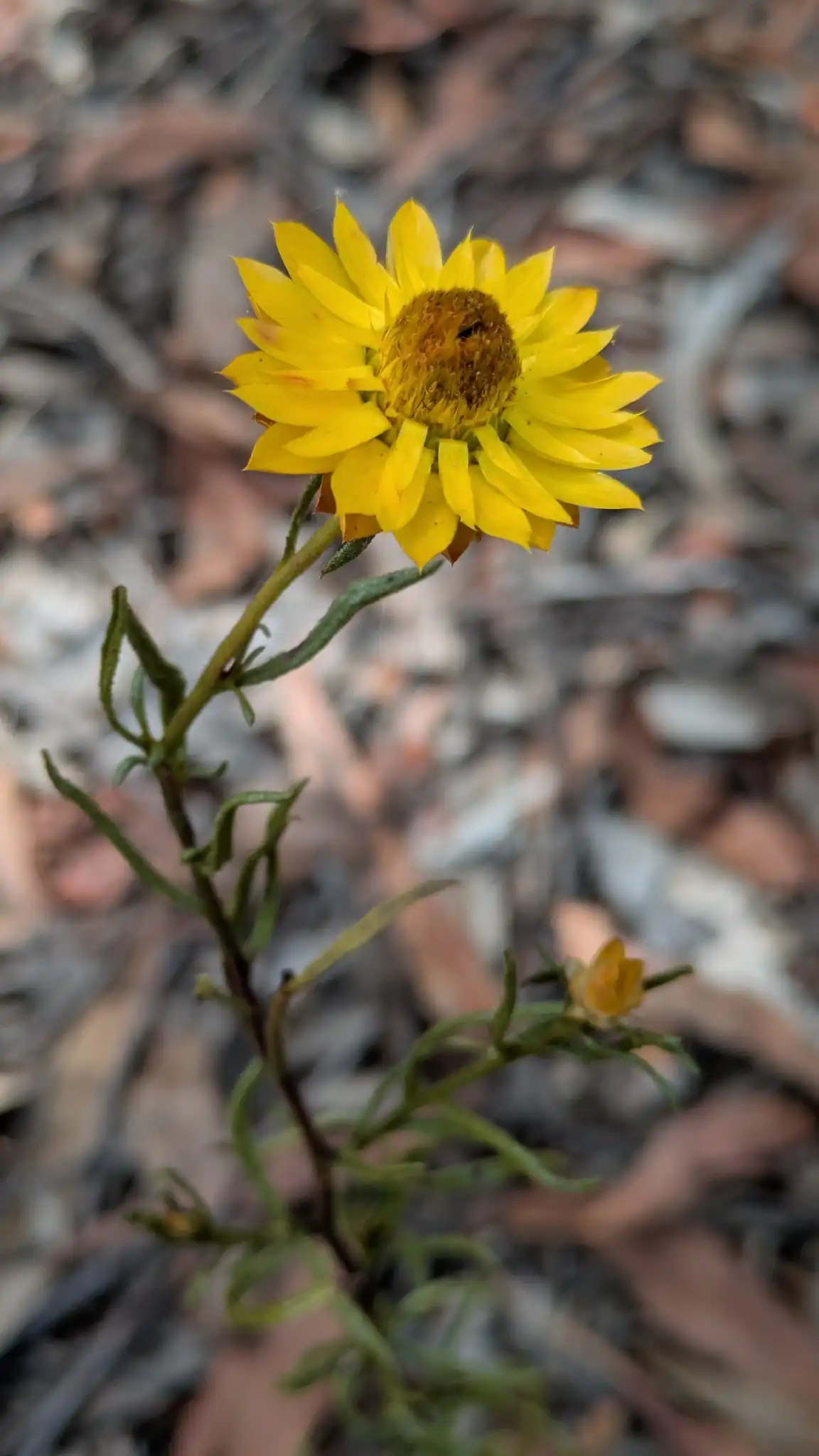
Xerochrysum viscosum, commonly known as sticky everlasting, is an upright, multi-stemmed Australian herb growing up to thirty inches tall with resinous, linear foliage. Solitary or small clusters of terminal daisy-like flower heads display papery bracts in shades of bright yellow, gold, and bronze around central golden disc florets.
The stems and leaf surfaces feature a distinctly sticky, resinous coating that occasionally traps small insects. Its dry, crisp papery flower heads retain their color and shape long after harvesting, making them exceptional candidates for dried floral craft.
Uses & Benefits:
Essentials
At a Glance
Plant Type
Perennial
Height
31"
Width
31"
Light
Full Sun
Zones
8, 9, 10
Water
Low
Humidity
Tolerant
Lifespan
Short-lived perennial
Native To
Australia
Toxicity
Non-toxic
Bloom period
Spring – Fall
In flower about 9 months of the year
Planting
How to Grow
- Choose a site in full sun with sharp, fast-draining sandy or loamy soil.
- Sow seeds on the soil surface without deep coverage or plant nursery starts after the last spring frost.
- Water moderately until established, then allow the top layer of soil to dry between waterings.
- Prune back hard in late autumn to encourage fresh growth and prevent leggy, woody bases.
Pro Tip
Cut stems back hard after the primary flowering flush ends to stimulate fresh basal shoots; avoiding old, leafless woody stems prevents bud failure.
Keep It Thriving
Care Guide
Do
- Provide maximum direct sunlight to prevent sparse, short-lived growth.
- Ensure excellent soil drainage to protect the root system from fungal rot.
- Prune hard post-bloom to renew basal shoots.
Don't
- Do not overwater or plant in heavy, waterlogged clay soils.
- Do not cut deep into old, leafless woody stems during pruning.
- Do not apply high-nitrogen heavy fertilizers.
Seasonal Care Calendar
| Task | Jan | Feb | Mar | Apr | May | Jun | Jul | Aug | Sep | Oct | Nov | Dec |
|---|---|---|---|---|---|---|---|---|---|---|---|---|
| Deadhead | ||||||||||||
| Pest Check | ||||||||||||
| Plant | ||||||||||||
| Prune |
Watch Out For
Pests & Diseases
Common Pests
Common Diseases
In the Garden
Landscape Uses & Companions
Landscape Uses
Multiply
Propagation Methods
Good to Know
Common Questions
Sticky Everlasting questions
What zones can Sticky Everlasting grow in?
Sticky Everlasting is hardy in USDA Zones 8–10: in that range it survives winter in the ground. Colder than Zone 8, grow it in a container you can move to shelter for the winter, or as an annual.
Is Sticky Everlasting deer resistant?
Not reliably. Deer may browse Sticky Everlasting, especially tender spring growth — plan on repellents or fencing where pressure is high.
When does Sticky Everlasting bloom?
Sticky Everlasting typically blooms from spring to fall. Exact timing shifts a week or two with your zone — Sow's bloom calendar maps it to your garden.
Does Sticky Everlasting need full sun?
Sticky Everlasting does best in full sun (6+ hours).
Is Sticky Everlasting drought tolerant?
Yes — once established (usually after the first full season), Sticky Everlasting handles dry spells with minimal watering. Water deeply its first year to build the root system that makes that possible.
More Xerochrysum to compare
Keep exploring
Explore the genus
Hardy in your zone?
Grow Sticky Everlasting with confidence
See it in a design of your actual yard, get zone-matched care reminders, and track it season by season in your garden journal.