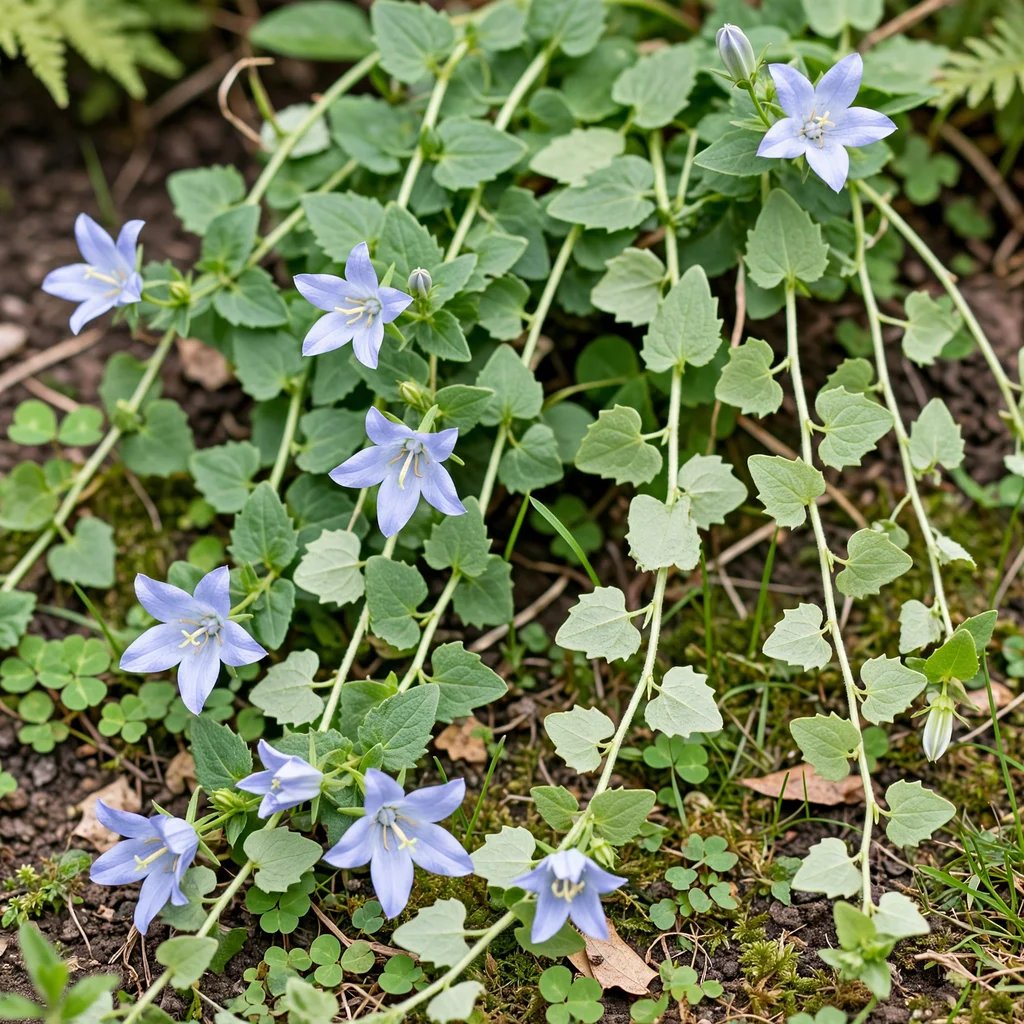
The Story
Plant Bio
Campanula isophylla is a tender trailing perennial from the limestone sea cliffs of western Liguria, forming low cascading mounds of soft brittle stems lined with small heart-shaped toothed leaves. The flowers are upward-facing star-shaped bells about an inch and a half across, borne in loose clusters at the stem ends through the warm months.
Unlike the upright border bellflowers, this species trails rather than clumps, spilling over baskets, pots and wall crevices on lax stems that snap if handled roughly. It initiates buds only under long days of about fifteen hours, which concentrates bloom in summer to fall and explains why plants held indoors without strong light fail to flower.
Uses & Benefits:
Essentials
At a Glance
Plant Type
Perennial
Height
8"
Width
12"
Light
Full Sun, Partial Sun
Zones
7, 8, 9, 10
Water
Medium, evenly moist
Humidity
Low to moderate, avoid high humidity
Lifespan
Tender perennial, often grown as annual or houseplant
Native To
Western Liguria, Italy
Toxicity
Unknown
Bloom period
Summer – Fall
In flower about 6 months of the year
Planting
How to Grow
- Plant after frost danger in full sun to partial shade, with shelter from hot afternoon sun.
- Set into moist well-drained chalk, sand or loam; add perlite or sand to container mix for drainage.
- Water regularly to keep the mix evenly moist, letting the surface dry without waterlogging.
- Feed with balanced liquid fertilizer monthly in the growing season and deadhead spent heads to prolong bloom.
- Move pots under cover before frost and cut dead stems to the base in late winter.
Pro Tip
Keep pots on the dry side of moist with sharp drainage and move them under cover before frost; cold combined with wet mix rots the crown.
Keep It Thriving
Care Guide
Do
- Do give bright light and long days to initiate buds.
- Do deadhead and pinch stem tips to keep plants dense and reblooming.
- Do protect brittle stems when moving pots.
Don't
- Don't overwater or hold plants wet and humid.
- Don't leave containers exposed to hard frost.
- Don't cut back repeatedly through the season; cut dead stems once before growth resumes.
Seasonal Care Calendar
| Task | Jan | Feb | Mar | Apr | May | Jun | Jul | Aug | Sep | Oct | Nov | Dec |
|---|---|---|---|---|---|---|---|---|---|---|---|---|
| Deadhead | ||||||||||||
| Fertilize | ||||||||||||
| Pest Check | ||||||||||||
| Pinch | ||||||||||||
| Winter Prep |
Watch Out For
Pests & Diseases
Common Pests
Common Diseases
In the Garden
Landscape Uses & Companions
Landscape Uses
Companion Plants
Multiply
Propagation Methods
Good to Know
Common Questions
Italian Bellflower questions
What zones can Italian Bellflower grow in?
Italian Bellflower is hardy in USDA Zones 7–10: in that range it survives winter in the ground. Colder than Zone 7, grow it in a container you can move to shelter for the winter, or as an annual.
When does Italian Bellflower bloom?
Italian Bellflower typically blooms from summer to fall. Exact timing shifts a week or two with your zone — Sow's bloom calendar maps it to your garden.
Does Italian Bellflower need full sun?
Italian Bellflower does best in full sun to part shade. In hot climates, afternoon shade keeps blooms fresher longer.
More Campanula to compare
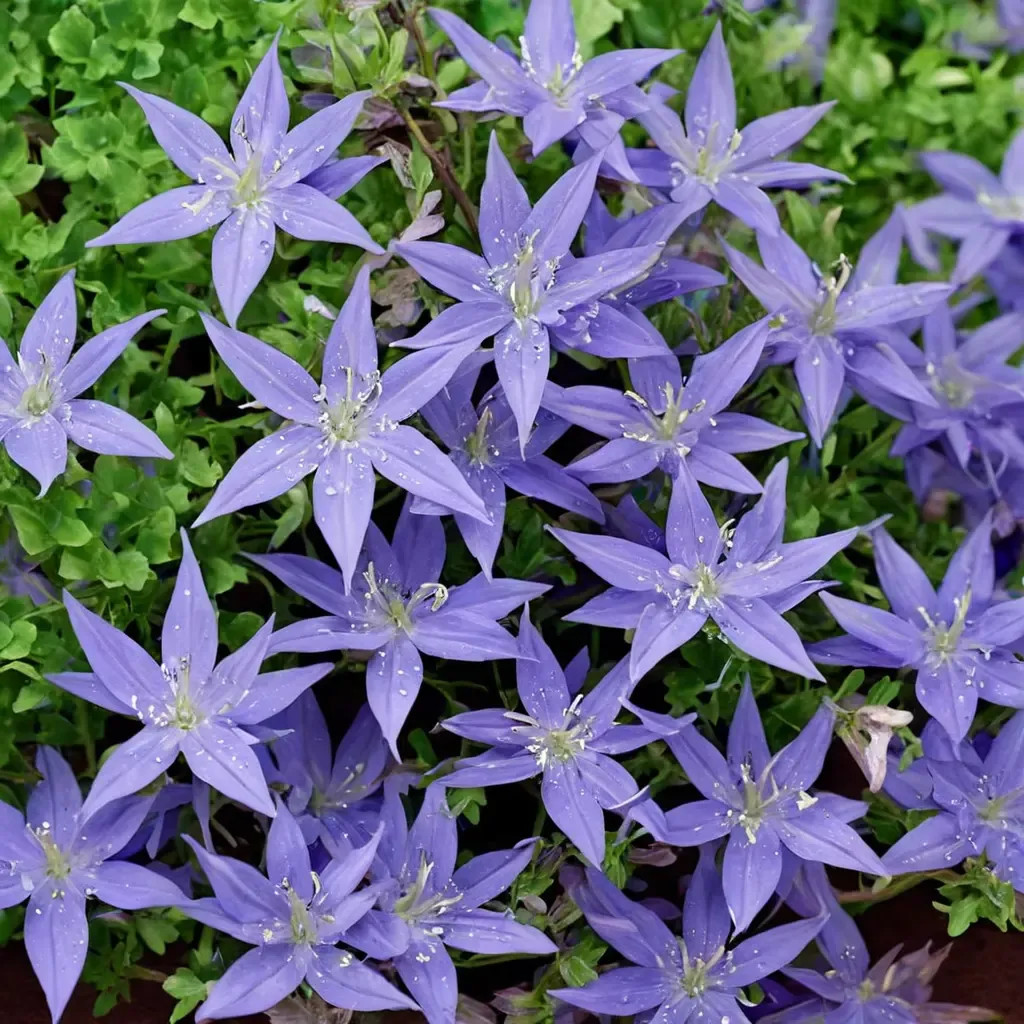
Blue Waterfall Bellflower
Campanula poscharskyana 'Blue Waterfall'
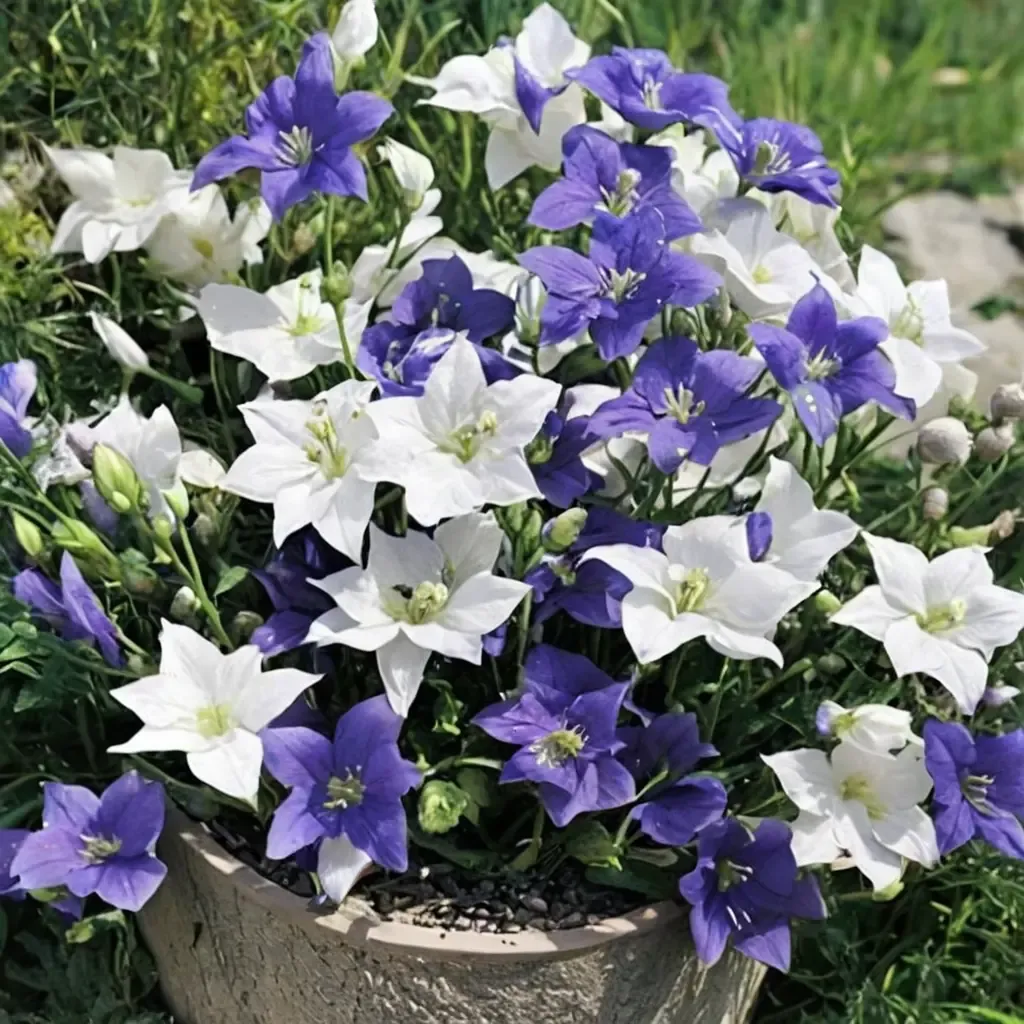
Carpathian Bellflower Mix
Campanula carpatica 'Mix'

Prichard Milky Bellflower
Campanula lactiflora 'Prichard'
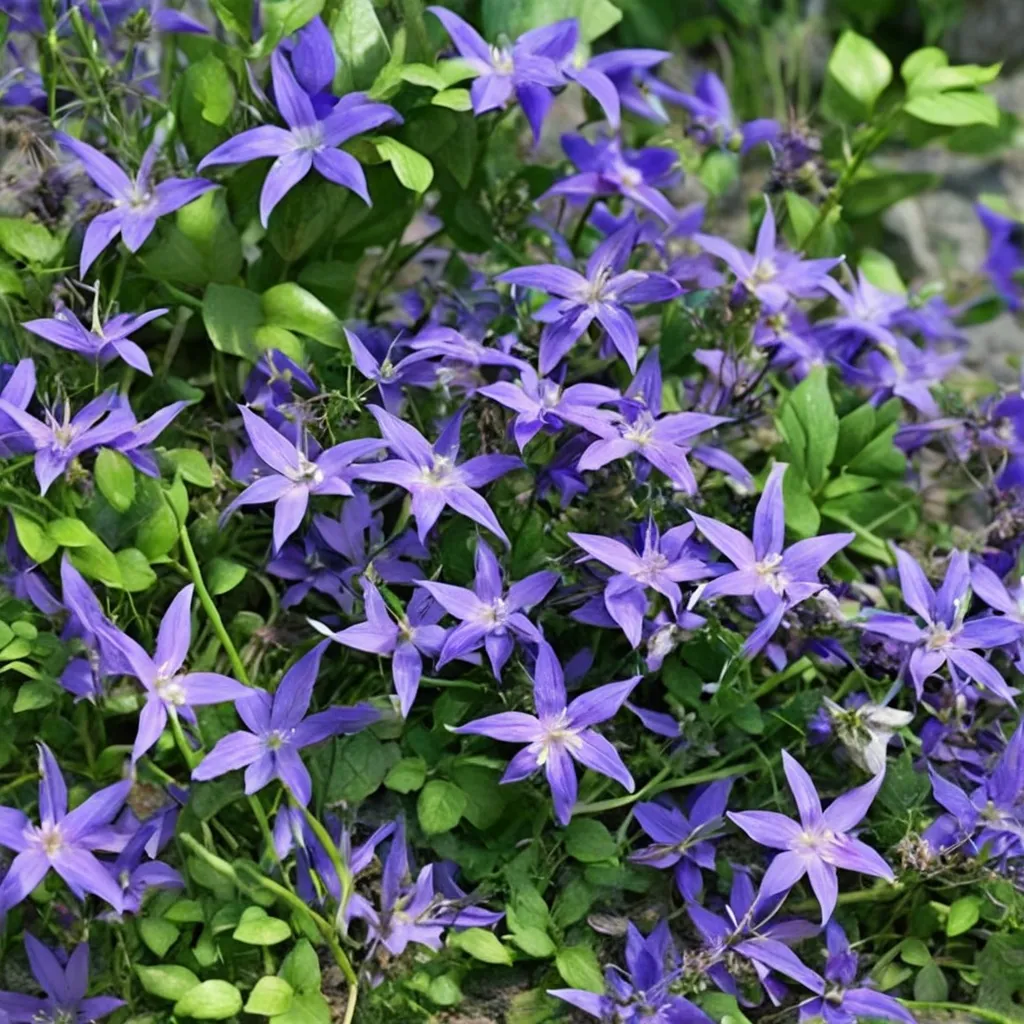
Serrated Bellflower
Campanula poscharskyana 'Stella'
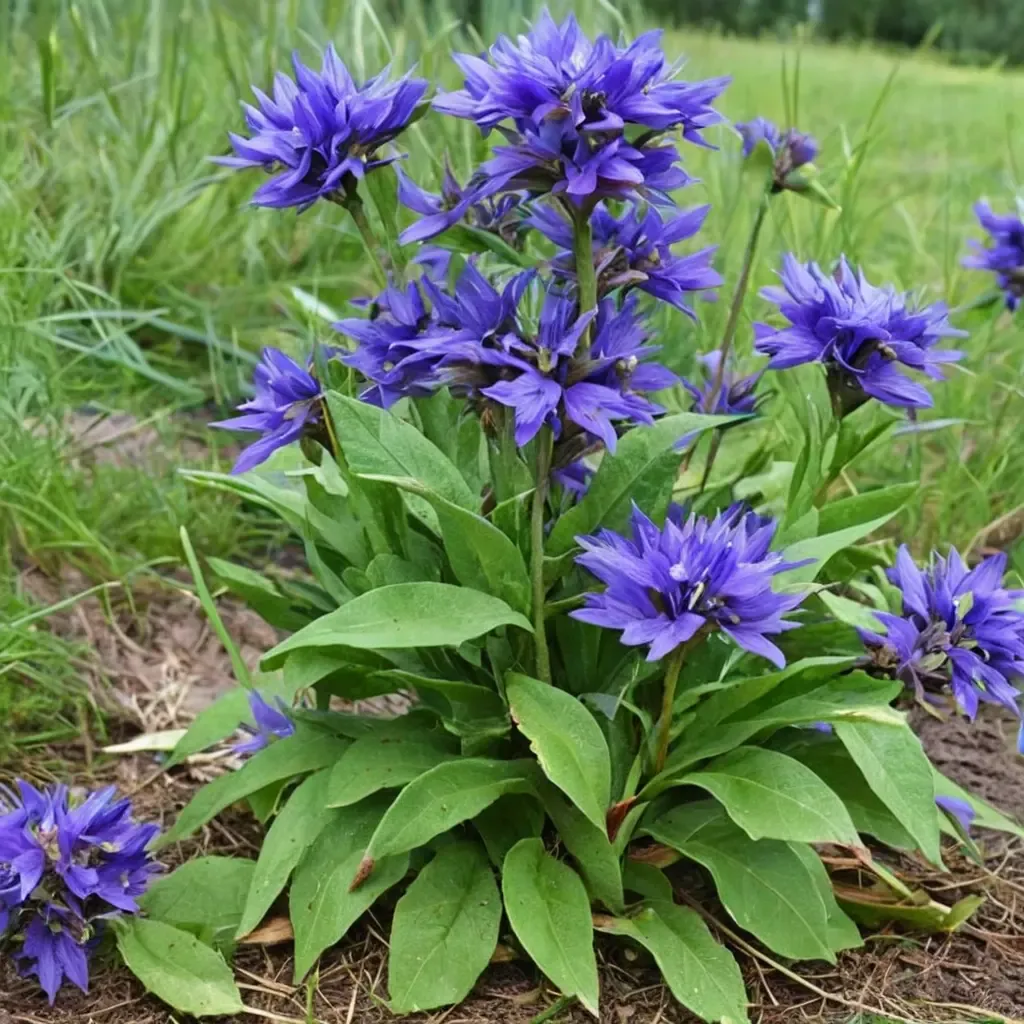
Clustered Bellflower
Campanula glomerata
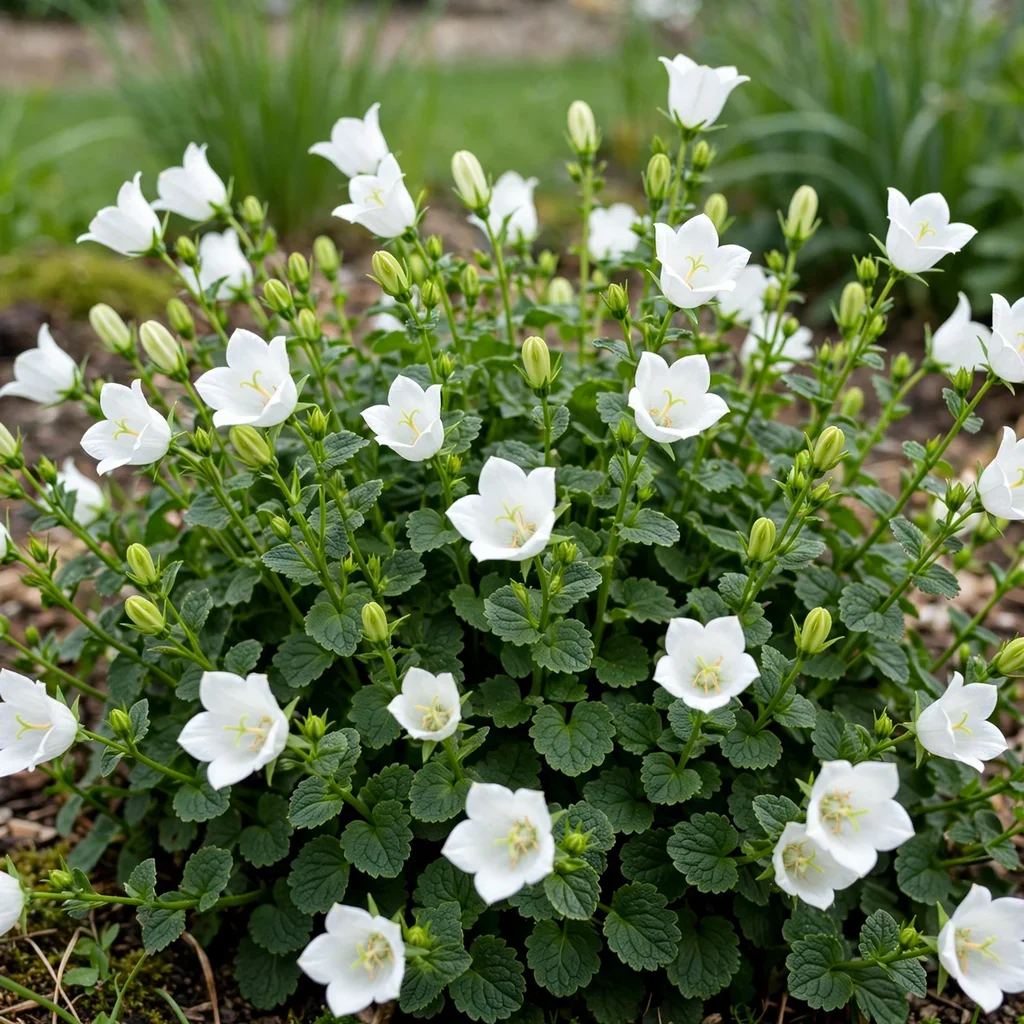
Rapido White Carpathian Bellflower
Campanula rapunculoides 'Rapido White'
Keep exploring
Explore the genus
Hardy in your zone?
Grow Italian Bellflower with confidence
See it in a design of your actual yard, get zone-matched care reminders, and track it season by season in your garden journal.