The Story
Plant Bio
Guaiacum sanctum is an extremely slow-growing evergreen shrub or small tree with a short, often crooked trunk and a dense rounded crown. The leaves are opposite and compound, dark green and glossy, with small leaflets that persist year-round.
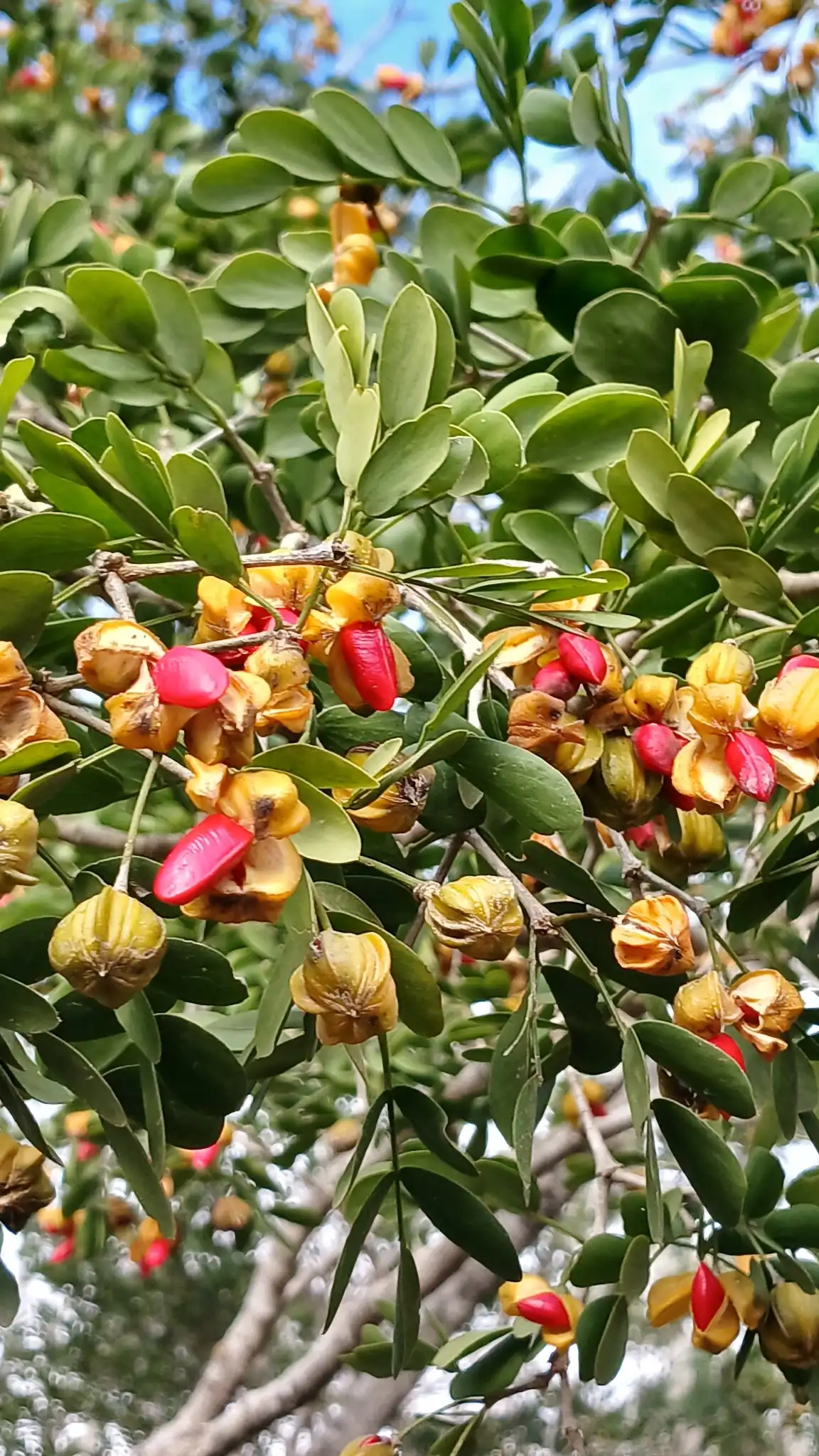
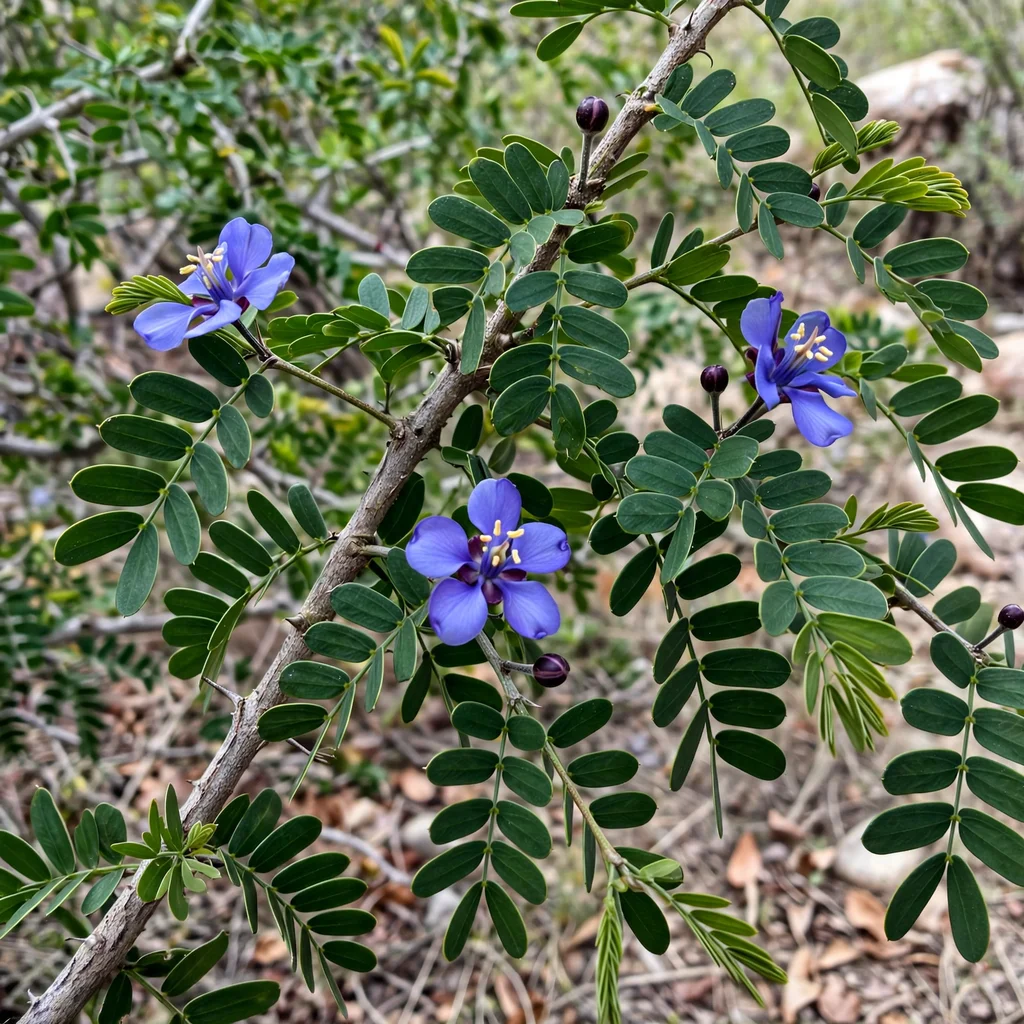
It blooms from spring into summer, carrying clusters of blue to bluish-purple five-petaled flowers about an inch across in the upper leaf axils, followed by yellow heart-shaped capsules that split to expose a red aril. Its wood is exceptionally hard, heavy, and oil-rich, a history of overharvest that explains its rarity in the wild and its protected status in Florida.
Uses & Benefits:
Essentials
At a Glance
Plant Type
Tree
Height
360"
Width
144"
Light
Full Sun, Partial Sun
Zones
10
Water
Low once established
Humidity
Tolerates humid subtropical conditions
Lifespan
Very long-lived slow tree
Native To
Southern Florida, Mexico, Central America, Caribbean
Toxicity
Not known to be toxic; historic medicinal resin
Bloom period
Spring – Summer
In flower about 6 months of the year
Planting
How to Grow
- Plant potted stock in spring in full sun to light partial shade.
- Dig a hole no deeper than the root ball in sand, loam, or rocky limestone soil that drains freely.
- Backfill, water in deeply, then mulch thinly clear of the trunk.
- Water regularly the first season, then taper to deep occasional watering once rooted.
Pro Tip
Site it once in full sun with sharp drainage and leave it to establish; reshaping cuts into old bare wood only set this slow crown back further.
Keep It Thriving
Care Guide
Do
- Do give it full sun, warmth, and well-drained soil.
- Do mulch lightly and keep equipment away from the slow trunk.
- Do allow space for an 8 to 12 foot crown over decades.
Don't
- Don't plant where hard frost occurs or soil stays wet.
- Don't over-prune or shear it for fast shade.
- Don't expect quick growth or move it once established.
Seasonal Care Calendar
| Task | Jan | Feb | Mar | Apr | May | Jun | Jul | Aug | Sep | Oct | Nov | Dec |
|---|---|---|---|---|---|---|---|---|---|---|---|---|
| Mulch | ||||||||||||
| Pest Check | ||||||||||||
| Plant | ||||||||||||
| Prune |
Watch Out For
Pests & Diseases
Common Pests
Common Diseases
In the Garden
Landscape Uses & Companions
Landscape Uses
Multiply
Propagation Methods
Good to Know
Common Questions
Lignum Vitae questions
What zones can Lignum Vitae grow in?
Lignum Vitae is hardy in USDA Zone 10: in that range it survives winter in the ground. Colder than Zone 10, winters are too cold for it to survive outdoors.
When does Lignum Vitae bloom?
Lignum Vitae typically blooms from spring to summer. Exact timing shifts a week or two with your zone — Sow's bloom calendar maps it to your garden.
Does Lignum Vitae need full sun?
Lignum Vitae does best in full sun to part shade. In hot climates, afternoon shade keeps blooms fresher longer.
Is Lignum Vitae drought tolerant?
Yes — once established (usually after the first full season), Lignum Vitae handles dry spells with minimal watering. Water deeply its first year to build the root system that makes that possible.
More Guaiacum to compare
Keep exploring
Explore the genus
Hardy in your zone?
Grow Lignum Vitae with confidence
See it in a design of your actual yard, get zone-matched care reminders, and track it season by season in your garden journal.