The Story
Plant Bio
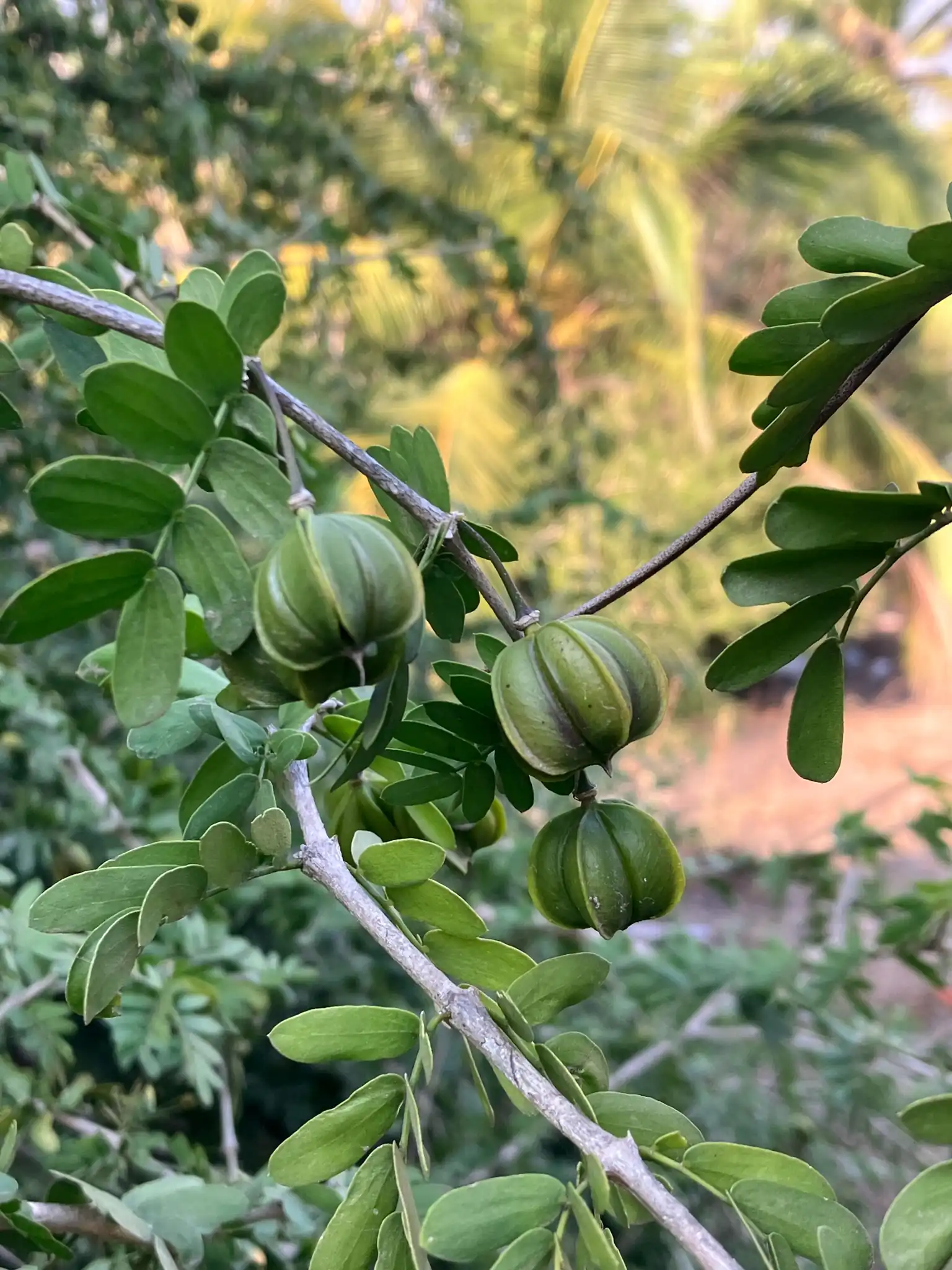
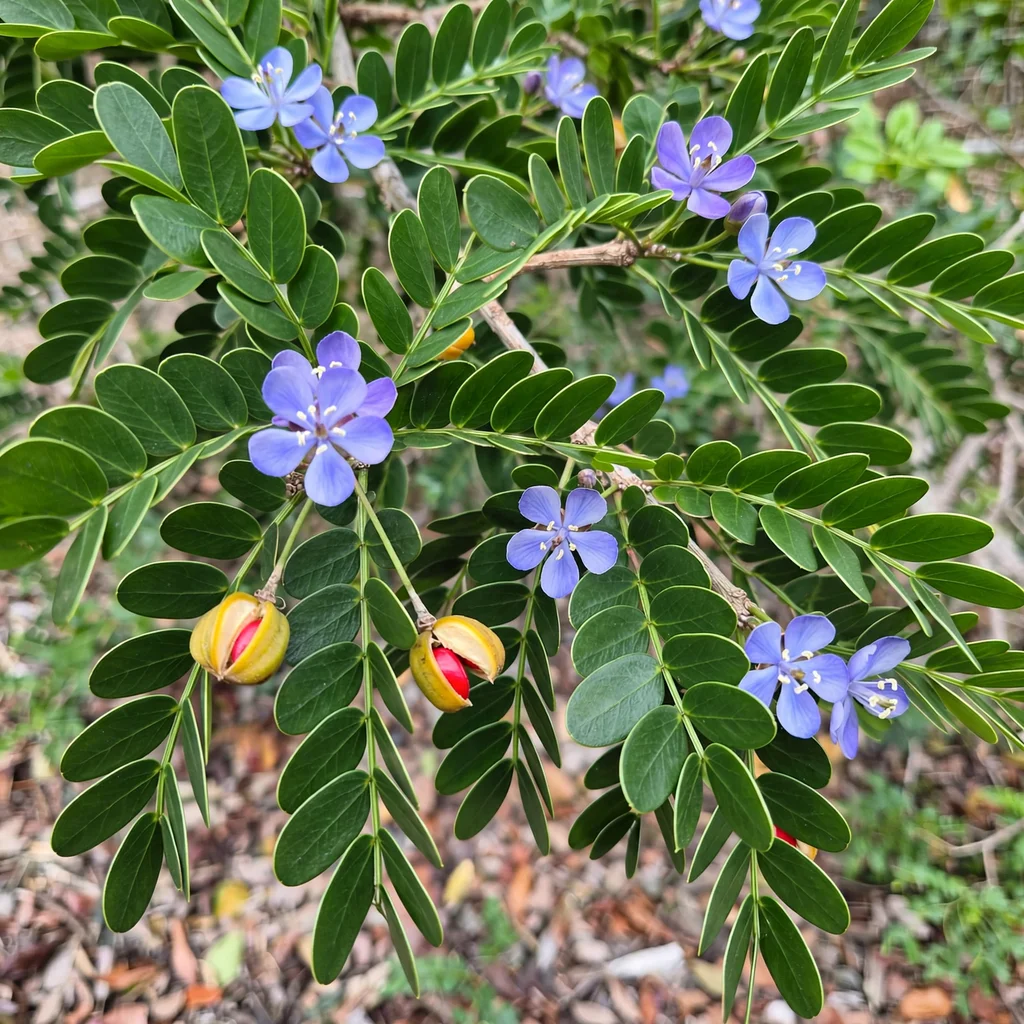
Guaiacum coulteri is a slow-growing evergreen shrub to small tree from dry forest in western Mexico to Guatemala, reaching six to ten feet in gardens with crooked zig-zag branching. It carries dark green pinnate leaves of two to six pairs of small oval leaflets that turn edge-on to reduce water loss in heat and drought.
Spring bloom brings inch-wide flowers with five blue to violet paddle petals around yellow anthers, borne singly and in small clusters with repeat flushes into fall. Growth is less than an inch a year, the wood is dense enough to sink in water, and seedlings vary in rate, form and flower shade.
Uses & Benefits:
Essentials
At a Glance
Plant Type
Shrub
Height
120"
Width
120"
Light
Full Sun, Partial Sun
Zones
9, 10
Water
Low
Humidity
Low
Lifespan
Long-lived
Native To
Western Mexico to Guatemala
Toxicity
Non-toxic
Bloom period
Spring – Fall
In flower about 9 months of the year
Planting
How to Grow
- Plant after last frost in full sun to light shade with very well-drained gravelly sand or loam.
- Set the rootball intact without disturbing the taproot and water in deeply.
- Water deeply weekly in warm weather for establishment, then every one to two weeks, every three to four weeks in winter.
- Protect from frost the first one to two seasons against a south wall; established plants take only a brief dip to 25F.
- Leave the slow framework unpruned except to remove frost-damaged wood in spring.
Pro Tip
Site it in full sun with sharp drainage and leave it alone; sparse edge-on leaves in drought are water conservation, not sickness, and five feet can take decades.
Keep It Thriving
Care Guide
Do
- Provide full sun and excellent drainage, in ground or in a large pot.
- Water deeply then allow drying between waterings.
- Protect young plants from frost and deer browsing.
Don't
- Do not shear annually or cut for shape.
- Do not plant in heavy clay or constantly wet soil.
- Do not transplant repeatedly once the taproot is established.
Seasonal Care Calendar
| Task | Jan | Feb | Mar | Apr | May | Jun | Jul | Aug | Sep | Oct | Nov | Dec |
|---|---|---|---|---|---|---|---|---|---|---|---|---|
| Pest Check | ||||||||||||
| Plant | ||||||||||||
| Propagate | ||||||||||||
| Prune | ||||||||||||
| Winter Prep |
Watch Out For
Pests & Diseases
Common Pests
Common Diseases
In the Garden
Landscape Uses & Companions
Landscape Uses
Multiply
Propagation Methods
Good to Know
Common Questions
Sonoran Lignum-Vitae questions
What zones can Sonoran Lignum-Vitae grow in?
Sonoran Lignum-Vitae is hardy in USDA Zones 9–10: in that range it survives winter in the ground. Colder than Zone 9, grow it in a container you can move to shelter for the winter.
Is Sonoran Lignum-Vitae deer resistant?
Not reliably. Deer may browse Sonoran Lignum-Vitae, especially tender spring growth — plan on repellents or fencing where pressure is high.
When does Sonoran Lignum-Vitae bloom?
Sonoran Lignum-Vitae typically blooms from spring to fall. Exact timing shifts a week or two with your zone — Sow's bloom calendar maps it to your garden.
Does Sonoran Lignum-Vitae need full sun?
Sonoran Lignum-Vitae does best in full sun to part shade. In hot climates, afternoon shade keeps blooms fresher longer.
Is Sonoran Lignum-Vitae drought tolerant?
Yes — once established (usually after the first full season), Sonoran Lignum-Vitae handles dry spells with minimal watering. Water deeply its first year to build the root system that makes that possible.
More Guaiacum to compare
Keep exploring
Explore the genus
Hardy in your zone?
Grow Sonoran Lignum-Vitae with confidence
See it in a design of your actual yard, get zone-matched care reminders, and track it season by season in your garden journal.