The Story
Plant Bio
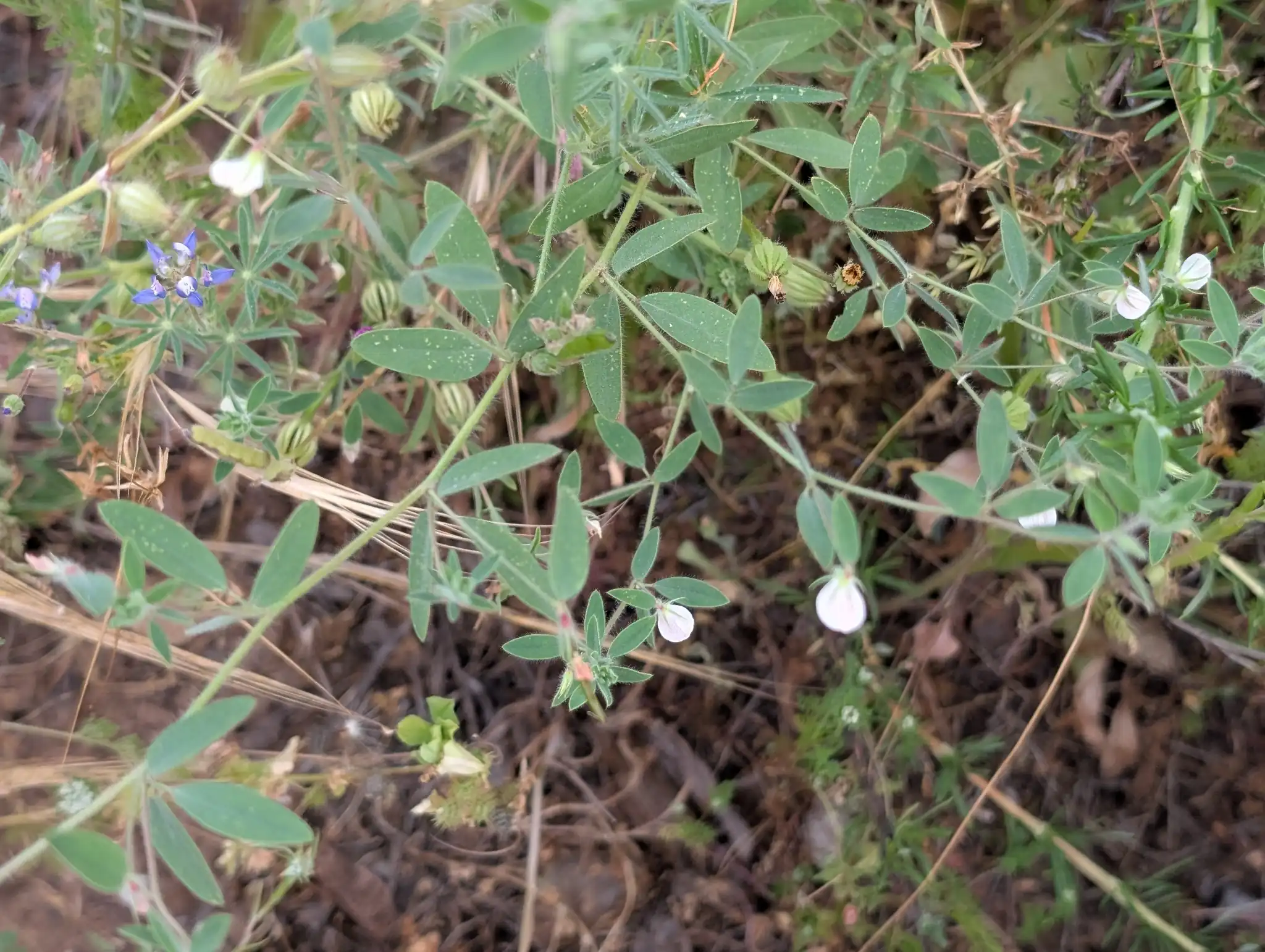
Acmispon americanus is an upright, branching annual wildflower native across North America, forming fine hairy stems clad in small trifoliate leaves. It produces small, solitary pea-like flowers ranging from pale yellow to cream or pale pink from spring into summer.
As a nitrogen-fixing legume, this species improves lean soils naturally without requiring added fertilizers. It serves as a larval host plant for the Eastern tailed blue butterfly and relies on late-season self-seeding to persist in native plantings.
Uses & Benefits:
Essentials
At a Glance
Plant Type
Annual
Height
24"
Width
12"
Light
Full Sun, Partial Sun
Zones
4, 5, 6, 7, 8, 9
Water
Low
Humidity
Adaptable
Lifespan
Annual
Native To
North America
Toxicity
Non-toxic
Bloom period
Spring – Summer
In flower about 6 months of the year
Planting
How to Grow
- Select a site in full sun to light shade with well-drained sandy or loamy soil.
- Sow seeds directly onto cleared soil in early spring, pressing lightly into the surface.
- Keep soil moist until germination, then reduce irrigation as seedlings establish.
- Avoid applying nitrogen fertilizer, which inhibits natural root nodulation and nitrogen fixation.
- Allow flower heads to set seed and shatter naturally in late summer to reseed the area.
Pro Tip
Allow seed pods to mature and drop naturally on open soil; clearing dead foliage before seed release eliminates the seed bank required for next year's crop.
Keep It Thriving
Care Guide
Do
- Sow seeds directly into well-drained, sandy or loamy soils.
- Allow plants to mature and shed seed naturally to ensure regeneration.
- Provide full sun to light partial shade for optimal flower production.
Don't
- Do not apply nitrogen fertilizers, which disrupt natural soil fixation.
- Do not plant in heavy clay or waterlogged soils prone to standing water.
- Do not remove spent top growth before seeds have fully ripened and dropped.
Seasonal Care Calendar
| Task | Jan | Feb | Mar | Apr | May | Jun | Jul | Aug | Sep | Oct | Nov | Dec |
|---|---|---|---|---|---|---|---|---|---|---|---|---|
| Deadhead | ||||||||||||
| Pest Check | ||||||||||||
| Plant | ||||||||||||
| Spring Cleanup |
Watch Out For
Pests & Diseases
Common Pests
Common Diseases
In the Garden
Landscape Uses & Companions
Landscape Uses
Multiply
Propagation Methods
Good to Know
Common Questions
American Bird's-Foot Trefoil questions
What zones can American Bird's-Foot Trefoil grow in?
American Bird's-Foot Trefoil is an annual: it grows, flowers and sets seed in one season, so winter cold doesn't limit where it grows. Gardeners in any zone can grow it by planting at the right time, usually after the last spring frost.
When does American Bird's-Foot Trefoil bloom?
American Bird's-Foot Trefoil typically blooms from spring to summer. Exact timing shifts a week or two with your zone — Sow's bloom calendar maps it to your garden.
Does American Bird's-Foot Trefoil need full sun?
American Bird's-Foot Trefoil does best in full sun to part shade. In hot climates, afternoon shade keeps blooms fresher longer.
Is American Bird's-Foot Trefoil drought tolerant?
Yes — once established (usually after the first full season), American Bird's-Foot Trefoil handles dry spells with minimal watering. Water deeply its first year to build the root system that makes that possible.
More Acmispon to compare
Keep exploring
Explore the genus
Grow American Bird's-Foot Trefoil with confidence
See it in a design of your actual yard, get zone-matched care reminders, and track it season by season in your garden journal.