The Story
Plant Bio
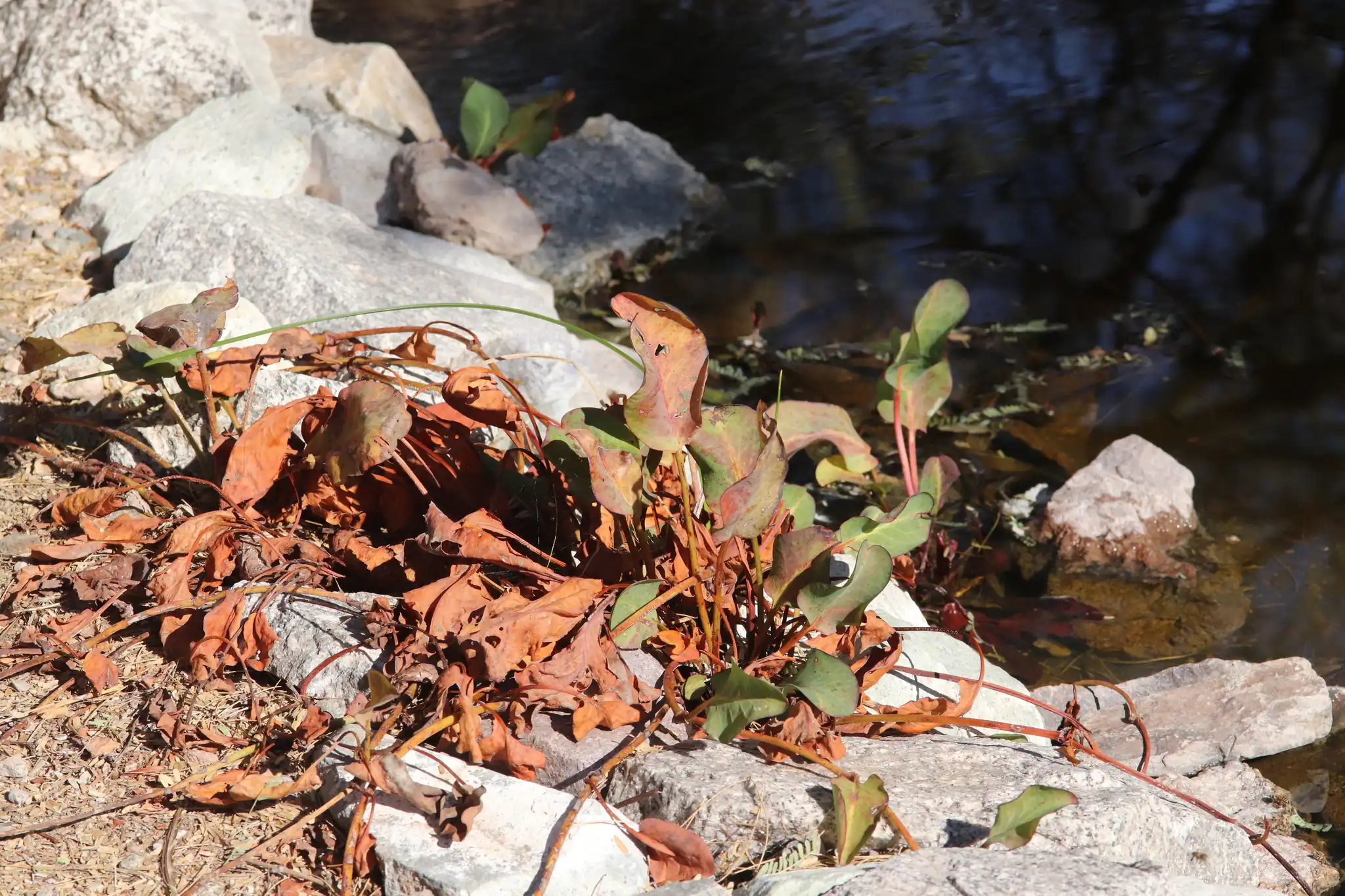
Anemopsis californica is a low-growing, spreading hydroperennial native to western North America, forming dense groundcover mats via above-ground stolons and creeping rhizomes. Thick, leathery leaves emerge glossy green from basal rosettes before shifting to rich bronze and deep red tones in fall.
The species produces upright conical floral spikes surrounded by four to nine conspicuous, white petal-like bracts that age to pink and deep red. Its ability to thrive in saturated, saline, or high-pH soils makes it effective for stabilizing boggy ground and pond margins.
Uses & Benefits:
Essentials
At a Glance
Plant Type
Perennial
Height
24"
Width
40"
Light
Full Sun, Partial Sun
Zones
6, 7, 8, 9, 10
Water
High
Humidity
High
Lifespan
Perennial
Native To
North America
Toxicity
Non-toxic
Bloom period
Spring – Summer
In flower about 6 months of the year
Planting
How to Grow
- Select a planting location in full sun to partial shade with consistently moist, wet, or poorly drained soil.
- Dig a hole twice as wide as the root ball and set the crown flush with the soil surface.
- Water deeply after planting to settle the soil around rhizomes and stolons.
- Maintain regular irrigation to prevent the soil from drying out completely during establishment.
Pro Tip
Keep the root zone consistently damp; while established roots endure brief dry periods, steady moisture prevents foliage edges from burning.
Keep It Thriving
Care Guide
Do
- Maintain wet or boggy soil conditions to promote lush foliage and steady spreading.
- Trim away browned or frost-damaged foliage in early spring before new leaves emerge.
Don't
- Do not allow soil surrounding young or establishing roots to dry out completely.
- Do not prune into subterranean crowns or disturb underground rhizomes unnecessarily.
Seasonal Care Calendar
| Task | Jan | Feb | Mar | Apr | May | Jun | Jul | Aug | Sep | Oct | Nov | Dec |
|---|---|---|---|---|---|---|---|---|---|---|---|---|
| Divide | ||||||||||||
| Pest Check | ||||||||||||
| Spring Cleanup | ||||||||||||
| Winter Prep |
Watch Out For
Pests & Diseases
Common Pests
Common Diseases
In the Garden
Landscape Uses & Companions
Landscape Uses
Multiply
Propagation Methods
Good to Know
Common Questions
Yerba Mansa questions
What zones can Yerba Mansa grow in?
Yerba Mansa is hardy in USDA Zones 6–10: in that range it survives winter in the ground. Colder than Zone 6, grow it in a container you can move to shelter for the winter, or as an annual.
When does Yerba Mansa bloom?
Yerba Mansa typically blooms from spring to summer. Exact timing shifts a week or two with your zone — Sow's bloom calendar maps it to your garden.
Does Yerba Mansa need full sun?
Yerba Mansa does best in full sun to part shade. In hot climates, afternoon shade keeps blooms fresher longer.
Is Yerba Mansa drought tolerant?
Yes — once established (usually after the first full season), Yerba Mansa handles dry spells with minimal watering. Water deeply its first year to build the root system that makes that possible.
Keep exploring
Explore the genus
Hardy in your zone?
Grow Yerba Mansa with confidence
See it in a design of your actual yard, get zone-matched care reminders, and track it season by season in your garden journal.