The Story
Plant Bio
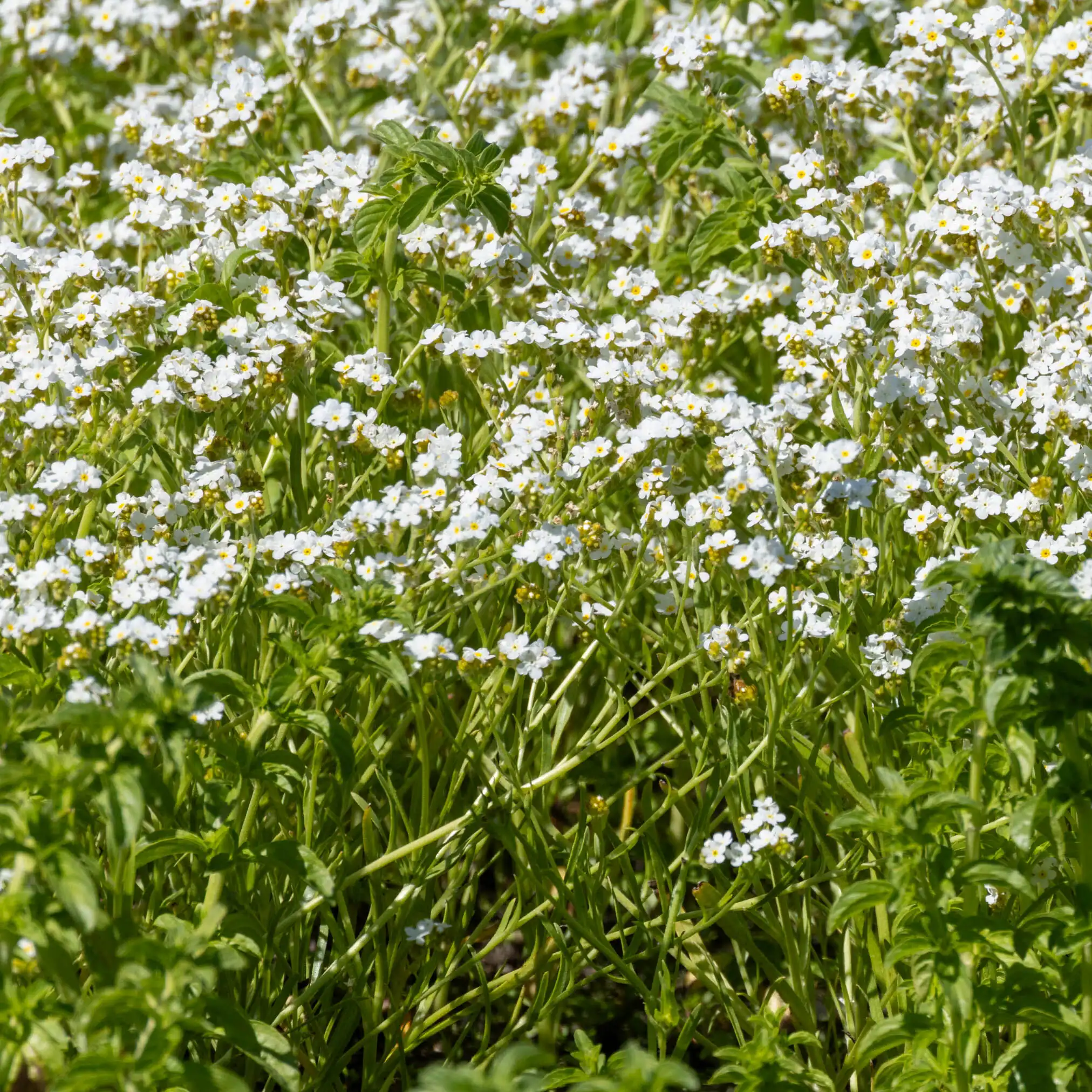
Plagiobothrys figuratus is an annual herb native to Pacific Northwest wet meadows, bogs, and vernally wet sites. It forms a low basal clump of linear mid-green leaves before sending up branched stems bearing dense, coiled spikes of tiny white flowers with yellow centers.
This species is notable for the sweet, honey-like scent of its spring blooms and its ability to thrive in saturated, heavy clay soils. Plants complete their lifecycle before summer drought sets in, leaving seeds in the soil that germinate with fall rains.
Uses & Benefits:
Essentials
At a Glance
Plant Type
Annual
Height
18"
Width
12"
Light
Full Sun
Zones
6, 7, 8, 9, 10
Water
High (Wet/Moist)
Humidity
Moderate
Lifespan
Annual
Native To
North America (Pacific Northwest)
Toxicity
Non-toxic
Bloom period
Spring – Summer
In flower about 6 months of the year
Planting
How to Grow
- Select an open, full-sun site that stays wet or muddy in winter and spring.
- Sow seeds directly onto undisturbed damp soil in fall or early spring without burying them deeply.
- Maintain consistent soil moisture throughout the main vegetative and flowering period.
- Allow seed pods to mature and shatter on the plant to secure self-sowing for subsequent seasons.
Pro Tip
Leave the spent plants intact after flowering so seeds drop directly into the soil to regenerate the stand naturally every year.
Keep It Thriving
Care Guide
Do
- Keep soil consistently moist to wet from spring emergence through flowering.
- Plant in heavy, water-retentive clay or silty soil mixes.
- Provide full sun to ensure compact stem growth and dense flower spikes.
Don't
- Do not apply synthetic fertilizers, which encourage weak, floppy growth.
- Do not allow soil to dry out prematurely while plants are actively flowering.
- Do not mulch deeply over seeding areas, as seeds need close contact with soil to germinate.
Seasonal Care Calendar
| Task | Jan | Feb | Mar | Apr | May | Jun | Jul | Aug | Sep | Oct | Nov | Dec |
|---|---|---|---|---|---|---|---|---|---|---|---|---|
| Pest Check | ||||||||||||
| Plant | ||||||||||||
| Propagate | ||||||||||||
| Spring Cleanup |
Watch Out For
Pests & Diseases
Common Pests
Common Diseases
In the Garden
Landscape Uses & Companions
Landscape Uses
Multiply
Propagation Methods
Good to Know
Common Questions
Fragrant Popcornflower questions
What zones can Fragrant Popcornflower grow in?
Fragrant Popcornflower is an annual: it grows, flowers and sets seed in one season, so winter cold doesn't limit where it grows. Gardeners in any zone can grow it by planting at the right time, usually after the last spring frost.
Is Fragrant Popcornflower deer resistant?
Yes — Fragrant Popcornflower is rated deer-resistant. Deer typically pass it over, though extreme hunger can override any plant's defenses.
When does Fragrant Popcornflower bloom?
Fragrant Popcornflower typically blooms from spring to summer. Exact timing shifts a week or two with your zone — Sow's bloom calendar maps it to your garden.
Does Fragrant Popcornflower need full sun?
Fragrant Popcornflower does best in full sun (6+ hours).
More Plagiobothrys to compare
Keep exploring
Explore the genus
Hardy in your zone?
Grow Fragrant Popcornflower with confidence
See it in a design of your actual yard, get zone-matched care reminders, and track it season by season in your garden journal.