The Story
Plant Bio
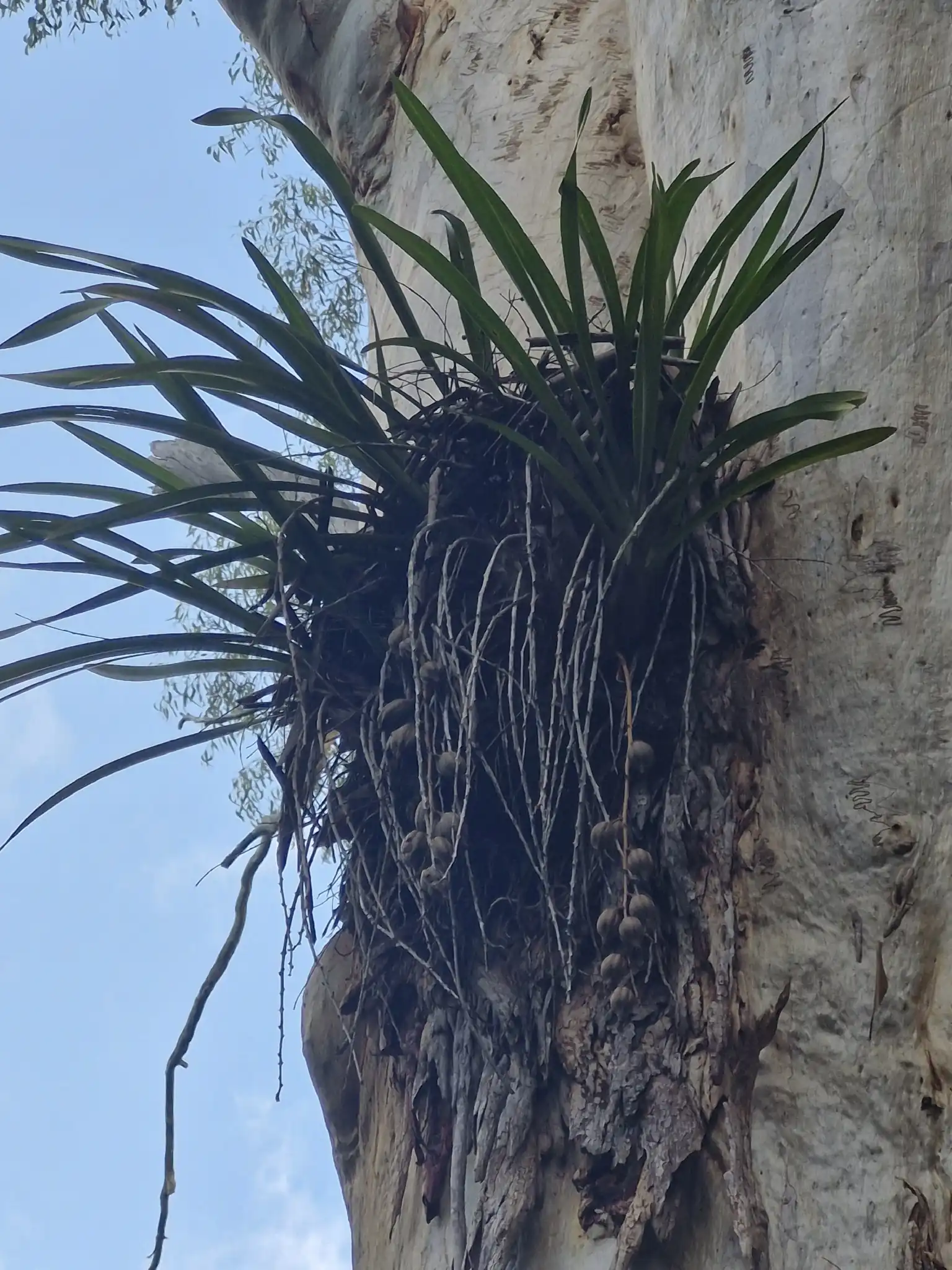
Cymbidium madidum, known as the buttercup orchid, is a large epiphytic species native to eastern Australia. It forms heavy clumps of ovoid pseudobulbs carrying flexible, dark green, strap-like leaves up to three feet long.
Pendent flower racemes grow up to 30 inches long and hold up to 70 small, non-spreading blossoms in shades of olive to brownish green. Each bloom features a bright yellow lip marked with a central red-brown stripe.
Uses & Benefits:
Essentials
At a Glance
Plant Type
Tropical
Height
35"
Width
39"
Light
Partial Sun
Zones
10
Water
Moderate
Humidity
Moderate to High
Lifespan
Perennial
Native To
Australia
Toxicity
Non-toxic
Bloom period
Spring – Summer
In flower about 6 months of the year
Planting
How to Grow
- Plant in a coarse orchid bark or charcoal substrate with rapid drainage.
- Position pseudobulbs so the base sits entirely above the substrate surface.
- Place in bright, indirect light while shielding foliage from direct midday sun.
- Water regularly during active growth, allowing the medium to dry slightly between waterings.
Pro Tip
Position pseudobulbs at or slightly above the potting surface; burying them traps moisture against the bases and induces fatal rot.
Keep It Thriving
Care Guide
Do
- Keep pseudobulbs elevated at the top of the potting medium.
- Provide consistent bright, filtered light and air circulation.
- Apply a weak orchid fertilizer biweekly during spring and summer.
- Maintain moderate to high humidity around the foliage.
Don't
- Do not bury pseudobulbs beneath the potting medium.
- Do not divide clumps into single-bulb sections.
- Do not remove leafless backbulbs that remain firm and green.
- Do not allow roots to sit in stagnant water.
Seasonal Care Calendar
| Task | Jan | Feb | Mar | Apr | May | Jun | Jul | Aug | Sep | Oct | Nov | Dec |
|---|---|---|---|---|---|---|---|---|---|---|---|---|
| Divide | ||||||||||||
| Fertilize | ||||||||||||
| Pest Check | ||||||||||||
| Prune | ||||||||||||
| Winter Prep |
Watch Out For
Pests & Diseases
Common Pests
Common Diseases
In the Garden
Landscape Uses & Companions
Landscape Uses
Companion Plants
Multiply
Propagation Methods
Good to Know
Common Questions
Buttercup Orchid questions
What zones can Buttercup Orchid grow in?
Buttercup Orchid is hardy in USDA Zone 10: in that range it survives winter in the ground. Colder than Zone 10, grow it in a container you can move to shelter for the winter, or as an annual.
When does Buttercup Orchid bloom?
Buttercup Orchid typically blooms from spring to summer. Exact timing shifts a week or two with your zone — Sow's bloom calendar maps it to your garden.
Does Buttercup Orchid need full sun?
Buttercup Orchid does best in part shade.
Is Buttercup Orchid drought tolerant?
Yes — once established (usually after the first full season), Buttercup Orchid handles dry spells with minimal watering. Water deeply its first year to build the root system that makes that possible.
More Cymbidium to compare
Keep exploring
Explore the genus
Hardy in your zone?
Grow Buttercup Orchid with confidence
See it in a design of your actual yard, get zone-matched care reminders, and track it season by season in your garden journal.