The Story
Plant Bio
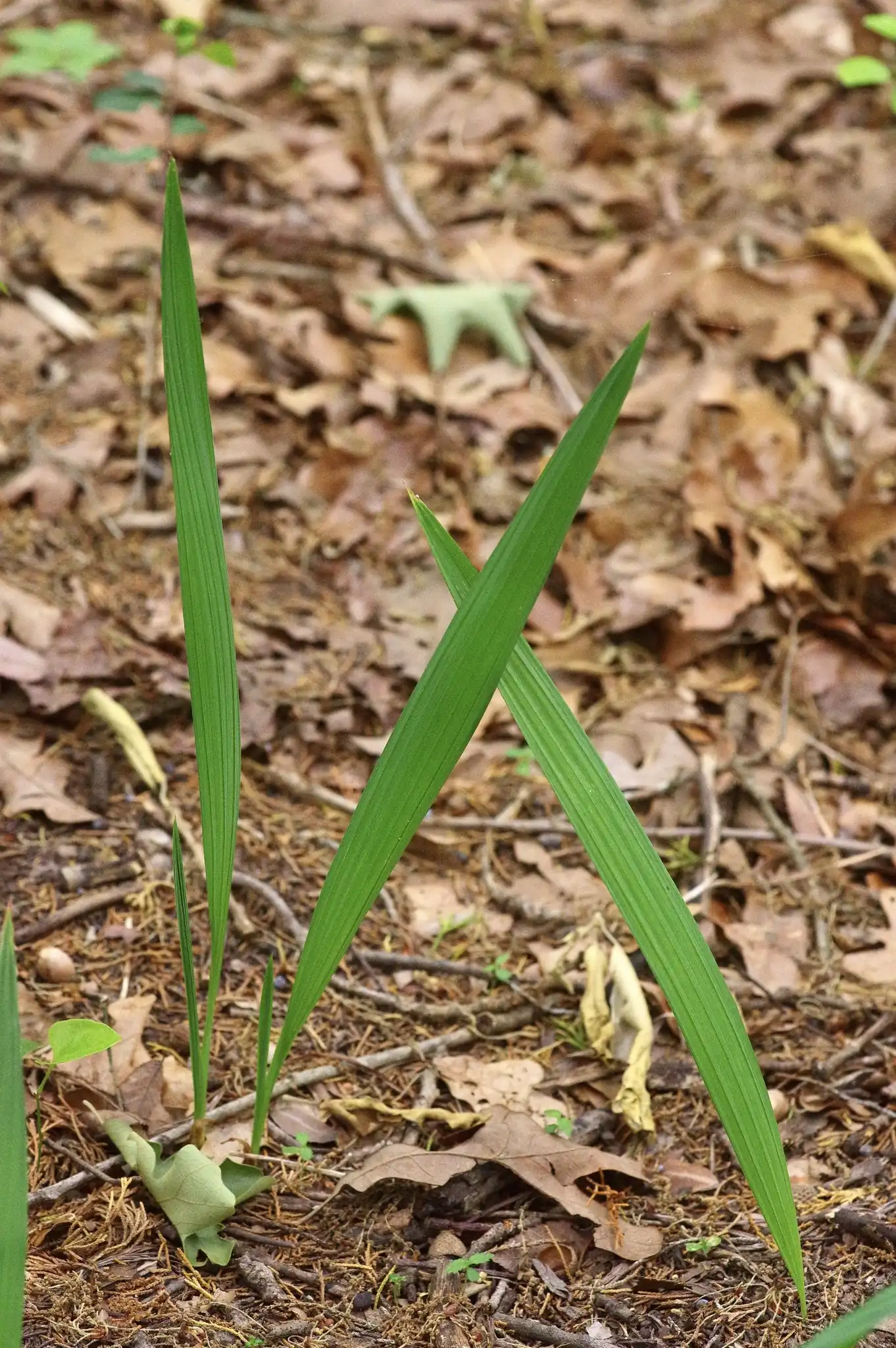
Alophia drummondii is a winter-dormant iris relative that grows from a tunic-covered corm to one to two feet, with narrow pleated basal leaves that clasp the unbranched stem. The leaves die to the ground in winter and return in spring from the underground corm.
The flowers open one at a time on two- to four-flowered rhipidia, each bloom about two inches across with spreading purple tepals around a yellow center spotted reddish brown. Each flower lasts a single day but buds follow in succession for weeks, a sequence that separates true stock from Herbertia lahue sold under the same name.
Uses & Benefits:
Essentials
At a Glance
Plant Type
Bulb Corm Tuber
Height
18"
Width
8"
Light
Partial Sun, Shade
Zones
7, 8, 9, 10
Water
Low
Humidity
Unknown
Lifespan
Perennial
Native To
South-central U.S. to Mexico
Toxicity
Unknown
Bloom period
Late spring – Early fall
In flower about 5 months of the year
Planting
How to Grow
- Plant corms 2-3 inches deep in spring after frost in sandy to sandy-loam soil that drains fast.
- Site in part sun to part shade with open air around the basal fan.
- Water to establish, then water sparingly; established clumps take dry spells.
- Leave foliage to ripen after flowering to recharge the corm.
- Keep dry and unwatered through winter dormancy; mulch lightly only in zone 7.
Pro Tip
Leave the clump undisturbed and dry through winter dormancy; watering or digging while leafless rots the corm and prevents spring emergence.
Keep It Thriving
Care Guide
Do
- Plant in fast-draining sandy soil in part sun
- Allow foliage to senesce naturally after bloom
- Keep corms dry while winter-dormant
Don't
- Don't set corms in soil that ponds or stays soggy
- Don't lift or divide while leaves are green and active
- Don't water through winter dormancy
Seasonal Care Calendar
| Task | Jan | Feb | Mar | Apr | May | Jun | Jul | Aug | Sep | Oct | Nov | Dec |
|---|---|---|---|---|---|---|---|---|---|---|---|---|
| Deadhead | ||||||||||||
| Divide | ||||||||||||
| Plant | ||||||||||||
| Spring Cleanup | ||||||||||||
| Winter Prep |
Watch Out For
Pests & Diseases
Common Pests
Common Diseases
In the Garden
Landscape Uses & Companions
Landscape Uses
Multiply
Propagation Methods
Good to Know
Common Questions
Propeller Flower questions
What zones can Propeller Flower grow in?
Propeller Flower is hardy in USDA Zones 7–10: in that range it survives winter in the ground. Colder than Zone 7, grow it in a container you can move to shelter for the winter, or as an annual.
When does Propeller Flower bloom?
Propeller Flower typically blooms from late spring to early fall. Exact timing shifts a week or two with your zone — Sow's bloom calendar maps it to your garden.
Does Propeller Flower need full sun?
Propeller Flower does best in part shade.
Is Propeller Flower drought tolerant?
Yes — once established (usually after the first full season), Propeller Flower handles dry spells with minimal watering. Water deeply its first year to build the root system that makes that possible.
Keep exploring
Explore the genus
Hardy in your zone?
Grow Propeller Flower with confidence
See it in a design of your actual yard, get zone-matched care reminders, and track it season by season in your garden journal.