The Story
Plant Bio
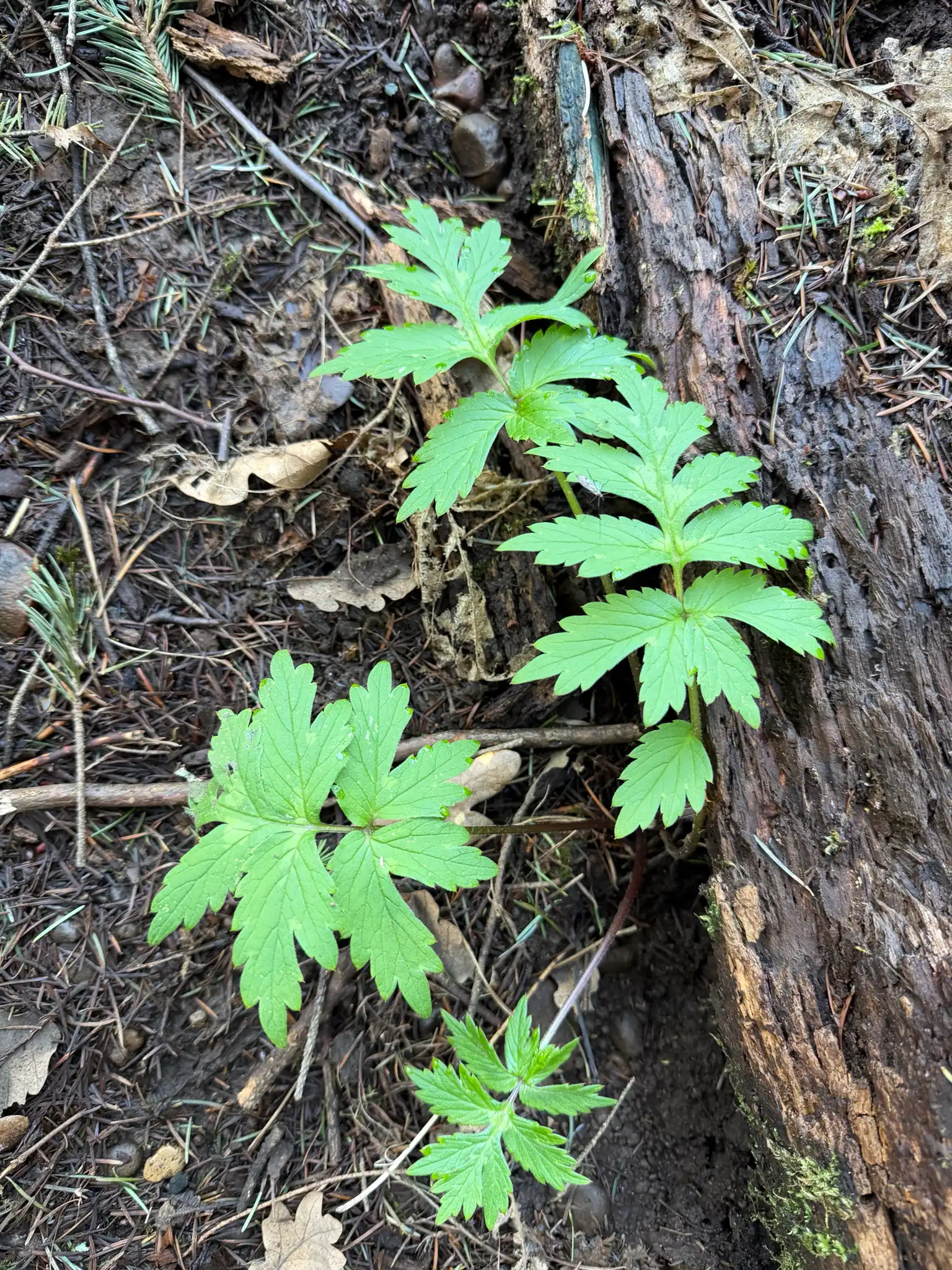
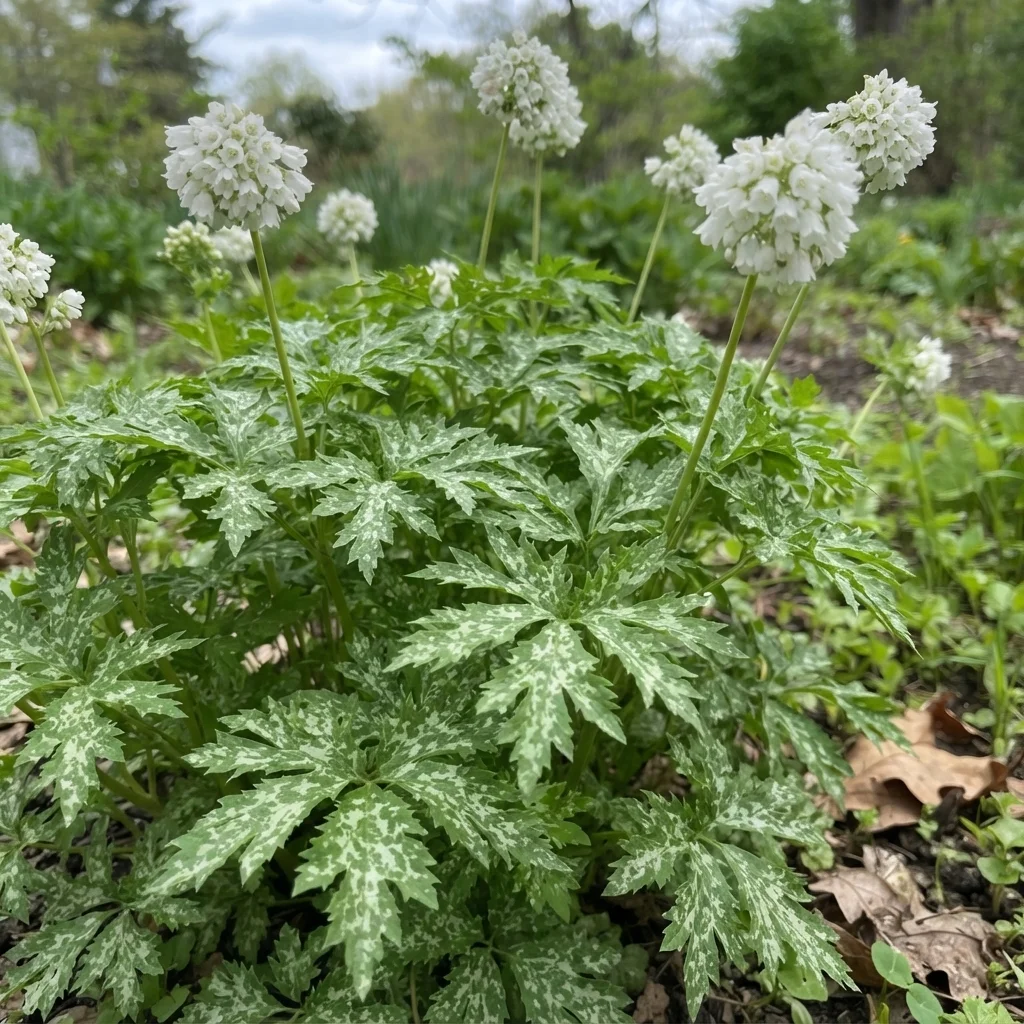
Hydrophyllum tenuipes, commonly called Pacific waterleaf, is a creeping woodland perennial native to moist Pacific Northwest forests. It forms expanding colonies via underground rhizomes, featuring deeply lobed leaves marked with pale watermark-like spots and clusters of bell-shaped flowers with protruding stamens.
The species is distinguished by stamens and styles that extend to twice the length of its pale lavender to greenish-white petals. Foliage undergoes natural summer dormancy, withering completely during warm, dry periods.
Uses & Benefits:
Essentials
At a Glance
Plant Type
Groundcover
Height
30"
Width
36"
Light
Partial Sun, Shade
Zones
4, 5, 6, 7, 8, 9
Water
Low to medium
Humidity
High humidity preferred
Lifespan
Perennial
Native To
Western North America
Toxicity
Non-toxic
Bloom period
Mid spring – Early summer
In flower about 3 months of the year
Planting
How to Grow
- Plant rhizomes or root plugs in rich, organic woodland soil located in full to partial shade.
- Water regularly during spring emergence to establish deep root systems before summer heat arrives.
- Apply an annual top-dressing of leaf mold or compost in fall to mimic natural forest floor conditions.
- Allow foliage to die back completely in summer, withholding irrigation while rhizomes are dormant.
Pro Tip
Allow the foliage to wither naturally as summer heat sets in; forcing soil moisture during dormancy triggers crown and root rot.
Keep It Thriving
Care Guide
Do
- Top-dress planting beds with compost or leaf mold annually in fall.
- Plant in full shade or partial shade in moist, organic-rich soil.
Don't
- Do not overwater during summer dormancy, as saturated warm soil causes root rot.
- Do not apply heavy synthetic fertilizers or attempt to force continuous summer foliage.
Seasonal Care Calendar
| Task | Jan | Feb | Mar | Apr | May | Jun | Jul | Aug | Sep | Oct | Nov | Dec |
|---|---|---|---|---|---|---|---|---|---|---|---|---|
| Divide | ||||||||||||
| Mulch | ||||||||||||
| Pest Check | ||||||||||||
| Spring Cleanup |
Watch Out For
Pests & Diseases
Common Pests
Common Diseases
In the Garden
Landscape Uses & Companions
Landscape Uses
Multiply
Propagation Methods
Good to Know
Common Questions
Pacific Waterleaf questions
What zones can Pacific Waterleaf grow in?
Pacific Waterleaf is hardy in USDA Zones 4–9: in that range it survives winter in the ground. Warmer than Zone 9, winter isn't the problem: it prefers colder winters, and summer heat can shorten its life.
Is Pacific Waterleaf deer resistant?
Not reliably. Deer may browse Pacific Waterleaf, especially tender spring growth — plan on repellents or fencing where pressure is high.
When does Pacific Waterleaf bloom?
Pacific Waterleaf typically blooms from mid-spring to early summer. Exact timing shifts a week or two with your zone — Sow's bloom calendar maps it to your garden.
Does Pacific Waterleaf need full sun?
Pacific Waterleaf does best in part shade.
More Hydrophyllum to compare
Keep exploring
Explore the genus
Grow Pacific Waterleaf with confidence
See it in a design of your actual yard, get zone-matched care reminders, and track it season by season in your garden journal.