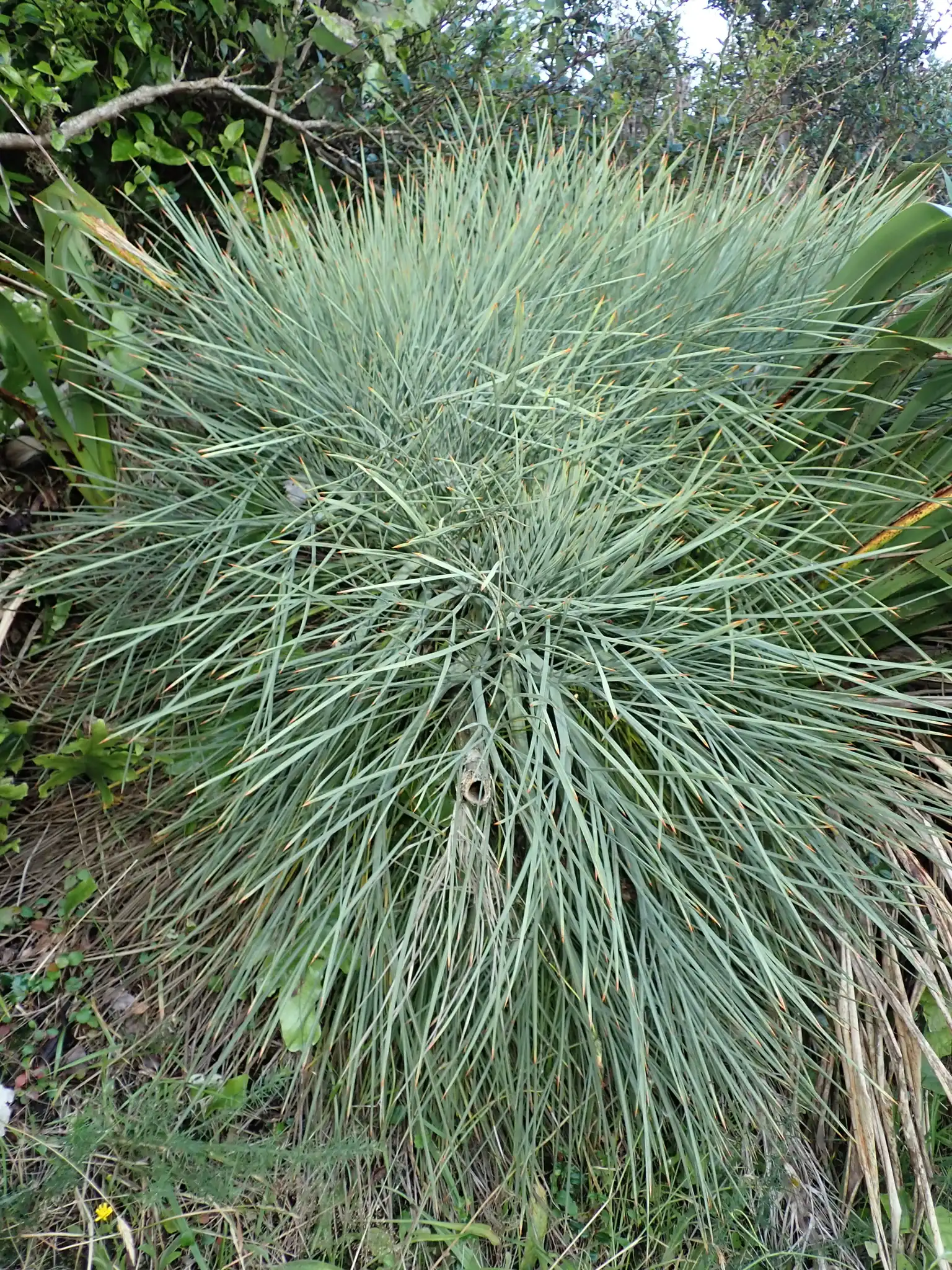
The Story
Plant Bio
Aciphylla squarrosa is an evergreen perennial native to New Zealand that forms rigid, architectural rosettes of needle-tipped, blue-gray foliage up to five feet wide. In late spring, mature plants push up thick, woody flowering spikes up to six feet tall that bear dense clusters of small greenish-yellow umbels.
The species is distinguished by its fiercely spined, multi-pinnate leaves that resemble an Agave, earning it the common name speargrass. It is dioecious, requiring separate male and female plants to produce viable seed.
Uses & Benefits:
Essentials
At a Glance
Plant Type
Perennial
Height
79"
Width
59"
Light
Full Sun
Zones
6, 7, 8, 9, 10
Water
Low
Humidity
Low to Moderate
Lifespan
Perennial
Native To
New Zealand
Toxicity
Non-toxic (causes mechanical injury)
Bloom period
Late spring – Summer
In flower about 4 months of the year
Planting
How to Grow
- Select a site in full sun with gritty, sharply draining soil, avoiding low-lying areas that collect standing water.
- Amend heavy garden soil with coarse gravel, grit, or pumice to ensure rapid water drainage.
- Set the plant into the soil at the original container depth, wearing thick leather gloves to protect against spiky leaves.
- Water sparingly after planting until established, allowing the upper soil layer to dry completely between waterings.
Pro Tip
Plant in lean, sharply drained gravel or sandy loam in full sun; rich garden soils retain too much moisture and cause fatal root rot.
Keep It Thriving
Care Guide
Do
- Plant in lean, sharply draining gravelly soil
- Position in full sun for robust, compact growth
- Wear heavy leather gloves when working near foliage
- Remove spent flower stems at the base once dry
Don't
- Do not cut back into old leafless wood
- Do not overwater or allow roots to sit in soggy soil
- Do not apply heavy fertilizers or rich organic amendments
- Do not plant near high-traffic walkways or play areas
Seasonal Care Calendar
| Task | Jan | Feb | Mar | Apr | May | Jun | Jul | Aug | Sep | Oct | Nov | Dec |
|---|---|---|---|---|---|---|---|---|---|---|---|---|
| Pest Check | ||||||||||||
| Plant | ||||||||||||
| Propagate | ||||||||||||
| Prune |
Watch Out For
Pests & Diseases
Common Pests
Common Diseases
In the Garden
Landscape Uses & Companions
Landscape Uses
Companion Plants
Multiply
Propagation Methods
Good to Know
Common Questions
Common Speargrass questions
What zones can Common Speargrass grow in?
Common Speargrass is hardy in USDA Zones 6–10: in that range it survives winter in the ground. Colder than Zone 6, grow it in a container you can move to shelter for the winter, or as an annual.
Is Common Speargrass deer resistant?
Yes — Common Speargrass is rated deer-resistant. Deer typically pass it over, though extreme hunger can override any plant's defenses.
When does Common Speargrass bloom?
Common Speargrass typically blooms from late spring to late summer. Exact timing shifts a week or two with your zone — Sow's bloom calendar maps it to your garden.
Does Common Speargrass need full sun?
Common Speargrass does best in full sun (6+ hours).
Is Common Speargrass drought tolerant?
Yes — once established (usually after the first full season), Common Speargrass handles dry spells with minimal watering. Water deeply its first year to build the root system that makes that possible.
More Aciphylla to compare
Keep exploring
Explore the genus
Hardy in your zone?
Grow Common Speargrass with confidence
See it in a design of your actual yard, get zone-matched care reminders, and track it season by season in your garden journal.