The Story
Plant Bio
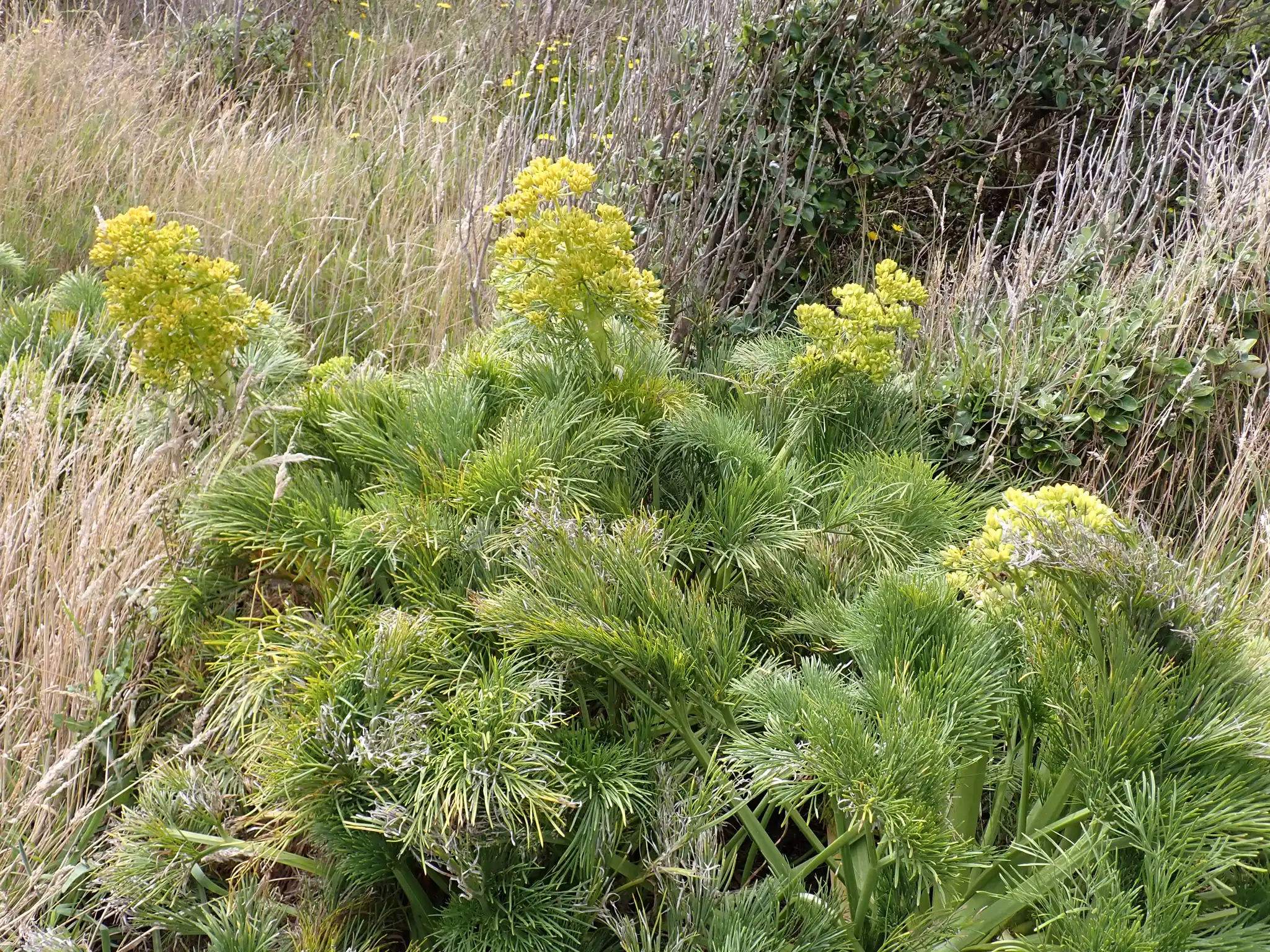
Aciphylla dieffenbachii is an evergreen perennial native to coastal cliffs and rocky ledges of the Chatham Islands. It forms a rosette of soft, arching, blue-green divided leaves that bleed a sticky white sap when damaged, topped in summer by stout stalks bearing pale yellow flower umbels.
Unlike most speargrasses with needle-sharp spines, this species features flexible, soft foliage with blunt leaf ends. Its glaucous foliage and architectural flowering stems give it a striking maritime presence while requiring intense airflow and exceptionally sharp soil drainage.
Uses & Benefits:
Essentials
At a Glance
Plant Type
Perennial
Height
59"
Width
39"
Light
Full Sun, Partial Sun
Zones
8, 9, 10
Water
Low
Humidity
Low
Lifespan
Perennial
Native To
Chatham Islands (New Zealand)
Toxicity
Mild skin irritant (latex sap)
Bloom period
Early summer – Late summer
In flower about 3 months of the year
Planting
How to Grow
- Choose an open, fully sunlit site exposed to reliable air circulation.
- Amend the planting area with coarse mineral grit, lava rock, or crushed gravel to guarantee rapid drainage.
- Set young plants into the soil at the same depth as their nursery container, taking care not to damage the long taproot.
- Water sparingly during initial establishment and refrain from overhead irrigation during hot summer months.
Pro Tip
Plant in coarse grit or gravel-heavy soil in an open, windy position; summer heat paired with high humidity or stagnant air rapidly causes fatal crown rot.
Keep It Thriving
Care Guide
Do
- Plant in sharply draining, mineral-rich soil or gravel beds.
- Provide a bright, windy site with strong air movement.
- Wear gloves when handling or trimming leaves to avoid contact with latex sap.
Don't
- Do not overwater or allow standing water around the crown.
- Do not plant in sheltered, humid courtyards or rich, heavy clay soils.
- Do not attempt to divide established plants due to their sensitive taproot.
Seasonal Care Calendar
| Task | Jan | Feb | Mar | Apr | May | Jun | Jul | Aug | Sep | Oct | Nov | Dec |
|---|---|---|---|---|---|---|---|---|---|---|---|---|
| Deadhead | ||||||||||||
| Fertilize | ||||||||||||
| Pest Check | ||||||||||||
| Spring Cleanup |
Watch Out For
Pests & Diseases
Common Pests
Common Diseases
In the Garden
Landscape Uses & Companions
Landscape Uses
Companion Plants
Multiply
Propagation Methods
Good to Know
Common Questions
Chatham Island Speargrass questions
What zones can Chatham Island Speargrass grow in?
Chatham Island Speargrass is hardy in USDA Zones 8–10: in that range it survives winter in the ground. Colder than Zone 8, grow it in a container you can move to shelter for the winter, or as an annual.
Is Chatham Island Speargrass deer resistant?
Not reliably. Deer may browse Chatham Island Speargrass, especially tender spring growth — plan on repellents or fencing where pressure is high.
When does Chatham Island Speargrass bloom?
Chatham Island Speargrass typically blooms in summer. Exact timing shifts a week or two with your zone — Sow's bloom calendar maps it to your garden.
Does Chatham Island Speargrass need full sun?
Chatham Island Speargrass does best in full sun to part shade. In hot climates, afternoon shade keeps blooms fresher longer.
Is Chatham Island Speargrass drought tolerant?
Yes — once established (usually after the first full season), Chatham Island Speargrass handles dry spells with minimal watering. Water deeply its first year to build the root system that makes that possible.
More Aciphylla to compare
Keep exploring
Explore the genus
Hardy in your zone?
Grow Chatham Island Speargrass with confidence
See it in a design of your actual yard, get zone-matched care reminders, and track it season by season in your garden journal.