The Story
Plant Bio
Holmskioldia sanguinea is a fast-growing, erect to arching shrub from the subtropical Himalayas that reaches 6 to 10 feet tall and spreads wider, scrambling or climbing when staked. It carries opposite, mid- to deep-green ovate leaves with shallow teeth on long, arching canes.
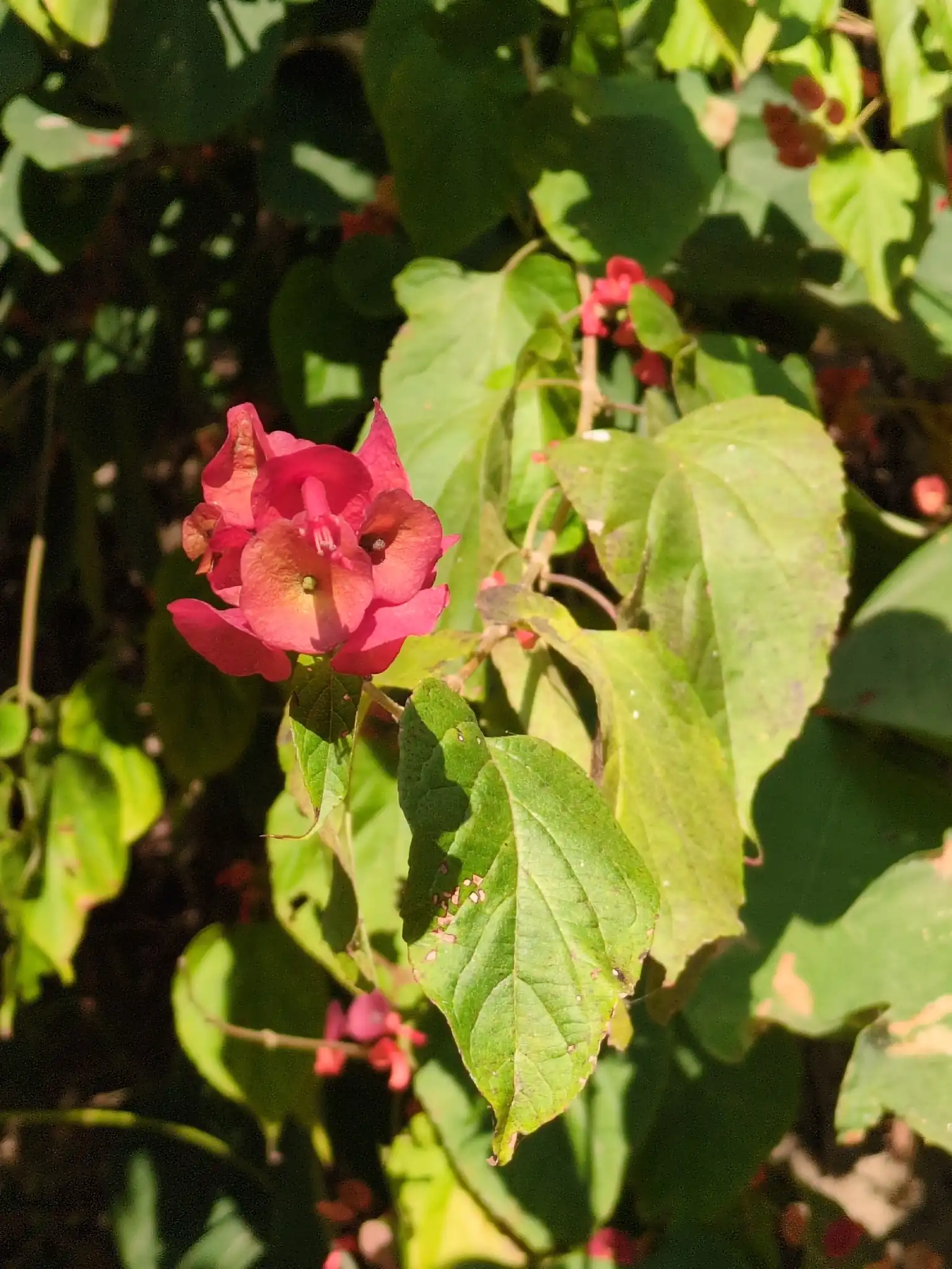
The display is a flat orange-red calyx saucer about an inch across that holds a narrow crimson-red trumpet in the center. The trumpet drops within days while the saucer persists for weeks, carrying color into fall; a yellow-chartreuse lutea form and an orange aurantiaca form offer alternate colors.
Uses & Benefits:
Essentials
At a Glance
Plant Type
Shrub
Height
120"
Width
142"
Light
Full Sun, Partial Sun
Zones
8, 9, 10
Water
Moderate
Humidity
Average
Lifespan
Perennial shrub
Native To
Subtropical Himalayas: India, Nepal, Bhutan, Bangladesh, Myanmar, Pakistan
Toxicity
Non-toxic to humans and animals
Bloom period
Spring – Fall
In flower about 9 months of the year
Planting
How to Grow
- Plant in full sun to part shade after last frost, allowing 8 to 12 feet of spread and a stout stake, fence or trellis for arching canes.
- Set the crown level in well-drained soil, working compost into poor sandy soil and firming well.
- Water deeply after planting and through the first summer; established plants tolerate short dry spells but flower best with regular water.
- Prune after the fall saucer display to shorten long shoots and keep an open vase shape.
- Mulch 2 to 3 inches and protect the crown in zone 8, where tops die back and resprout from the roots in spring.
Pro Tip
Leave the saucers in place after the trumpets fall and cut back after flowering to hold the size; give arching canes a stake from the start.
Keep It Thriving
Care Guide
Do
- Give it room to reach full width or a strong support to scramble on.
- Water regularly the first year, then water during dry spells for best bloom.
- Prune after flowering to shape and control staggering growth.
Don't
- Do not crowd it against slow shrubs it will quickly overgrow.
- Do not leave it unstaked where canes will sprawl across paths.
- Do not expect the red trumpets to last; the long show comes from the saucers.
Seasonal Care Calendar
| Task | Jan | Feb | Mar | Apr | May | Jun | Jul | Aug | Sep | Oct | Nov | Dec |
|---|---|---|---|---|---|---|---|---|---|---|---|---|
| Pest Check | ||||||||||||
| Plant | ||||||||||||
| Prune | ||||||||||||
| Stake | ||||||||||||
| Winter Prep |
Watch Out For
Pests & Diseases
Common Pests
In the Garden
Landscape Uses & Companions
Landscape Uses
Multiply
Propagation Methods
Good to Know
Common Questions
Chinese Hat Plant questions
What zones can Chinese Hat Plant grow in?
Chinese Hat Plant is hardy in USDA Zones 8–10: in that range it survives winter in the ground. Colder than Zone 8, grow it in a container you can move to shelter for the winter.
When does Chinese Hat Plant bloom?
Chinese Hat Plant typically blooms from spring to fall. Exact timing shifts a week or two with your zone — Sow's bloom calendar maps it to your garden.
Does Chinese Hat Plant need full sun?
Chinese Hat Plant does best in full sun to part shade. In hot climates, afternoon shade keeps blooms fresher longer.
Is Chinese Hat Plant drought tolerant?
Yes — once established (usually after the first full season), Chinese Hat Plant handles dry spells with minimal watering. Water deeply its first year to build the root system that makes that possible.
Keep exploring
Explore the genus
Hardy in your zone?
Grow Chinese Hat Plant with confidence
See it in a design of your actual yard, get zone-matched care reminders, and track it season by season in your garden journal.