The Story
Plant Bio
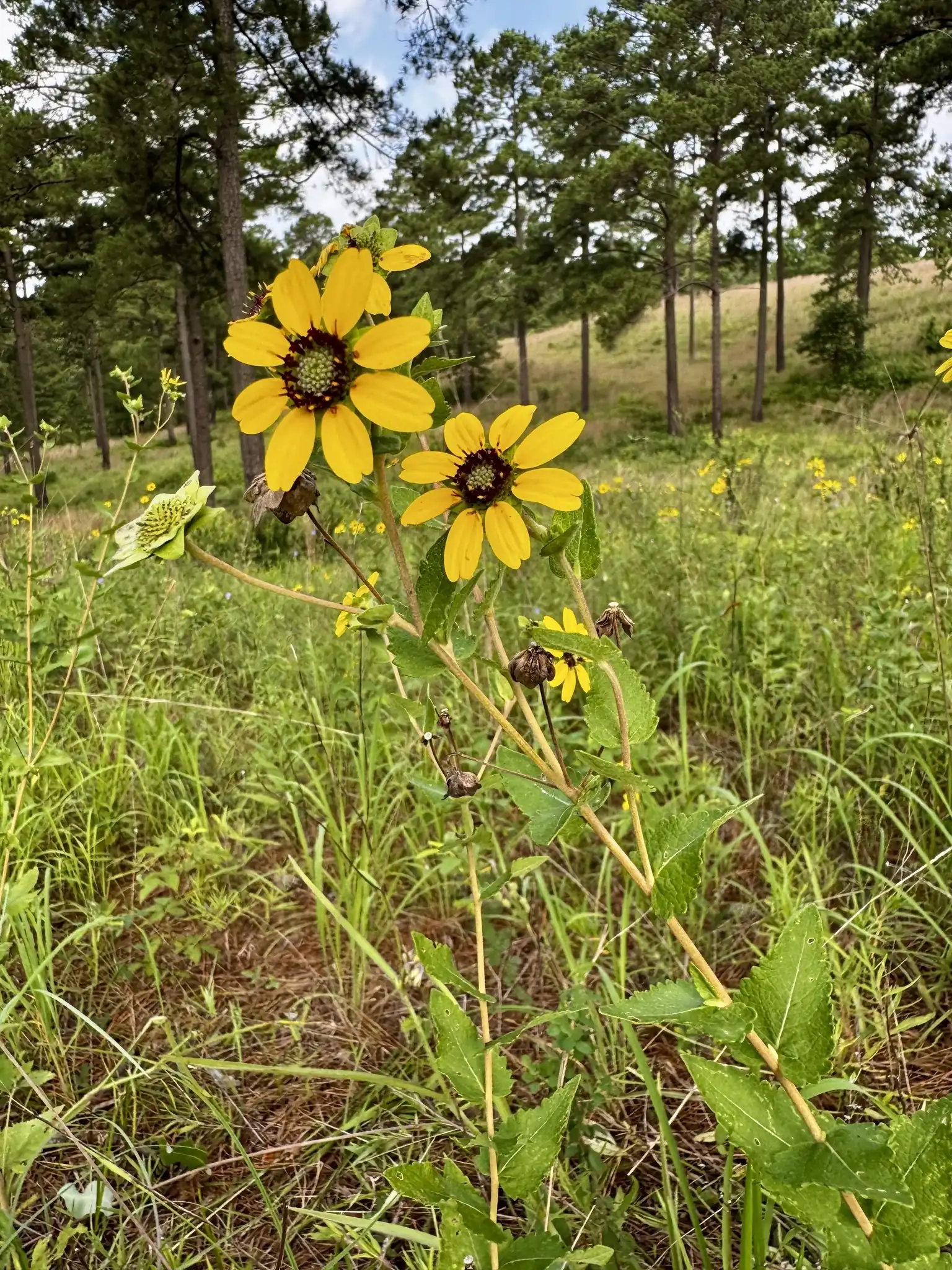
Berlandiera betonicifolia, Texas greeneyes, is an erect herbaceous perennial to about 3-1/2 feet, branching from evenly leafy stems that stay flexible and sometimes woody at the base. The flower heads are borne in open branching clusters, each with yellow rays around a central disk that opens green and matures red to maroon.
It is separated by narrowly to broadly ovate stalked leaves with toothed margins and a finely rough-hairy upper surface, plus jointed purplish hairs on the flower stalks. Plants under this name are intermediate between B. pumila and B. texana, with 12-18 mm involucres and deep yellow rays veined green beneath.
Uses & Benefits:
Essentials
At a Glance
Plant Type
Perennial
Height
43"
Width
24"
Light
Full Sun, Partial Sun
Zones
6, 7, 8
Water
Moist
Humidity
Unknown
Lifespan
Perennial
Native To
South-Central U.S.
Toxicity
Unknown
Bloom period
Spring – Fall
In flower about 9 months of the year
Planting
How to Grow
- Plant in full sun to part shade in well-drained sandy loam, loam, or caliche.
- Space 18 to 24 inches apart to allow for branched, leafy stems.
- Water deeply to establish, then reduce to occasional water; it tolerates heat and drought.
- Deadhead spent heads to extend bloom from spring to fall.
Pro Tip
In rich soil with extra water stems flop and then send out branchlets that flower more; in a meadow, mow in early summer and let the regrowth bloom.
Keep It Thriving
Care Guide
Do
- Plant in well-drained sand, loam or caliche in full sun to part shade.
- Water to establish, then allow soil to dry between waterings.
- Deadhead to prolong bloom from spring to fall.
Don't
- Don't plant in heavy wet clay or full shade.
- Don't overwater or fertilize heavily - rich wet soil causes flopping.
- Don't leave crowns soggy in winter; rot develops in poorly drained soil.
Seasonal Care Calendar
| Task | Jan | Feb | Mar | Apr | May | Jun | Jul | Aug | Sep | Oct | Nov | Dec |
|---|---|---|---|---|---|---|---|---|---|---|---|---|
| Deadhead | ||||||||||||
| Pest Check | ||||||||||||
| Plant | ||||||||||||
| Spring Cleanup | ||||||||||||
| Stake |
Watch Out For
Pests & Diseases
Common Pests
Common Diseases
In the Garden
Landscape Uses & Companions
Landscape Uses
Multiply
Propagation Methods
Good to Know
Common Questions
Texas Greeneyes questions
What zones can Texas Greeneyes grow in?
Texas Greeneyes is hardy in USDA Zones 6–8: in that range it survives winter in the ground. Colder than Zone 6, grow it in a container you can move to shelter for the winter, or as an annual. Warmer than Zone 8, winter isn't the problem: it prefers colder winters, and summer heat can shorten its life.
Is Texas Greeneyes deer resistant?
Not reliably. Deer may browse Texas Greeneyes, especially tender spring growth — plan on repellents or fencing where pressure is high.
When does Texas Greeneyes bloom?
Texas Greeneyes typically blooms from spring to fall. Exact timing shifts a week or two with your zone — Sow's bloom calendar maps it to your garden.
Does Texas Greeneyes need full sun?
Texas Greeneyes does best in full sun to part shade. In hot climates, afternoon shade keeps blooms fresher longer.
Is Texas Greeneyes drought tolerant?
Yes — once established (usually after the first full season), Texas Greeneyes handles dry spells with minimal watering. Water deeply its first year to build the root system that makes that possible.
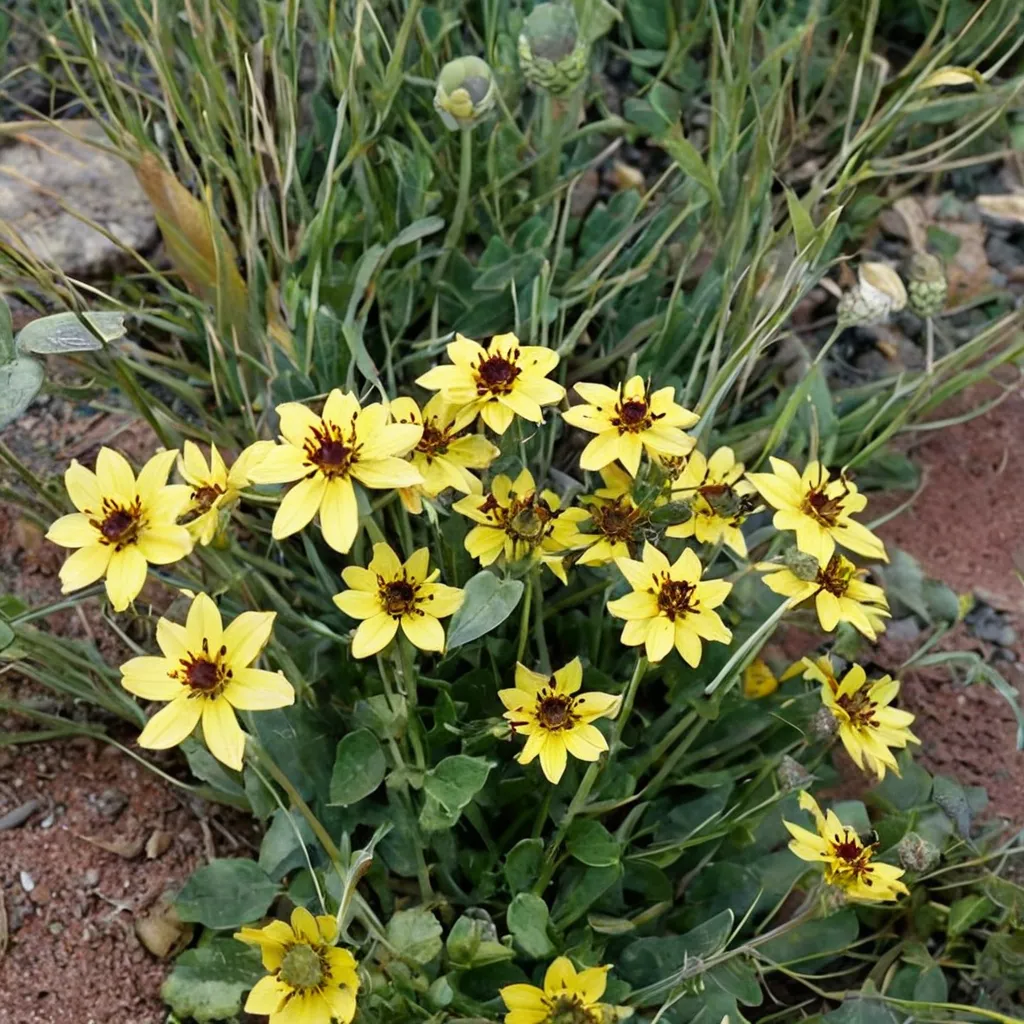
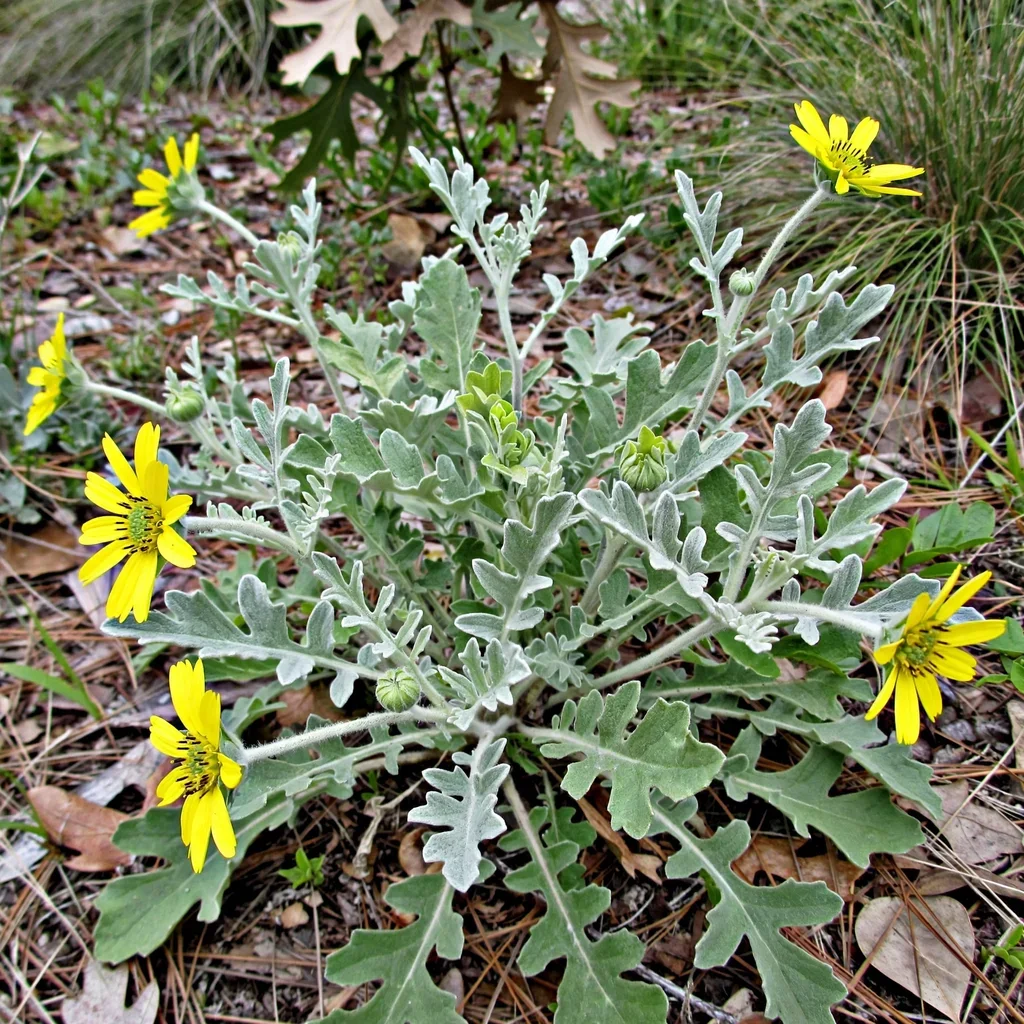
More Berlandiera to compare
Keep exploring
Explore the genus
Hardy in your zone?
Grow Texas Greeneyes with confidence
See it in a design of your actual yard, get zone-matched care reminders, and track it season by season in your garden journal.